THE TORSIONAL LOSS MODULUS IN HUMAN HAIR 175 (4,10,1 1) including those, which are based on the assumption of circular hair cross-sections (1,12,1 3). Arithmetic means for oscillation time T were determined from fi ve successive oscillations. G′ values were determined from the mean oscillation times for fi vefold measurements for a given fi ber. From the continuous decrease of the torsional amplitude due to damping, the logarithmic decrement Λ is determined through the following equation: =1 = 1 ln Λ n i Ai n A1+i (4) where Ai and Ai + 1 are the amplitudes of successive oscillations and n is the number of oscillation from which the value for Λ is calculated. For the current investigation, n = 5 generally applies. Values are based on fi vefold determinations for a given fi ber. For low degrees of damping, the connection between logarithmic decrement Λ and the torsional phase angle δ as tanδ is given by the following equation: Λ = π tanδ (5) With the loss factor: tanδ = G″/G′ (6) this yields: Λ = π G″/G′ (7) so that G″ = Λ G′/π (8) Equation (8) enables to determine the value for G″ from the related values of G′ and Λ for a given experiment. In view of the fact that hair is not an uniformly isotropic, viscoelastic material, as may in principle be required, a core/shell model is suggested, which enables to estimate the separate contributions of cortex and cuticle to G″, in analogy to G′ (3) as follows: G″ = (G″co Ico + G″cu Icu)/I (9) with I = Ico + Icu (10) where subscripts co and cu relate to cortex and cuticle, respectively. In accordance with the experimental evidence for the material used, the cuticle is treated for each fi ber as a hollow, elliptical shaft with a constant wall thickness of 3 μm. This

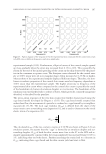
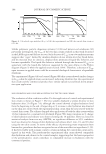
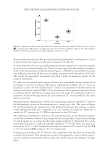
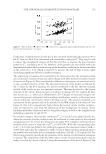
JOURNAL OF COSMETIC SCIENCE 176 relates to about six layers of cuticle in the cross-section, which are assumed to be constant along fi ber length and independent of fi ber diameter. Equation (9) was fi tted to the G″ data using the established nonlinear regression method (3). This approach accounts for a certain fraction of the variance of the data and also yields estimates for the torsional loss moduli of cortex and cuticle together with their 95% con- fi dence limits. The justifi cation of this model-based approach, the applicability of which is considered as independent of the actual scatter of the data, is, namely, based on the observation that the torsional storage modulus of hair fi bers drops signifi cantly after the removal of the cuticle (10). Further considerations are given elsewhere (3). EXPERIMENTAL All experiments on hair fi bers were conducted on a Single Fiber Torsion Pendulum apparatus (TRI Princeton, Princeton, NJ) as described by Persaud and Kamath (4). Effec- tive hair fi ber length was 3 cm, frequency about 0.1 Hz, and environmental conditions 22°C and 22% relative humidity. All tests and treatments were conducted on dark brown, commercial, Caucasian hair (International Hair Importers & Products Inc., Glendale, NY). For each fi ber tested, the smallest and largest diameters were determined at fi ve equidis- tant points and through 360° (Laser Scan Micrometer, LSM-500, Mitutoyo, Kanagawa, Japan). Hair tresses were taken from a collective of virgin hair (V) and subjected to a permanent waving treatment (7% thioglycolic acid, pH 9.5, 30 min) followed by reoxi- dation (2.2% H2O2, pH 4). This was followed by bleaching (8% H2O2, pH 9.4, 30 min). The perm-waved and bleached sample is referred to as WB. A group of fi bers already prepared for torsional testing was furthermore treated with a commercial “repair” shampoo (30 min and 30 s rinse). The sample is referred to as WBS. For further, specifi c details the reader is referred to Wortmann et al. (3). Data analysis and nonlinear curve fi ts were conducted using Statistica (Version 13, Dell, Tulsa, OK) and SPSS (Version 20, IBM, Armonk, NY). Homogeneity or in-homogeneity of data sets was determined by analysis of variance (ANOVA) and nonconservative, post hoc least signifi cant difference (LSD) tests, as implemented in the statistics programs. RESULTS AND DISCUSSION BASIC OBSERVATIONS One of the primary experimental variables obtained from the free torsional oscillation test and in particular from the continuous decrease of the oscillation amplitude is the loga- rithmic decrement Λ [see equation (4)], as a measure of damping within the viscoelastic hair fi ber. Figure 1 summarizes the results for Λ for the three samples. Logarithmic decrement values at the chosen conditions (22% relative humidity, 22°C) are low compared to literature values for wool (14) and hair (12) at 65% relative humid- ity. This is attributed to the humidity-dependent glass transition of wool (15) and hair (16), where low humidity sh ifts the properties of a keratinous material further into the glassy region. The values show satisfactory agreement, however, with the values for wool at 25% relative humidity and T 30°C of Λ 0.06 (17). Also reasonable agreement is
Purchased for the exclusive use of nofirst nolast (unknown)
From: SCC Media Library & Resource Center (library.scconline.org)