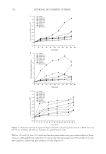
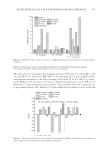
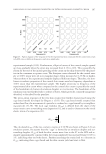
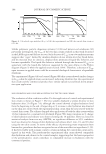
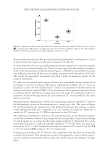
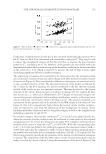
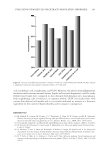
PLANT EXTRACTS ACT AS ANTIOXIDANTS OR PRO-OXIDANTS 151 cold-pressed oils, but according to the Polish standard PN-EN ISO 6885:2001 (28), AV cannot exceed the level of 8.0. Argan oil did not exceed this value. EFFECT OF ACEROLA, WILLOW, AND ROSE EXTRACTS ON OXIDATIVE STABILITY OF ARGAN OIL–WATER COSMETIC EMULSIONS A major cause of quality deterioration of emulsions is the susceptibility of their lipids to oxidation. Temperature is one of the most important factors infl uencing the stability of unsaturated fats, thus in the present study the effect of two concentrations of three plant extracts on the oxidative stability of emulsions based on argan oil was investigated. Emul- sions were stored at 5°C, 20°C, and 40°C and the PFs of extracts as well as their long- term ability to inhibit the peroxide formation (Ip) in cosmetic emulsions were calculated. All extracts were characterized by good antioxidant activities. Their TEAC and FRAP values were, respectively, 40.4 and 41.3 μmol/g (for rose extract), 44.4 and 46.8 μmol/g (for willow extract), and 55.3 and 141.8 μmol/g (for acerola extract). In the DPPH assay, their AADPPH values, calculated as 1/EC50, were 12.5 for rose extract, 16.7 for willow extract, and 50.0 for acerola extract. The polyphenol contents were 5.5 mg/g for rose extract, 6.2 mg/g for willow extract, and 11.8 mg/g for acerola extract (13,14). Figure 1 presents the effect of plant extracts and BHT on the peroxide contents in tested cosmetic emulsions stored in different conditions. Potential of extracts and BHT to pro- tect emulsions from oxidation, expressed as the PF values, is shown in Figure 2. Peroxide content in control sample stored at 5°C for 6 months increased from 0.22 to 0.80 (Figure 1A). The contents of peroxides in control emulsions stored at 20°C for 6 m and at 40°C for 4 w were 1.15 (Figure 1B) and 1.20 mmol O2/ml (Figure 1C), respec- tively. Taking into account the same time of storage (about 31 d), it was observed that the peroxide content in control samples increased to 0.41 mmol O2/ml at 5°C, to 0.63 mmol O2/ml at 20°C, and to 1.20 mmol O2/ml at 40°C (Figure 1). These observations con- fi rmed that the temperature of storage affected the rate of emulsion oxidation. Faster formation of hydroperoxides in oil-in-water emulsions stored at higher temperatures has already been reported (14). EFFECT OF ACEROLA, WILLOW, AND ROSE EXTRACTS ON OXIDATIVE STABILITY OF ARGAN OIL–WATER COSMETIC EMULSIONS STORED AT 5°C FOR 6 MONTHS It was observed that 1% acerola in emulsion stored at 5°C showed neither antioxidant nor pro-oxidant activities (PF = 1.0) up to 60 d but after this time it started to act as pro- oxidant (Figures 1A and 2). The most effective was 5% willow extract (PF = 6.6 Figure 2) with moderate phenolic content and antioxidant activity expressed as the TEAC, FRAP, and AADPPH values. Its protective activity was similar to that of 0.01% BHT (PF = 5.6). The long-term abilities of 5% willow extract and BHT to inhibit the peroxide formation (Ip), calculated at the end of storage, were also the highest among all tested antioxidants and amounted to 48.8% and 47.5%, respectively (Figure 3). No signifi cant difference was observed for 1% willow and 5% acerola extracts (PFs were 2.2. and 2.0, respectively, p 0.05), but their ability to inhibit the peroxide formation (Ip) calculated at the end of storage was 31.3% for 5% acerola and 25% for 1% willow. The calculated

JOURNAL OF COSMETIC SCIENCE 152 Figure 1. Oxidative stability of argan oil–water emulsions containing plant extracts or BHT stored at (A) 5°C for 6 months, (B) 20°C for 6 months, (C) and 40°C for 4 weeks. PFs for 1% and 5% rose (1.0) indicated neither antioxidant nor pro-oxidant effect of these extracts, although the Ip value for 1% rose at the end of storage was 30% and for 5% rose was negative, indicating pro-oxidant activity (Figure 3).
Purchased for the exclusive use of nofirst nolast (unknown)
From: SCC Media Library & Resource Center (library.scconline.org)