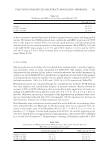
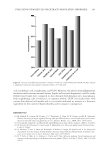
RHEOLOGICAL AND SENSORY PROPERTIES OF PETROLEUM-BASED COSMETIC CREAM 171 MG-structured emulsion that was initially formulated as an alternative for low-fat shortenings. This work compared the rheological and sensorial properties of this experimental petroleum-free skin cream with a commercially available petroleum-based skin cream. The experimental skin cream showed similar linear and nonlinear viscoelastic rheological properties and comparable skin hydration, as well as consumer acceptance as the commercial product. A schematic diagram aiming to correlate the physical and sensorial properties of skin cream was also proposed at the end of the work. ACKNOWLEDGMENTS This work was funded by Natural Sciences and Engineering Research Council of Canada. The authors would like to thank Dr. Lisa Duizer for her advice on sensory evaluation ex- periments and Mr. Braulio Macias Rodriguez for expert advice on non-linear rheological measurements and analysis. REFERENCES (1) A. V. Rawlings and K. J. Lombard, A review on the extensive skin benefi ts of mineral oil, Int. J. Cosmet. Sci., 34, 511–518 (2012). (2) C.I.R.E. Panel, Amended fi nal report on the safety assessment of polyacrylamide and acrylamide resi- dues in cosmetics, Int. J. Toxicol., 24, 21–50 (2005). (3) T. A. Stortz and A. G. Marangoni, The replacement for petrolatum: Thixotropic ethylcellulose oleogels in triglyceride oils, Green Chem., 16, 3064–3070 (2014). (4) A. G. Marangoni, S. H. J. Idziak, C. Vega, H. Batte, M. Ollivon, P. S. Jantzi, and J. W. E. Rush, Encapsulation-stucturing of edible oil attenuates acute elevation of blood lipids and insulin in hu- mans, Soft Matter, 3, 183–187 (2007). (5) A. G. Marangoni and S. H. J. Idziak, Food Product, US Patent 7,718,210 B2, 2010. (6) H. D. Batte, A. J. Wright, J. W. Rush, S. H. J. Idziak, and A. G. Marangoni, Phase behavior, stability, and mesomorphism of monostearin–oil–water gels, Food Biophys., 2, 29–37 (2007). (7) F. C. Wang and A. G. Marangoni, Microstructural basis for water release from glycerol monostearate structured emulsions upon transformation from the α-gel to the coagel phase, Food Struct., 7, 1–5 (2016). (8) N. Krog, “Food Emulsifi ers and Their Chemical and Physical Properties,” in Food Emulsions, 3rd ed., S. E. Friberg and K. Larsson. Eds. (Marcel Dekker, New York, NY, 1997), pp. 141–188. (9) N. Krog and K. Larsson, Phase behaviour and rheological properties of aqueous systems of industrial distilled monoglycerides, Chem. Phys. Lipids., 2, 129–143 (1968). (10) E. S. Lutton, The phases of saturated 1-monoglycerides C14-C22, J. Am. Oil Chem. Soc., 48, 778–781 (1971). (11) N. Krog and A. P. Borup, Swelling behaviour of lamellar phases of saturated monoglycerides in aqueous systems, J. Sci. Fd Argic., 24, 691–701 (1973). (12) K. Larsson, K. Fontell, and N. Krog, Structural relationships between lamellar, cubic and hexagonal phases in monoglyceride-water systems. Possibility of cubic structures in biological systems, Chem. Phys. Lipids., 27, 321–328 (1980). (13) H. D. Batte, A. J. Wright, J. W. Rush, S. H. J. Idziak, and A. G. Marangoni, Effect of processing condi- tions on the structure of monostearin–oil–water gels, Food Res. Int., 40, 982–988 (2007). (14) F. C. Wang and A. G. Marangoni, Internal and external factors affecting the stability of glycerol mono- stearate structured emulsions, RSC Adv., 5, 93108–93116 (2015). (15) T. Sone, T. Hanamizu, M. Ichioka, T. Yokokura, S. Yoshikawa, N. Kondo-Yanai, Y. Hiraki, K. Esumi, Moisturizing effect of vesicles formed from monoglycerides on human skin, Int. J. Cosmet. Sci., 21, 23– 31 (1999). (16) A. K. Zetzl and A. G. Marangoni, “Novel Strategies for Nanostructuring Liquid Oils into Functional Fats,” in Edible Oleogels, A.G. Marangoni and N. Garti. Eds. (AOCS Press, Urbana, IL, 2011), pp. 19– 47.

JOURNAL OF COSMETIC SCIENCE 172 (17) F. C. Wang, A. J. Gravelle, A. I. Blake, and A. G. Marangoni, Novel trans fat replacement strategies, Curr. Opin. Food Sci., 7, 27–34 (2016). (18) T. Moravkova and P. Filip, The infl uence of emulsifi r on rheological and sensory properties of cosmetic lotions, Adv. Mater. Sci. Eng., 2013, 1–7 (2013). (19) G. Savary, M. Grisel, and C. Picard, Impact of emollients on the spreading properties of cosmetic prod- ucts: A combined sensory and instrumental characterization, Colloids Surf. B., 102, 371–378 (2013). (20) T. Moravkova and P. Filip, The infl uence of thickeners on the rheological and sensory properties of cos- metic lotions, Acta Polytech. Hungarica., 11, 173–186 (2014). (21) L. Gilbert, C. Picard, G. Savary, and M. Grisel, Impact of polymers on texture properties of cosmetic emulsions: A methodological approach, J. Sens. Stud., 27, 392–402 (2012). (22) L. Gilbert, V. Loisel, G. Savary, M. Grisel, and C. Picard, Stretching properties of xanthan, carob, modifi ed guar and celluloses in cosmetic emulsions, Carbohydr. Polym., 93, 644–650 (2013). (23) L. Gilbert, C. Picard, G. Savary, and M. Grisel, Rheological and textural characterization of cosmetic emulsions containing natural and synthetic polymers: Relationships between both data, Colloids Surf. A., 421, 150–163 (2013). (24) L. Gilbert, G. Savary, M. Grisel, and C. Picard, Predicting sensory texture properties of cosmetic emul- sions by physical measurements, Chemom. Intell. Lab. Syst., 124, 21–31 (2013). (25) ASTM E1490-11 Standard Guide for Two Sensory Descriptive Analysis Approaches for Skin Creams and Lotions, ASTM International, West Conshohocken, PA, 2011. (26) S. Guest, F. Mcglone, A. Hopkinson, Z. A. Schendel, K. Blot, and G. Essick, Perceptual and sensory- functional consequences of skin care products, J. Cosmet. Dermatological Sci. Appl., 2013, 66–78 (2013). (27) R. Brummer and S. Godersky, Rheological studies to objectify sensations occurring when cosmetic emulsions are applied to the skin, Colloids Surf. A., 152, 89–94 (1999). (28) M. Bekker, G. V. Webber, and N. R. Louw, Relating rheological measurements to primary and second- ary skin feeling when mineral-based and Fischer-Tropsch wax-based cosmetic emulsions and jellies are applied to the skin, Int. J. Cosmet. Sci., 35, 354–361 (2013). (29) M. C. Adeyeye, A. C. Jain, M. K. M. Ghorab, and W. J. Reilly, Viscoelastic evaluation of topical creams containing microcrystalline cellulose/sodium carboxymethyl cellulose as stabilizer, AAPS PharmSci- Tech., 3, 1–10 (2002). (30) R. E. Greenaway, Psychorheology of skin cream, PhD Thesis University of Nottingham, Norringhan, UK, (2010). (31) S. A. Rogers, B. M. Erwin, D. Vlassopoulos, and M. Cloitre, A sequence of physical processes deter- mined and quantifi ed in LAOS: Application to a yield stress fl uid, J. Rheol. (N. Y. N. Y)., 55, 435 (2011). (32) K. Hyun, J. G. Nam, M. Wilhellm, K. H. Ahn, and S. J. Lee, Large amplitude oscillatory shear behav- ior of PEO-PPO-PEO triblock copolymer solutions, Rheol. Acta., 45, 239–249 (2006). (33) K. Hyun, M. Wilhelm, C. O. Klein, K. S. Cho, J. G. Nam, K. H. Ahn, S. J. Lee, R. H. Ewoldt, and G. H. McKinley, A review of nonlinear oscillatory shear tests: Analysis and application of large ampli- tude oscillatory shear (LAOS), Prog. Polym. Sci., 36, 1697–1753 (2011). (34) E. K. Park and K. W. Song, Rheological evaluation of petroleum jelly as a base material in ointment and cream formulations: Steady shear fl ow behavior, Arch. Pharm. Res., 33, 141–150 (2010). (35) C. J. Dimitriou, R. H. Ewoldt, and G. H. McKinley, Describing and prescribing the constitutive re- sponse of yield stress fl uids using large amplitude oscillatory shear stress (LAOStress), J. Rheol. (N. Y. N. Y)., 57, 27–70 (2013). (36) R. Shu, W. Sun, T. Wang, C. Wang, X. Liu, and Z. Tong, Linear and nonlinear viscoelasticity of water- in-oil emulsions: Effect of droplet elasticity, Colloids Surf. A., 434, 220–228 (2013). (37) R. H. Ewoldt, P. Winter, J. Maxey, and G. H. McKinley, Large amplitude oscillatory shear of pseudo- plastic and elastoviscoplastic materials, Rheol. Acta., 49, 191–212 (2010). (38) K. van der Vaart, Y. Rahmani, R. Zargar, Z. Hu, D. Bonn, and P. Schall, Rheology of concentrated soft and hard-sphere suspensions, J. Rheol. (N. Y. N. Y)., 57, 1195–1209 (2013). (39) A. V. Rawlings and C. R. Harding, Moisturization and skin barrier function, Dermatol. Ther., 17 Suppl 1, 43–48 (2004).
Purchased for the exclusive use of nofirst nolast (unknown)
From: SCC Media Library & Resource Center (library.scconline.org)