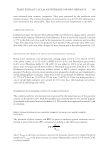
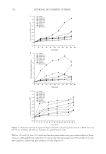
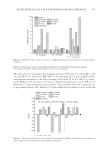
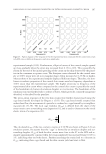
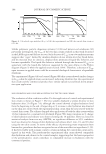
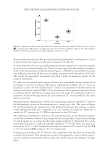
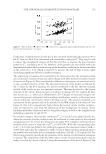
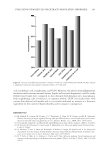
RHEOLOGICAL AND SENSORY PROPERTIES OF PETROLEUM-BASED COSMETIC CREAM 169 The experimental and the control skin cream also had similar consumer liking from the sensory evaluation (Figure 8A). The experimental lotion showed higher saleability, indi- cated by higher liking for purchase. However, in terms of overall preference or liking, 53.3% of the panelists prefer the commercial sample, whereas 46.7% prefer the experi- mental sample. In terms of the sensorial parameters evaluated, the experimental lotion was described to have higher greasiness and was considered more suitable for the winter- time, possibly due to its higher oil and emulsifi er content. The similar consumer prefer- ence between the two samples therefore makes the experimental skin cream is potentially capable of competing with a successful commercial product, especially good for dry win- ter days as described by the panelists. Figure 7. Moisture barrier function of the experimental and control skin creams on human skin. (A) Skin hydration and (B) oiliness measured in a 2-h period after applying the samples on panelists’ forearms. Figure 8. Consumer acceptance of the experimental skin cream compared with the control product. (A) Consumer liking scores of the skin creams and (B) comparison of different skin sensations after the ap- plication of the lotions.

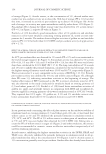
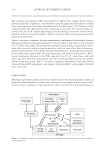
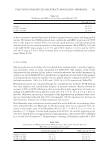
JOURNAL OF COSMETIC SCIENCE 170 EFFECT OF FORMULATION AND RHEOLOGICAL PROPERTIES ON SKIN SENSATION OF COSMETIC LOTIONS The consumer perception of skin care products is affected by complex factors such as physical properties of products, touch behavior upon the application of products, and the time-varying pattern of mechanical stimulation of the skin surface (26). Changes in skin conditions from the application of skin care products also affect the sensation that con- sumers feel (26). Such complex physiological and psychological reactions toward the ap- plication of skin care products make it diffi cult to predict their sensorial properties from physical measurements. Figure 9 presents a schematic diagram summarizing fundamental relationships between physical parameters and sensorial properties of topical skin cream based on the literature (24,27,28) and this study. The formulation and processing of skin cream products deter- mine their structural and rheological properties, which in turn, affect skin feel upon ap- plication of the product. Oil content and texture modifi ers (i.e., hydrocolloids and waxes), on the other hand, greatly affect the initial greasiness and oiliness of the product. Rheo- logical parameters obtained in the LVR, especially the G′, G”, yield stress, and yield strain, possibly determine the primary skin feel including hardness and initial spread- ability of the skin cream. The G” overshoot, frequency dependence and other factors obtained from LAOS experiments may suggest the spreadability and secondary skin feel after a few rubs. CONCLUSION Rheology and texture analysis have been widely used in the characterization of physical properties of food products, and recently, they have been employed in the characteriza- tion of cosmetic products. A petroleum-free skin cream has been developed using an Figure 9. Schematic diagram of the relationship between formulation and rheology of cosmetic creams to the skin sensation.
Purchased for the exclusive use of nofirst nolast (unknown)
From: SCC Media Library & Resource Center (library.scconline.org)