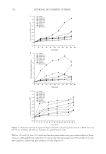
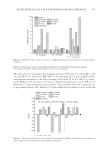
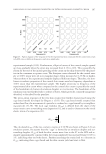
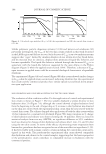
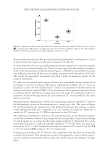
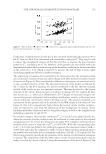
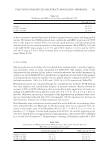
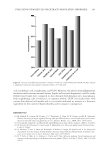
PLANT EXTRACTS ACT AS ANTIOXIDANTS OR PRO-OXIDANTS 155 for acerola extract in emulsions based on evening primrose (13) and wheat germ (14) oils. All our studies confi rmed that preferably 5% acerola extract, not 1% extract, might be applied as an antioxidant in cosmetic emulsions. Some of well-known antioxidants, e.g., ascorbic acid, gallic acid (30), quercetin, rutin, or carnosine, (31) have been reported to exhibit pro-oxidant activity at low concentrations in contrast to antioxidant activity at higher concentrations. Acerola is rich in ascorbic acid, which at lower concentrations may induce lipid hydroperoxide decomposition to free radicals and aldehydes responsible for oxidative degradation of lipids, proteins, and vitamins (32). It may also enhance the cata- lytic effect of iron and copper acting as pro-oxidants (14,33). In this way, ascorbic acid may contribute to the pro-oxidant activity of acerola extract. Rose extract, showing the lowest antioxidant activities in the DPPH, FRAP, and TEAC tests, at both concentrations had no protective effect at the beginning of emulsion storage at 5°C (PF = 1.0 Figure 2), but after about 30 d, 1% rose effectively inhibited the perox- ide formation in tested emulsion (Figure 1A). At the end of storage, the Ip value calculated for 1% rose was 30%, whereas 5% rose was pro-oxidant (negative Ip value Figure 3). At the concentration of 5%, at 20°C, it had the same protective factor as BHT, and at the end of storage it was even better antioxidant than 5% willow, and 5% acerola extracts (Ip value was 35%, whereas for 5% acerola—14%, and for 5% willow—negative Ip value indicat- ing pro-oxidant activity). At the concentration of 1%, it started to be pro-oxidant in emul- sions stored longer than 120 d (negative Ip value at the end of storage). At 40°C, 5% rose extract exhibited periodic pro-oxidant activity, but at the end of storage, its Ip value was positive (7.5%). Therefore, 1% rose is preferably recommended than 5% one for emulsions stored at higher temperatures. Different results were obtained by the authors in lipid oxi- dation studies in emulsions based on evening primrose oil (13) and wheat germ oil (14), in which rose extract turned out to be an effective antioxidant at both concentrations. Synthetic antioxidant BHT inhibited the peroxides formation in all temperature condi- tions. Its PF value in emulsion stored at 5°C was comparable to PF of 5% willow extract, and lower than 1% willow extract in emulsions stored at 20°C. At the end of storage, its protective activity in emulsion stored at 5°C, measured as Ip value, was similar to 5% willow. It was the most effective antioxidant for long-term stored emulsions at 20°C (Ip = 67%). At 40°C, its Ip value was comparable to those calculated for 5% acerola and 1% rose (Figure 3). It is also worth to notice that the rate of oxidation of various oils used in our previous (13,14) and present studies was different and was related to the contribution of unsatu- rated fatty acids in oil. Emulsions based on evening primrose oil, containing about 75.3% of linoleic acid (13), were more susceptible to oxidation than those based on wheat germ (55% of linoleic acid) and argan oil (36% of linoleic acid). Taking into account the in- crease in the content of peroxides in control samples based on evening primrose oil (about 9.4-fold at 5°C, 30-fold at 20°C, and 75-fold at 40°C), wheat germ oil (about 4-fold at 5°C, 16-fold at 20°C, and 18-fold at 40°C), and argan oil (about 1.9-fold at 5°C, 2.9-fold at 20°C, and 5.5-fold at 40°C) stored for similar time (29–31 d), it was found that the sta- bility of argan oil is much higher than the stability of wheat germ and evening primrose oils. CONCLUSIONS Altogether, the results of the present study have revealed that willow and rose extracts could maintain or prolong the oxidative stability of cosmetic emulsions based on argan

JOURNAL OF COSMETIC SCIENCE 156 oil, but acerola extract, especially at the concentration of 1%, should not be recommended for emulsions based on this kind of oil. The antioxidant activity is an important property of commercial plant extracts, which may infl uence the oxidative stability of cosmetic formulations. Cosmetic emulsions should be tested in a range of temperatures from 5°C to 40°C to be sure that they will be stable during general use by the consumers and that antioxidants do not accelerate oxidative degradation of their oil base. Moreover, plant extracts intended as antioxidant additives in cosmetic emulsions should be tested in emulsions based on different oils. Taking into account the results of our previous (13,14) and present studies, it can be concluded that some plant extracts may act as pro-oxidants in long-term stored cosmetics. Selection of proper plant antioxidants for cosmetic emulsions is an essential element of cos- metic production but this selection should be related to the oil used as the base of emulsion. This article does not contain any studies with human or animal subjects. REFERENCES (1) C. Mielczarek and E. Brzezińska, Flavonoids in cosmetics and cosmetology. Part. 1. Biological proper- ties of fl avonoids, Pol. J. Cosmetol., 3, 156–163 (2000). (2) S. Field, E. Hazelwood, B. Bourke, and J. F. Bourke, Allergic contact dermatitis from tertiary- butylhydroquinone and Laureth 12 in a hair dye, Contact Dermatitis, 56, 116–117 (2007). (3) K. Yamaki, S. Taneda, R. Yanagisawa, K. I. Inoue, H. Takano, and S. Yoshino, Enhancement of allergic responses in vivo and in vitro by butylated hydroxytoluene, Toxicol. Appl. Pharmacol., 223, 164–172 (2007). (4) N. Yusuf, C. Irby, S. K. Katiyar, and C. A Elmets, Photoprotective effects of green tea polyphenols, Photodermatol. Photoimmunol. Photomed., 23, 48–56 (2007). (5) C. Mielczarek and E. Brzezinska. Flavonoid substances and their practical application. Part. 3. Practical application of fl avonoid raw material in cosmetics, Pol. J. Cosmetol., 3, 74–87 (2000). (6) A. Svobodova, J. Psotova, and D. Walterova. Natural phenolics in prevention of UV-induced skin dam- age, Biomed Papers, 147, 137–145 (2003). (7) R. Casagrande, S. R. Georgetti, W. A. Verri Jr, J. R. Jabor, A. C. Santos, and M. J. V. Fonseca, Evalua- tion of functional stability of quercetin as a raw material and in different topical formulations by its antilipoperoxidative activity. AAPS PharmSciTech, 7(1), Article 10 (2006), accessed August 28, 2015, http://www.aapspharmscitech.org . (8) P. K. J. P. D. Wanasundara and F. Shahidi, “Antioxidants: Science, Technology, and Applications”, in Bailey’s Industrial Oil & Fat Products, F. Shahidi. ed. (John Wiley & Sons, New York, 2005), pp. 431–489. (9) E. Szukalska, Wybrane zagadnienia utleniania tluszczów, Tluszcze Jadalne, 38, 42–61 (2003). (10) K. Morteza-Semnani, S. Madjid, and B. Shahnavaz, Comparison of antioxidant activity of extract from roots of licorice (Glycyrrhiza glabra L.) to commercial antioxidants in 2% hydroquinone cream, J. Cos- met. Sci., 54, 551–558 (2003). (11) F. Bonina, C. Puglia, D. Ventura, R. Aquino, S. Tortora, A. Sacchi, A. Saija, A. Tomaino, M. L. Pellegrino, and P. de Caprariis, In vitro antioxidant and in vivo photoprotective effects of a lyophilized extract of Capparis spinosa L. buds, J. Cosmet. Sci., 53, 321–335 (2002). (12) A. Manosroi, M. Abe, and J. Manosroi, Comparison of antioxidant activity of extract from seeds of white pepper (Piper nigrum L.) to commercial antioxidants in 2% hydroquinone cream. J. Cosmet. Sci., 50, 221–229 (1999). (13) P. Malinowska and R. Zieliński, Application of natural antioxidants for improving the oxidative stabil- ity of emulsion products made in cosmetic industry, Przem. Chem., 90, 1738–1742 (2011). (14) P. Malinowska, A. Gliszczyńska-Świglo, and H. Szymusiak, Protective effect of commercial acerola, willow, and rose extracts against oxidation of cosmetic emulsions containing wheat germ oil, Eur. J. Lipid Sci. Technol., 11, 1553–1562 (2014). (15) E. Lamer-Zarawska, C. Chwala, and A. Gwadrys, Rośliny w kosmetyce i kosmetologii przeciwstarzeniowej (Wyd. Lekarskie PZWL, Warsaw, 2013).
Purchased for the exclusive use of nofirst nolast (unknown)
From: SCC Media Library & Resource Center (library.scconline.org)