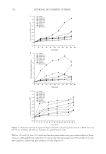
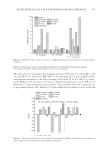
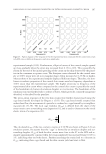
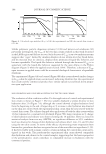
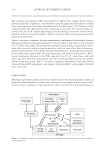
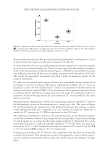
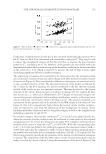
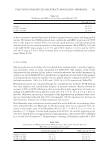
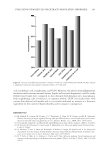
PLANT EXTRACTS ACT AS ANTIOXIDANTS OR PRO-OXIDANTS 153 EFFECT OF ACEROLA, WILLOW, AND ROSE EXTRACTS ON OXIDATIVE STABILITY OF ARGAN OIL–WATER COSMETIC EMULSIONS STORED AT 20°C FOR 6 MONTHS The most effective antioxidants for emulsions stored at 20°C were 1% willow (PF = 1.8), 5% rose (PF = 1.4), and 0.01% BHT (PF = 1.4), although only 5% rose and BHT inhib- ited peroxide formation at the end of storage at the levels of 34.8% and 67%, respec- tively. Willow (5%) and rose (1%) extracts showed low protective activity (PF = 1.1). Moreover, 1% rose was protective up to about 120 d, and after this time it started to act as pro-oxidant (Figure 1B). Willow at 5% also exhibited pro-oxidant activity at the end Figure 2. The PF of acerola, willow, rose extracts and BHT in argan oil–water emulsions stored in different conditions. Figure 3. The long-term ability of acerola, willow, rose extracts and BHT to inhibit the peroxide formation (Ip) in argan oil–water emulsions stored in different conditions.

JOURNAL OF COSMETIC SCIENCE 154 of storage (Figure 3). Acerola extract, at the concentration of 5%, showed neither anti- oxidant nor pro-oxidant activity up to about the 30th day of storage (PF = 1.0), but after this time, it reversed its activity to pro-oxidative up to about 150 d (Figure 1B). At the end of storage, its activity was again antioxidative with Ip value about 14% (Figure 3). Pro-oxidant effect during the whole storage time was observed for 1% acerola extract (PF = 0.2 in Figure 2, negative IP value in Figure 3). Peschel et al. (29) described a good antioxidative effect of 1% golden rot and artichoke extracts in oil-in-water emulsion containing evening primrose oil, stored at room tem- perature for 5 months. The authors observed higher activities of golden rot and artichoke extracts (PV 0.30 for both) than 0.01% BHT, and pro-oxidant activity of apple extract (PV = 2.75). EFFECT OF ACEROLA, WILLOW, AND ROSE EXTRACTS ON OXIDATIVE STABILITY OF ARGAN OIL– WATER COSMETIC EMULSIONS STORED AT 40°C FOR 4 WEEKS At 40°C, pro-oxidant effect was observed for 1% acerola (PF = 0.5) and it was maintained to the end of storage (negative Ip Figure 3). Antioxidant activity was shown by 5% acerola (PF = 6.9), 1% rose (PF = 5.8), and 1% willow (PF = 3.9), but their PFs were much lower than those calculated for 0.01% BHT (PF = 17.6). The long-term abilities of 5% acerola and 1% rose to inhibit the peroxide formation, calculated at the end of storage, were also the highest among all extracts tested and were 45.0% and 46.7%, respectively (Figure 3). Their activities after 4 w were comparable to the activity of BHT (Ip = 43.3%). Periodic pro-oxidant activity was exhibited by 5% rose and willow extracts (Figure 1C), although their PFs were 1.9, indicating antioxidant activities at the beginning of storage. The highest effectiveness of BHT (expressed as the PF) to protect emulsions stored at 40°C was also observed in the study conducted for emulsions based on evening primrose oil (13) and wheat germ oil (14). Peschel et al. (29) found better antioxidant activities of golden rot, apple, and artichoke extracts in comparison with BHT and tocopherol de- rivatives applied in evening primrose oil-in-water emulsions stored at 40°C for 5 weeks. They reported that 0.1% apple, 1% golden rot, 0.1% and 1% artichoke extracts were better antioxidants than both 0.15% tocopherol derivatives and 0.01% BHT. COMPARISON OF ACEROLA, WILLOW, AND ROSE EXTRACTS’ ANTIOXIDANT ACTIVITIES IN ARGAN OIL–WATER COSMETIC EMULSIONS In our previous study concerning the effect of plant extracts on the oxidative stability of emulsions based on evening primrose (13) and wheat germ (14) oils, it was found that willow extract at 1% and 5% inhibited the peroxide formation in emulsions stored at 5°C, 20°C, and 40°C. The PF of 5% willow extract in wheat germ oil emulsions stored at 5°C and 20°C was even higher than observed for 0.01% BHT (14). Taking into ac- count the PFs of willow extract in argan oil (Figure 2) and other emulsions, this extract could be recommended in cosmetic creams as effective antioxidant irrespectively of oil used for emulsion preparation. Acerola extract, exhibiting the highest antioxidant activities in the DPPH, FRAP, and TEAC tests, effectively inhibited the peroxide formation in emulsions stored in all ap- plied conditions but only at the concentration of 5% (Figures 2 and 3). Acerola extract at 1% concentration generally acted as pro-oxidant. Similar effect has already been observed
Purchased for the exclusive use of nofirst nolast (unknown)
From: SCC Media Library & Resource Center (library.scconline.org)