PLANT EXTRACTS ACT AS ANTIOXIDANTS OR PRO-OXIDANTS 149 were obtained from cosmetic companies. They were preserved by the producers with paraben mixture. The content of parabens in acerola extract was 0.25%. For other extracts such information was unavailable. They were stored at room temperature in the dark. COMMERCIAL PLANT OIL Cold-pressed argan oil (Argania Spinosa Kernel Oil) was obtained in opaque plastic container from Statfold company (Tamworth, Great Britain). It was stored in the original container at 5°C in the dark and it was used for the preparation of cosmetic emulsions not later than 2 days after obtaining it from the producer. Acid number (AN), peroxide value (PV), anisi- dine value (AV), and totox value of argan oil were determined as described previously (14). PREPARATION AND STORAGE OF ARGAN OIL-IN-WATER MODEL EMULSIONS Oil-in-water emulsions were prepared by mixing argan oil (5% w/w), Tween 20 (4% w/w), plant extract (1 or 5% w/w) or BHT (0.01% w/w), and Phenochem preservative (0.8% w/w). Phosphate buffer (0.1 M, pH = 6) was added to 100% (w/w) and all ingre- dients were homogenized (SilentCrusher S, Heidolph Instruments GmbH & Co. KG, Schwabach Germany). Emulsions without extract or BHT (control samples) were also prepared. Each type of oil-in-water emulsion was prepared in duplicate and transferred to closed polypropylene containers. They were stored in incubators in different conditions: (1) 5°C ± 1°C for 6 m, (2) 20°C ± 1°C for 6 m, (3) 40°C ± 1°C for 4 w with periodic ac- cess of air and light (samples were opened for 10 s every day). All emulsions were physi- cally and microbiologically stable. DETERMINATION OF PEROXIDE CONTENT IN COSMETIC EMULSIONS The oxidative stability of emulsions was monitored by the determination of the peroxide content as described in (25), with the modifi cation involving the use of a solvent mixture of methanol and butanol instead of ethanol (14). The results were expressed as mmol O2/ml of emulsion. EFFECT OF PLANT EXTRACTS ON OXIDATIVE STABILITY OF ARGAN OIL–WATER COSMETIC EMULSIONS The potential of plant extracts and BHT to protect emulsion against oxidation was ex- pressed as protection factor (PF), calculated according to the following equation: = PF Tsample Tcontrol where Tsample is the time necessary to increase the peroxide content to 0.4 mmol O2/ml in sample and Tcontrol is the time necessary to increase the peroxide content to 0.4 mmol O2/ml in control sample.

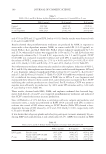
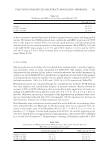
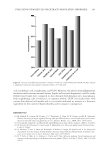
JOURNAL OF COSMETIC SCIENCE 150 The time necessary to increase the peroxide content is the time in which the oxidative changes in oil are undetectable or very low (9). In the case of argan oil emulsions, this level was determined as 0.4 mmol O2/ml. This value enables the comparison of oxidative changes occurring in all applied temperature conditions. The PF value higher than 1.0 indicates antioxidant properties and the protection of emulsion from oxidation. The PF value equal to 1.0 means the lack of protective ef- fect of antioxidant and the PF value lower than 1 indicates that antioxidant acts as pro-oxidant (9). The long-term ability of plant extracts and BHT to inhibit the peroxide formation (Ip) was calculated at the end of storage in all temperature conditions (percentage of peroxide content in relation to control sample). STATISTICAL ANALYSIS The results were expressed as mean ± standard deviation of three independent determina- tions for each emulsion prepared in duplicate (n = 6). All data were analyzed by SPSS Statistics 14.0. software program using analysis of variance (ANOVA). Games Howell post hoc test was applied. Differences were considered to be statistically signifi cant at α = 0.05. RESULTS AND DISCUSSION CHARACTERISTICS OF ARGAN OIL Argan oil is a rich source of unsaturated fatty acids (Table I), thus it is susceptible to oxi- dation. Before preparation of oil-in-water emulsions, the quality of argan oil was assessed by the determination of AN, PV, AV, and totox value (Table I). The AN, PV, and AV of argan oil met the quality requirements for cold-pressed oils. According to the Codex Alimentarius (27), AN cannot be higher than 4 mg KOH/g of oil whereas PV cannot exceed the level of 15 milliequivalents of active oxygen/kg of oil. The maximum AV is not included in the requirements of the European regulations for Table I Quality Characteristics of Cold-Pressed Argan (Argania Spinosa kernel) Oil (26) Fatty acids (%) 16:0 13.0 18:0 5.0 18:1 45.0 18:2 36.0 18:3 0.5 AN (mg KOH/g) 0.3 PV (meq O2/kg) 1.4 AV 0.4 Totox 3.2
Purchased for the exclusive use of nofirst nolast (unknown)
From: SCC Media Library & Resource Center (library.scconline.org)