JOURNAL OF COSMETIC SCIENCE 148 activity at higher concentrations (8,9). In contrast to low concentrations, higher concen- trations of antioxidants in cosmetic emulsions show different activities, and as a conse- quence, they may improve the appearance of the skin. There is limited information in literature (10–12) about application of plant extracts as antioxidants at higher concentrations (1–5%) recommended by their producers. Our pre- vious studies concerning the effect of plant extracts with healing properties such as acerola fruit (Malpighia punicifolia L.), rose buds (Rosa canina L.), and willow bark (Salix alba L.) on the oxidative stability of cosmetic emulsions based on different oils (13,14) revealed that these extracts may act as antioxidants or pro-oxidants depending not only on the concentration of extract or storage conditions but also on the type of oil. Therefore, we decided to analyze these extracts in emulsion based on argan oil. Argan oil obtained from Argania spinosa L. seeds is eaten raw in southwest of Morocco and it is also used in tradi- tional medicine. It is a rich source of unsaturated fatty acids and it has anti-allergic, anti- infl ammatory, and UV-protective activities so it is applied in cosmetics for dry, mature, sensitive, and allergic skin. Moreover, it improves acne-prone skin condition, moistur- izes, smoothes, revitalizes, and fi rms the skin, as well as protects it against the dryness and soothes irritations. It also strengthens hair and nails. Therefore, it is used as an ingre- dient in many kinds of cosmetics, e.g., massage and skin care oils, face, body and hair care cosmetics, such as creams, lotions, and milks (15). Extracts from acerola, willow, and rose are applied in many cosmetics and exhibit stronger or weaker antioxidant activity. It was reported that acerola fruit extract has antioxidant activity measured with the use of 1,1-diphenyl-2-picrylhydrazyl (DPPH) and oxygen radical absorbance capacity (ORAC) assays, superoxide anion radical scavenging activity, and reducing power (16,17). Ethanolic willow bark extracts were found to have antioxi- dant activity in DPPH (18) and β-carotene/linoleic acid bleaching (19) assays. There are less scientifi c reports indicating the antioxidant activity of rose bud extracts (20), litera- ture provides more data concerning properties of rosehip (21–23) and rose leaves extracts (24). The antioxidant activities of these three extracts were confi rmed in our previous study with the use of DPPH, Trolox Equivalent Antioxidant Capacity (TEAC), and Ferric Reducing Antioxidant Power (FRAP) tests (13). Therefore, in the present study, the effect of 1% and 5% acerola, willow, and rose ready- to-use commercial extracts on the oxidative stability of oil-in-water (o/w) cosmetic emul- sions based on argan oil stored in different conditions was evaluated. MATERIALS AND METHODS CHEMICALS BHT was purchased from Merck (Darmstadt, Germany). Phenochem preservative (mixture of parabens in 2-phenoxyethanol) was from Custom Ingredients (New Braunfels, TX). Polyoxyethylene (20) sorbitan monolaurate (Tween 20) was from Fluka (Buchs, Switzerland). COMMERCIAL PLANT EXTRACTS Ready-to-use commercial plant extracts, acerola fruit (M. punicifolia L.) hydroglycolic extract, rose buds (R. canina L.) glycolic extract, and willow bark (S. alba L.) glycolic extract

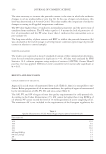
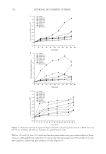
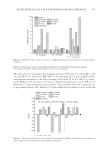
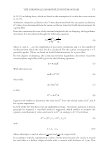
PLANT EXTRACTS ACT AS ANTIOXIDANTS OR PRO-OXIDANTS 149 were obtained from cosmetic companies. They were preserved by the producers with paraben mixture. The content of parabens in acerola extract was 0.25%. For other extracts such information was unavailable. They were stored at room temperature in the dark. COMMERCIAL PLANT OIL Cold-pressed argan oil (Argania Spinosa Kernel Oil) was obtained in opaque plastic container from Statfold company (Tamworth, Great Britain). It was stored in the original container at 5°C in the dark and it was used for the preparation of cosmetic emulsions not later than 2 days after obtaining it from the producer. Acid number (AN), peroxide value (PV), anisi- dine value (AV), and totox value of argan oil were determined as described previously (14). PREPARATION AND STORAGE OF ARGAN OIL-IN-WATER MODEL EMULSIONS Oil-in-water emulsions were prepared by mixing argan oil (5% w/w), Tween 20 (4% w/w), plant extract (1 or 5% w/w) or BHT (0.01% w/w), and Phenochem preservative (0.8% w/w). Phosphate buffer (0.1 M, pH = 6) was added to 100% (w/w) and all ingre- dients were homogenized (SilentCrusher S, Heidolph Instruments GmbH & Co. KG, Schwabach Germany). Emulsions without extract or BHT (control samples) were also prepared. Each type of oil-in-water emulsion was prepared in duplicate and transferred to closed polypropylene containers. They were stored in incubators in different conditions: (1) 5°C ± 1°C for 6 m, (2) 20°C ± 1°C for 6 m, (3) 40°C ± 1°C for 4 w with periodic ac- cess of air and light (samples were opened for 10 s every day). All emulsions were physi- cally and microbiologically stable. DETERMINATION OF PEROXIDE CONTENT IN COSMETIC EMULSIONS The oxidative stability of emulsions was monitored by the determination of the peroxide content as described in (25), with the modifi cation involving the use of a solvent mixture of methanol and butanol instead of ethanol (14). The results were expressed as mmol O2/ml of emulsion. EFFECT OF PLANT EXTRACTS ON OXIDATIVE STABILITY OF ARGAN OIL–WATER COSMETIC EMULSIONS The potential of plant extracts and BHT to protect emulsion against oxidation was ex- pressed as protection factor (PF), calculated according to the following equation: = PF Tsample Tcontrol where Tsample is the time necessary to increase the peroxide content to 0.4 mmol O2/ml in sample and Tcontrol is the time necessary to increase the peroxide content to 0.4 mmol O2/ml in control sample.
Purchased for the exclusive use of nofirst nolast (unknown)
From: SCC Media Library & Resource Center (library.scconline.org)