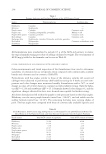
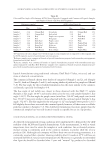
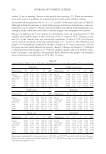
EVALUATE SKIN DISINFECTANT SPRAY 207 impact of the prototype formulation in its intended use, it was considered necessary to evaluate the prototype formulation on wounded skin. Since there are multiple issues as- sociated with conducting clinical studies on subjects with wounded skin (recruitment, evaluation, and timing), the use of an experimental wound methodology offered a conve- nient and clinically relevant approach to evaluate product-use experience, irritation potential, and sensory factors. This article describes two clinical studies (the pilot and the pivotal study) to evaluate the sensory characteristics and irritation potential of a prototype disinfectant spray in sub- jects with experimental wounds compared with reference and control products. The ex- perimental wounds were generated using sequential tape strippings of the forearm skin before product application. The wound model used was a modifi cation of the method reported by Pagnoni (16) (adapted from the method of Bashir (17)). Pagnoni reported that they were able to use 40 strippings of the Transpore® tape (3M Health Care, St. Paul, MN) to disrupt the stratum corneum barrier to successfully demonstrate the sensory re- sponses from a fi rst-aid formulation applied to experimental wounds. In recent years, the Corneofi x® (Courage & Khazaka Electronic GmbH, Cologne, Germany) tape ( 2 × 1.95 cm) is much more frequently used than the Transpore® tape in clinical practice in China. Informed by the pilot study results and the MMR sensory research outcomes, the pivotal study was conducted to further explore the sensory performance as well as the tolerability of prototype formulations. Some modifi cations to the study design were made for the pivotal study based on learning’s from the pilot and additional sensory studies conducted on healthy skin. MATERIALS AND METHODS The pilot study was a single center, “replicated latin square design”, randomized, and double-blinded. The pivotal study was a single center, randomized, controlled, cross- over, and double-blinded study, following a direct comparison test design of the study products. For both studies, the screening and treatment took place at the fi rst visit and follow-up visits occurred on Day 4 and Day 8, where the test sites were assessed visually. In the pilot study, the transepidermal water loss (TEWL) values were measured before and after wounding on Day 1 to ensure disruption of skin barrier and again on Day 4 and 8 to evaluate skin integrity restoration. The TEWL after wounding will be measured three times, and the arithmetic mean value will be taken as the TEWL value. Both studies were conducted at the Guangzhou Landproof Testing Technology Co., Ltd. (Guangzhou, China). The pilot study was conducted between August 12 and 19, 2013, and the pivotal study between May 16 and June 10, 2014. The study protocols and consent forms were reviewed and approved by the Guangdong Cosmetics Institutional Review Board. SUBJECT SELECTION In the pilot study, ~15 subjects were planned to be screened to randomize a maximum of 12 subjects with the intention that 10 subjects complete the study. There were no statis- tical considerations taken into account in the selection of the sample size as this was a

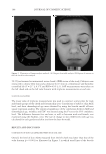
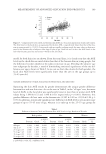
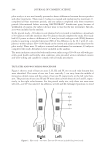
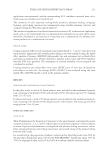
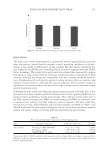
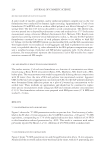
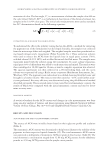
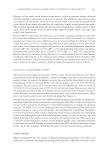
JOURNAL OF COSMETIC SCIENCE 208 pilot study so it was not formally powered to detect differences between the test product and other treatments. There were 12 subjects screened and randomized to treatment 11 completed all four treatment periods, and one subject completed only three treatment periods (discontinued before receiving BACTROBAN® disinfectant spray because of withdrawal of consent, the subject did not want to wait for the last treatment). All sub- jects were included in the analysis. In the pivotal study, ~60 subjects were planned to be screened to randomize a maximum of 50 subjects with the intention that 45 subjects should complete the study. The study had 85% power to detect a difference of 12 mm [in visual analogue scale (VAS)] between products assuming a standard deviation (SD) of the difference to be 26.1 with 45 com- pleters ( within-subject SD = 18.46 based on the review and analysis of the data from the pilot study). There were 50 subjects screened and randomized to treatment 49 subjects completed the study. All subjects were included in the analysis. The main inclusion criteria for both studies were subjects aged 18–60 year old with gen- erally good health and healthy skin condition, who provided written informed consent and were willing and capable to comply with all study procedures. TEST SITES AND WOUNDING PROCEDURE Figure 1 shows a total of four test areas: I, II, III, and IV, two on each volar forearm that were identifi ed. The center of test site I was vertically 5 cm away from the middle of transverse cubital crease and the center of test site II, respectively, in the left volar fore- arm. The positions of test sites III and IV were identical with those of site I and II, respec- tively, in the right volar forearm. For the pivotal study site, only three test areas were selected—site IV was omitted. In addition, sites II and III exchanged positions to avoid Figur e 1. Pilot study - test areas. Test area IV was not included for pivotal study.
Purchased for the exclusive use of nofirst nolast (unknown)
From: SCC Media Library & Resource Center (library.scconline.org)