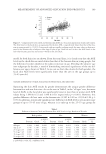
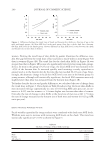
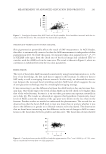
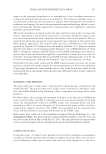
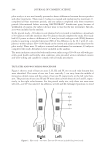
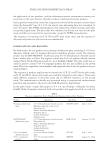
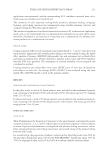
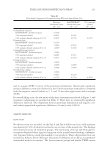
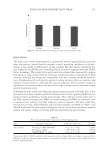
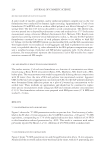
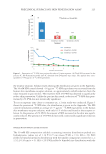
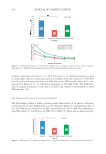
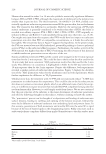
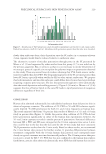
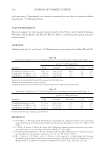
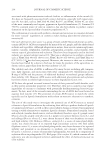
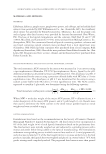
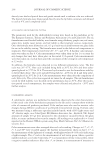
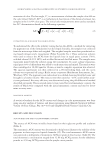
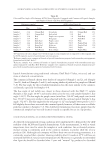
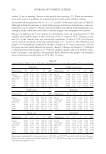
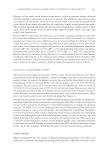
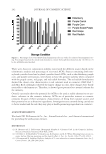
PRECLINICAL SURFACTANT SKIN PENETRATION ASSAY 225 the receptor solutions. Tabular results showing the distribution are given in the Appendix. The 50 mM SDS control showed ~16 μg/cm2 14 C-SDS equivalents was recovered from the human skin membrane–receptor solution, an approximately sixfold reduction from the value measured in porcine skin. The treatment with 2% PEO was observed to signifi cantly reduce skin penetration. Unlike the porcine skin result, reduction of 14 C-SDS skin pene- tration by 2% PVA was not statistically signifi cant. To test an exposure time closer to consumer use, a 2-min study was conducted. Figure 3 shows the penetrated 14 C-SDS dose the distribution is given in the Appendix. The SLS control formulation yielded an average of 7.3 μg/cm2 14 C-SDS equivalents in the human skin membrane–receptor solution, with only 0.1% of this total found in the receptor so- lution. In the presence of 2% PEO, the amount of SDS recovered in the skin was signifi - cantly reduced. The presence of 2% PVA did not yield a statistically signifi cant reduction in penetration. MICELLE/MACROMOLECULE SIZE ANALYSIS The 50 mM SLS composition yielded a scattering intensity distribution peaked at a hydrodynamic radius (rh) of 1.14 ± 0.27 nm (mean ± SD, n = 6). SLS + 2% PEO yielded a bimodal intensity distribution with the smaller component centered at rh = 1.52 ± 0.10 nm (n = 3). SLS + 2% PVA yielded a bimodal size distribution with the Fi gure 1. Penetration of 14 C-SDS into porcine skin after a 10-min exposure. (A) Total SDS recovered in the porcine SC (B) Penetration profi le into SC obtained from D-Squame tape strips. The applied dose corre- sponded to 2740 μg/cm2 of 14 C-SDS equivalents.

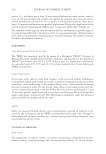
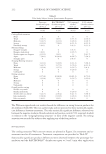
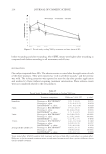
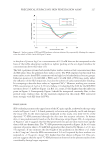
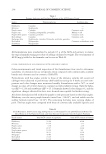
JOURNAL OF COSMETIC SCIENCE 226 smaller component centered at rh = 1.28 ± 0.03 nm (n = 2). Additional details as well as small angle neutron scattering results are available from the authors (13). The SLS micelle radius was approximately one half that of the SDS micelle radius of 2.1 nm reported by Moore et al. (1), which was measured in 100 mM NaCl. The difference may be largely attributed to the effect of added salt, which is well known to swell SDS micelles (14). CMC AND RELATED SURFACE TENSION MEASUREMENTS The SLS sample yielded a surface tension profi le characteristic of an anionic surfactant containing one or more highly surface-active impurities (Figure 4). A minimum value of γ = 19.9 mN/m was obtained at an SLS concentration (C) of 3.1 mM. For comparison, pure SDS yields γ 38 mN/m at its CMC of 8.2 mM (15). There was an infl ection point Figur e 3. Penetration of 14 C-SDS into human skin + receptor solution after a 2-min exposure (Experiment 2). Figu re 2. (A) Total penetration of 14 C-SDS into human skin + receptor solution after a 10-min exposure (Experiment 1) (B) Penetration profi le into human SC obtained from D-Squame tape strips.
Purchased for the exclusive use of nofirst nolast (unknown)
From: SCC Media Library & Resource Center (library.scconline.org)