ANTHOCYANINS AS NATURAL ALTERNATIVES TO SYNTHETIC COLORS FOR LIPSTICK 243 (4) S. Saitta, L. Ricciardi, A. Carni, A. Speciale, A. Saja, and S. Gangemi, Allergic response to a para-amino compound, Ital. J. Food Sci., 21, 375–379 (2009). (5) S. Barone, I. Cohen, and M. Schlossman, Monograph Number 8: Lipstick Technology. (Society of Cos- metic Chemists, New York, 2002). (6) K. Suzuki, K. Hirokawa, A. Yagami, and K. Matsunaga, Allergic contact dermatitis from carmine in cosmetic blush, Dermatitis, 22, 348–349 (2011). doi:10.2310/6620.2011.11022. (7) D. W. Shaw , Allergic contact dermatitis from carmine, Dermatitis, 20, 292–295 (2009). doi:10.2310/6620.2009.09025. (8) Z. D. Drae los, Cosmeceuticals: Effi cacy and infl uence on skin tone, Dermatol. Clin., 32, 137–143 (2014). doi:10.1016/j.det.2013.12.002. (9) R. E. Wrol stad and C. A. Culver, Alternatives to those artifi cial FD&C food colorants, Annu. Rev. Food Sci. Technol., 3, 59–77 (2012). doi:10.1146/annurev-food-022811-101118. (10) A. Aberou mand, A review article on edible pigments properties and sources as natural biocolorants in foodstuff and food industry, World J. Dairy Food Sci., 6, 71–78 (2011). (11) M. M. Giu sti and R. E. Wrolstad, Acylated anthocyanins from edible sources and their applications in food systems, Biochem. Eng. J., 14, 217–225 (2003). doi:10.1016/S1369-703X(02)00221-8. (12) N. Ahmadi ani, R. J. Robbins, T. M. Collins, and M. M. Giusti, Anthocyanins contents, profi les, and color characteristics of red cabbage extracts from different cultivars and maturity stages, J. Agric. Food Chem., 62, 7524–7531 (2014). doi:10.1021/jf501991q. (13) N. Mateus and V. de Freitas, “Anthocyanins as food colorants,” in Anthocyanins: Biosynthesis, Func- tions, and Applications, K. Gould, K. Davies, and C. Winefi eld. Eds. (Springer Science US, New York, 2009), pp. 283–298. (14) S. Y. Mir aje, N. M. Amlepatil, A. K. Sahoo, and G. V. Mote, Anthocyanin extraction from winery waste material: A review, J. Innov. Pharm. Biol. Sci., 2, 218–221 (2015). (15) P. Sari, C. H. Wijaya, D. Sajuthi, and U. Supratman, Colour properties, stability, and free radical scav- enging activity of jambolan (Syzygium cumini) fruit anthocyanins in a beverage model system: Natural and copigmented anthocyanins, Food Chem., 132, 1908–1914 (2012). doi:10.1016/j.foodchem.2011.12.025. (16) J. Flesch hut, F. Kratzer, G. Rechkemmer, and S. E. Kulling, Stability and biotransformation of various dietary anthocyanins in vitro, Eur. J. Nutr., 45, 7–18 (2006). doi:10.1007/s00394-005-0557-8. (17) S. J. Kim , Y.-H. Cho, W. Park, D. Han, C.-H. Chai, and J.-Y. Imm, Solubilization of water soluble anthocyanins in apolar medium using reverse micelle, J. Agric. Food Chem., 51, 7805–7809 (2003). (18) J. M. Bue no, P. Sáez-Plaza, F. Ramos-Escudero, A. M. Jiménez, R. Fett, and A. G. Asuero, Analysis and antioxidant capacity of anthocyanin pigments. Part II: Chemical structure, color, and intake of antho- cyanins, Crit. Rev. Anal. Chem., 42, 126–151 (2012). doi:10.1080/10408347.2011.632314. (19) R. L. Prior and X. Wu, Anthocyanins: Structural characteristics that result in unique metabolic patterns and biological activities, Free Radic. Res., 40, 1014–1028 (2006). doi:10.1080/10715760600758522. (20) M. Giusti a nd R. E. Wrolstad, Characterization of red radish anthocyanins, J. Food Sci., 61, 322–326 (1996). (21) K. Kamonpat ana, M. M. Giusti, C. Chitchumroonchokchai, M. MorenoCruz, K. M. Riedl, P. Kumar, and M. L. Failla, Susceptibility of anthocyanins to ex vivo degradation in human saliva, Food Chem., 135, 738–747 (2012). doi:10.1016/j.foodchem.2012.04.110. (22) M. M. Giust i and R.E. Wrolstad, “Characterization and measurement of anthocyanins by UV-visible spectrophotomery,” in Current Protocols in Food Analytical Chemistry, S. King, M. Gates, and L. Scalettar, Eds. ( John Wiley & Sons, Inc., New York, 2001), p. F1.2.1. (23) COLIPA, Gui delines on stability testing of cosmetic, COLIPA Guidel., 1–10 (2004). (24) J. Cannell, Review paper fundamentals of stability testing, Int. J. Cosmet. Sci., 7, 291–303 (1984). (25) E. É. Nicou é, S. Savard, and K. Belkacemi, Anthocyanins in wild blueberries of Quebec: Extraction and identifi cation, J. Agric. Food Chem., 55, 5626–5635 (2007). doi:10.1021/jf0703304. (26) P. Romanowski, How to stability test a cosmetic formula (2009). http://chemistscorner.com/how-to- stability-test-a-cosmetic-formula/. Accessed: 09/2014. (27) P. Begoun, Wh en to toss out beauty products: Basic skin care tips (2014). http://www.paulaschoice. com/expert-advice/skin-care-basics/_/When-to-Toss-Out-Beauty-Products. Accessed 09/2014. (28) W. S. Mokrzyc ki and M. Tatol, Colour difference ΔE: A survey, Mach. Graph Vis., 20, 4, 1–28 (2012).

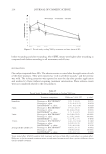
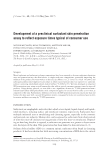
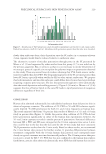
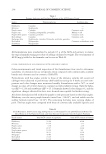
JOURNAL OF COSMETIC SCIENCE 244 Graphical Abstract HIGHLIGHTS • Sources repre senting the six major ACN aglycones were evaluated for their use in cosmetic formulations. • Color profi le s of formulas were compared with those of commercially available products and their equivalents. • Formulas show ed good stability to accelerated environmental testing conditions at elevated temperatures. • Our results s uggest a novel application of ACNs as potential alternatives to synthetic colorants in cosmetics.
Purchased for the exclusive use of nofirst nolast (unknown)
From: SCC Media Library & Resource Center (library.scconline.org)