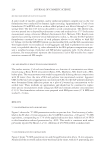
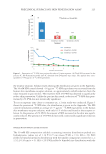
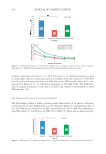
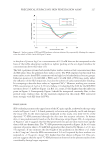
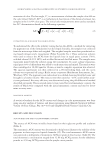
ANTHOCYANINS AS NATURAL ALTERNATIVES TO SYNTHETIC COLORS FOR LIPSTICK 235 MATERIALS AND METHODS MATERIALS Elderberry, hibiscus, purple carrot, purple sweet potato, red cabbage, and red radish dried extracts were provided by DD Williamson & Co., Inc. (Louisville, KY), the strawberry dried extract was provided by FutureCeuticals Inc. (Momence, IL), and the purple corn and red grape skin dried extracts were provided by Artemis International (Fort Wayne, IN). The base of the lipstick formulations and the colorants, D&C Red #6 and #7 (CI 15850), Mica Red, and Carmine (CI 75470), were purchased from MakingCosmetics, Inc. (Snoqualmie, WA). Five commercial brands of lipstick containing synthetic colorants and one brand containing natural colorants were purchased from a local department store (Columbus, OH). Black lip balm containers were purchased from a local company, Bulk Apothecary (Streetsboro, OH). Glass slides were purchased from Fisher Scientifi c Inc. (Fair Lawn, NJ). Reagents used were acetone, ethanol, and methanol and were purchased from Fisher Scientifi c Inc. SPECTROPHOTOMETRIC ANALYSIS OF THE TOTAL MONOMERIC CONTENT The total monomeric ACN content for the extracts was measured in 1-cm cuvettes using a spectrophotometer (Shimadzu UV-2450 Spectrophometer, Kyoto, Japan) by the pH- differential method as described by Giusti and Wrolstad (22). The absorbance at pH 1.0 was determined for the extracts using a potassium chloride buffer with HCl after a 15-min equilibration time. The absorbance at pH 4.5 was determined for the extracts using a sodium acetate buffer with HCl after a 15-min equilibration time. The ACN content, expressed as cyanidin-3-glucoside, was determined using the following equation: pH 1.0 pH 4.5 Abs Abs DF mg¬ Total monomeric anthocyanin content l q q1,000 ® qd ε (1) Where M W = molecular weight of the major ACN present, DF = dilution factor, ε = molar absorptivity of the major ACN present, and d = path length (1 cm). Results were then used to determine the ACN content in the dried extract powder based on initial weights and were recorded as mg/g. LIPSTICK FORMULATIONS Formulations were based on the recommendations in the Society of Cosmetic Chemists Monograph Number 8: Lipstick Technology (5). All dried extracts were incorporated as 8% of the fi nal weight (w/w) of each lipstick formulation based on the preliminary data. The dried extracts were initially weighed out and subjected to a grinding process with a mortar and pestle before being added to the lipstick manufacturing. The formulations underwent a wet grinding process in which castor oil was used in a 1:3 ratio (pigment:oil), and silica was included at 1% of the fi nal weight (w/w), to increase uniformity in the fi nal products. Initially, the lipstick base was weighed and placed i n a water bath at 70°C with gentle stirring until completely melted. The preground dried extracts were then poured

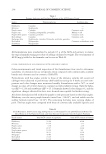
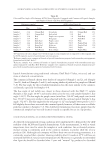
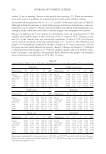
JOURNAL OF COSMETIC SCIENCE 236 directly into the hot lipstick base and gentle stirred until a uniform color was achieved. The lipstick formulas were then poured directly into the lip balm containers and allowed to cool at 4°C until completely solid. ACCELERATED ENVIRONMENTAL TESTING The parameters used for the shelf-stability testing were based on the guidelines set by The European Cosmetic, Toiletry and Perfumery Association (23), and Cannel (24). The six formulations tested for shelf stability were formulas using elderberry, purple corn, red carrot, grape skin, purple sweet potato, and red radish as their pigment sources, respectively. Once the formulas were allowed to cool, 0.5 g of each was secured between two glass slides for use in the stability testing. The formulas were stored in the dark at each temperature in triplicates. The temperatures tested were 20°, 37°, and 45°C. A baseline color measure- ment was taken on day 0. Color measurements were taken then on day 1 to account for any changes that may have taken place in the initial 24 h period. Color measurements were then taken on a weekly basis until the conclusion of the testing for each temperature at 12 weeks. In addition, the formulas were subjected to two different temperature cycles. The fi rst cycle was 20°–37°C. One cycle included being held at 20°C for 24 h and then subse- quently placed in 37°C for 24 h. The second cycle aimed to test the formulation stability to freeze/thaw abuse. One cycle included being held at -20°C for 24 h and then subse- quently placed in 20°C for 24 h. Color measurements were taken after the completion of each 48-h cycle. The cycles were repeated six times for all samples. The six formulations tested for shelf stability were decided on the preliminary data at 20°C. After the incuba- tion period at each temperature, the samples were collected and placed at -20°C until further analysis. COLORIMETRIC ANALYSIS A colorimetric analysis was performed to determine objectively the color characteristics of the initial color of the formulations prepared in the lab and to compare them with the color of commercial products purchased. Color analyses were also used to monitor color changes during different conditions of accelerated environmental testing. Formula color was measured using a refl ectance specular included mode, with a D65 light source and 10° observer angle, on a Color Quest XE (Hunter Associates, Inc., Keswick, VA). Equal amounts of sample (0.5 g) were presented to the colorimeter encased between two glass slides, to ensure uniformity between the samples. All readings were replicated (n = 3) and reported in the Hunter CIELab system using Easy Match Software Ver3.62 (Hunter As- sociates, Inc.). Color measurements were then averaged after each color reading. Changes in L*, a*, b*, c*, h, and ΔE* were recorded against the baseline measurements taken on day 0. L*, is the measurement of the lightness of a sample, with higher values (0–100 scale) indicating a lighter sample. The a* scale is the measurement of red versus green, where a positive number indicates a red color. Conversely, b* is a measurement of blue versus yellow, where a negative number indicates a blue color. c*, or chroma, is a measurement of intensity or
Purchased for the exclusive use of nofirst nolast (unknown)
From: SCC Media Library & Resource Center (library.scconline.org)