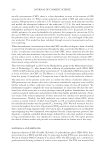
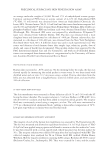
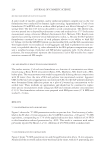
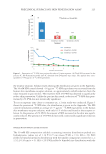
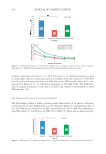
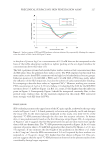
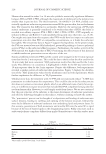
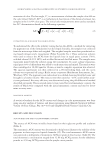
ANTHOCYANINS AS NATURAL ALTERNATIVES TO SYNTHETIC COLORS FOR LIPSTICK 237 saturation of color. The hue angle, h°, is a measurement of where the sample color falls on the color wheel. Delta E, ΔE*, is a mathematical description of the distance between two samples in the L*a*b* color space. The initial color measurements were used as standards for ΔE* determination based on the following equation: ΔE 2 2 2 * * * * * * 0 0 i i i0 L L a a b b ¯ ¡ ° ¢ ± (2) EXTRACTION OF ACNS FROM THE FO RMULATIONS To understand the effects the stability testing had on the ACNs, a method for extracting the pigments out of the formulations was developed. Initially, the samples were collected from the microscope slides and weighed. The weighed samples were then powderized us- ing liquid nitrogen and a tissuemeizer (Fisher Scientifi c Inc.). Three extraction solvents were used to extract the ACNs from the lipstick base in equal parts: acetone (70%), acidifi ed ethanol (0.01% HCl), and acidifi ed deionized distilled water. The samples were vigorously mixed with the solvents using the tissuemeizer. To cause a phase separation, equal parts (v/v) of chloroform was added to each extraction and mixed. The extracts were then centrifuged at 10,000 rpm for 10 min, or until a complete separation was achieved. The aqueous supernatant was then collected in a-250-ml boiling fl ask, and the excess solvent was evaporated off using a Büchi rotary evaporator (Brinkmann Instruments, Inc., Westbury, NY). The pigments were redissolved in acidifi ed deionized distilled water and brought to a known volume. The extracts were then stored at -20°C until further analy- sis was performed. Recovery effi ciency was determined using the pH-differential method described previously. The recovered extracts were tested for total monomeric content, the results of which were compared with the initial monomeric content and used to deter- mine recovery rates. STATISTICAL ANALYSIS A statistical analysis for the ACN content and changes in color measurements was done using one-way analysis of variance and linear regressions using Minitab Statistical Software Version 16 (State College, PA). (α = 0.05) and GraphPad Prism Version 6 (La Jolla, CA). RESULTS AND DISCUSSION ACN SOURCES AND THE TOTAL MONOMERIC CONTENT The sources of ACN were initially chosen based on their aglycone profi le and acylation (Table I). The monomeric ACN content was determined to help better illustrate the stability of the pigments in their respective lipstick formulas (25). The total monomeric ACN content was expressed as milligrams of monomeric ACN per gram of dried extract (Table II). The total monomeric concentration ranged from 32.96 mg ACN/g extract for the elderberry powder to 4.38 mg ACN/g extract for the purple carrot powder.

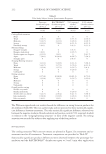
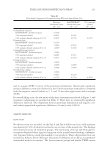
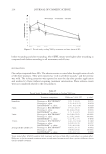
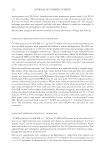
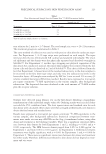
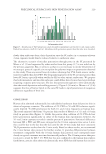
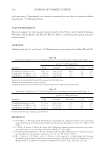
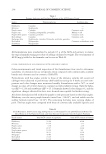
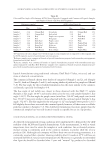
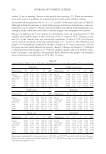
JOURNAL OF COSMETIC SCIENCE 238 All formulations were standardized to include 0.5 g of the ACN-rich extracts to mimic the typical manufacturing procedure of adding colorants by weight. The total amount of ACN (mg/g) added to the formulas can be seen in Table II. COLOR COMPARISON OF ACN-FORMULAS WITH REFERENCE SAMPLES Color measurements and visual inspection of the formulations were used to determine suitability of coloration for use in lipsticks when compared with commercially available brands and colorants used in cosmetics (Table III). Formulations with hue angles similar to those of the reference samples (all except red cabbage) were subjected to preliminary shelf-stability testing for 6 weeks at room tem- perature and color changes were monitored weekly. Formulations with a ΔE*, or total change in color, of 1 were chosen to continue on with stability testing. Only the hibis- cus (ΔE* = 12.8) and strawberry (ΔE* = 15.1) formulas showed color changes 1, and the signifi cant changes observed for these were deemed unacceptable for further testing. All chosen formulations fell within the purple to red spectrum based on their hue angles. Elderberry was the most purple formula (initial hue: 318.64°), and red radish was the reddest formula (initial hue: 14.34°). The remaining formulas were varying shades of pink. The hue angles were compared with those of commercially available lipsticks and Table I Primary Aglycones and Acylation Patterns of the ACN Sources Tested Source Primary aglycone Acylation type Elderberry Cyanidin — Hibiscus Delphinidin — Purple carrot Cyanidin Cinnamic acids Purple corn Cyanidin, pelargonidin, petunidin Malonic acids Purple sweet potato Cyanidin, peonidin Cinnamic acids Red cabbage Cyanidin Cinnamic acids Red grape skin Delphinidin, cyanidin, Petunidin, malvidin, peonidin, — Red radish Pelargonidin Cinnamic acid/malonic acids Strawberry Pelargonidin — Table II Total Monomeric ACN Content (mg ACN/g Extract) as Determined by the pH-Differential Method for Dried Extracts of the Pigments Tested, and Total Amount Incorporated into the Lipstick Formulas Dried extract Total ACN content of pigments Total ACN content in formula Elderberry 32.96 16.48 Hibiscus 14.24 7.12 Purple carrot 4.38 2.19 Purple corn 22.27 11.14 Purple sweet potato 19.20 9.6 Red cabbage 26.31 13.16 Red grape 29.86 14.93 Red radish 24.20 12.10 Strawberry 18.36 9.18
Purchased for the exclusive use of nofirst nolast (unknown)
From: SCC Media Library & Resource Center (library.scconline.org)