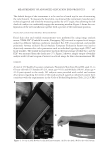
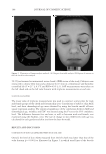
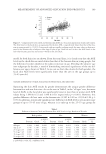
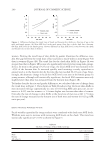
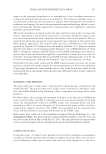
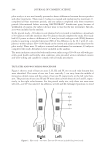
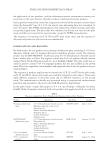
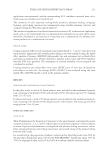
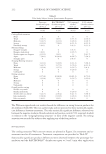
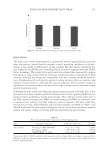
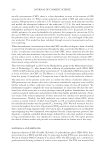
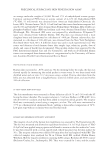
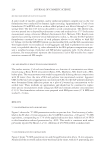
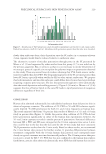
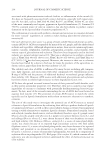
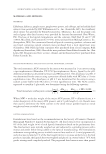
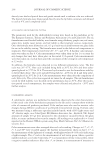
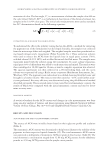
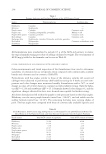
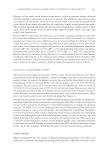
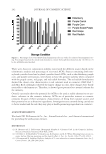
MEASUREMENT OF ADVANCED GLYCATION END-PRODUCTS 197 The default design of the instrument is to be used on a bench top for ease of measuring the volar forearm. To measure the facial skin, we obtained the instrument manufacturer’s technical approval and tilted the measuring surface by a 65° angle, thus allowing the left cheek of a subject to comfortably engage the measuring window. Figure 1 shows the con- fi guration of the new installation together with a picture of the traditional position. FACIAL SKIN COLOR AND WRINKLE MEASUREMENTS Facial skin color and wrinkle measurements were performed by using image analysis means. VISIA-CR® (Canfi eld Scientifi c, Parsippany, NJ) was used to capture facial images under fi ve different lighting conditions (standard, fl at, UV, cross polarized, and parallel polarized). Amway exclusive Facial Analysis Computer Evaluation System was used to objectively measure skin color parameters such as individual typology angle (ITA°) and facial wrinkles. The wrinkle measurement was from the frontal image of whole face, and the ITA° was measured from the cheek area (37). Figure 2 shows a sample output of wrinkle analysis result (A) and a region of interest on a facial image for skin color measurement (B). SUBJECTS A total of 239 healthy Caucasian volunteers, Fitzpatrick Skin Type II and III, aged 21- to 65-year old with 151 females (63.2%, mean age = 43.1) and 88 males (36.8%, mean age = 41.4) participated in the study. All subjects were provided with verbal and written descriptions regarding the intent of the study and each signed an informed consent form consistent with the requirements in the Code of Federal Regulations Title 21 (21 CFR) Fig ure 1. Set up of AGE Reader for skin AGE measurement. (A) For the cheek. (B) For the volar forearm.

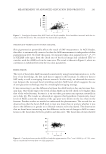
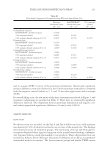
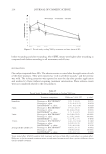
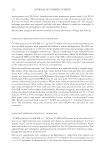
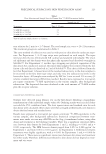
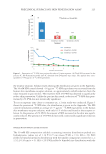
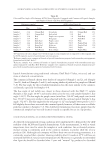
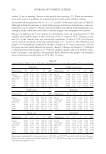
JOURNAL OF COSMETIC SCIENCE 198 50.25 [see footnote for institutional review board’s (IRB) review of the study]. Subjects were instructed to cleanse their skin and acclimatize for 15 min in a temperature and humidity controlled lab (T = 21° ± 0.5°C and RH = 45% ± 1). SAF measurements were taken on the left cheek and on the left volar forearm with triplicate measurements on each site. STATISTICAL ANALYSIS The mean value of triplicate measurements was used to construct scatter plots for male and female groups of the cheek and forearm skin sites. Correlations of subjects’ skin AGE level, and their chronological age were obtained by using the best-fi t model of least- square regression analysis. The statistical signifi cance of the correlations between AGE and chronological age, wrinkles, and ITA° was assessed using the F-test at the 95% confi dence level. The difference between face and arm, as well as between male and female, was examined using the Student t-test. The rate of change in skin AGE levels with age was calculated for each gender and skin site from the best-fi t model. RESULTS AND DISCUSSION COMPARISON OF SKIN AGE LEVELS BETWEEN FACE AND ARM Overall, the level of skin AGEs measured from the left cheek was lower than that of the volar forearm (p 0.001) as illustrated in Figure 3 in which trend lines of the best-fi t Figu re 2. Illustration of Image analysis methods. (A) Output of wrinkle analysis. (B) Region of interest on the left cheek for color analysis.
Purchased for the exclusive use of nofirst nolast (unknown)
From: SCC Media Library & Resource Center (library.scconline.org)