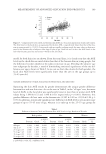
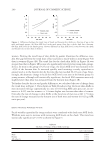
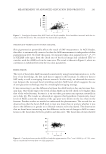
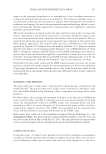
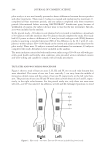
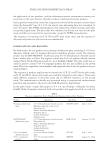
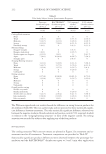
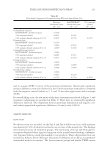
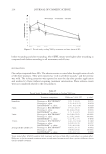
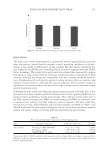
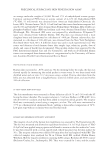
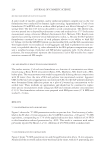
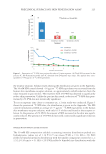
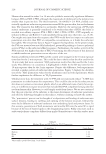
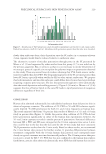
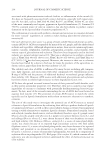
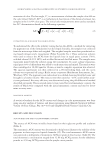
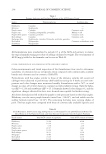
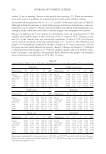
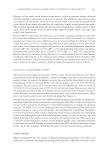
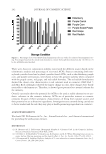
JOURNAL OF COSMETIC SCIENCE 214 before wounding and after wounding. The TEWL means were higher after wounding as compared with before wounding in all treatments and all sites. PIVOTAL STUDY One subject reported three AEs. The adverse events occurred after the application of each of the three products. They were reported as “itch in all three wounds,” and the severity was mild. The itching sensation was reported to start the day after product application and resolved 2 d later without requiring treatment intervention. These adverse events were not considered related to the test products. Figure 2. Pivotal study cooling VAS by treatment and time (mean ± SE). Table IV Pivotal Study Treatment Comparison on Cooling VAS Score Treatment comparison Differencea (95% CIa) p-valuea Immediate Prototype vs. BACTROBAN® 0.5 (-5.4, 6.3) 0.8711 Prototype vs. saline 5.5 (-0.4, 11.3) 0.0659 BACTROBAN® vs. saline 5.0 (-0.8, 10.8) 0.0928 3 min Prototype vs. BACTROBAN® 9.7 (2.7, 16.7) 0.0069 Prototype vs. saline 1s1.4 (4.4, 18.4) 0.0016 BACTROBAN® vs. saline 1.7 (-5.3, 8.7) 0.6323 5 min Prototype vs. BACTROBAN® 14.3 (8.4, 20.2) 0.0001 Prototype vs. saline 12.1 (6.2, 18.0) 0.0001 BACTROBAN® vs. saline -2.2 (-8.1, 3.7) 0.4645 15 min Prototype vs. BACTROBAN® 4.4 (-1.6, 10.4) 0.1482 Prototype vs. saline 6.4 (0.4, 12.4) 0.0357 BACTROBAN® vs. saline 2.0 (-4.0, 8.0) 0.5030 Average AUEC (AUEC/15) Prototype vs. BACTROBAN® 8.9 (4.3, 13.4) 0.0002 Prototype vs. saline 9.4 (4.9, 14.0) 0.0001 BACTROBAN® vs. saline 0.6 (-4.0, 5.1) 0.8006 a From mixed effect ANOVA analysis with treatment and site as fi xed effects and subject as random effect. Difference is the fi rst named treatment minus second named treatment such that a positive difference favors the fi rst named treatment.

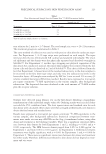
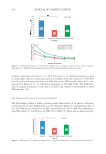
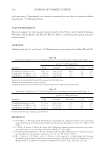
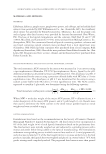
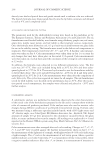
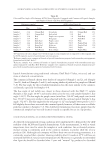
EVALUATE SKIN DISINFECTANT SPRAY 215 DISCUSSION The pilot study results demonstrated a signifi cantly more stinging/burning sensation from the positive control than the negative control providing confi dence in the reli- ability of this model to differentiate on this variable. The skin barrier disruption was also verifi ed by the TEWL after wounding which increased compared with the TEWL before wounding. The results of the pilot study also showed that numerically a higher proportion of subjects preferred the prototype disinfectant spray formulation to both controls, although the liking was comparable with the currently marketed formula- tion. A higher proportion of subjects reported cooling sensation relative to positive and negative control products. Although the sensory endpoints did not achieve statistical signifi cance, the observed effect size was used to help to design and calculate the sample size for the pivotal study. Following the pilot study and additional inhouse sensory research on healthy skin, it was decided to use a more sensitive and well-validated scale to detect potential differences in product sensory performance for the pivotal study. Three different rating scales such as the VAS, numerical rating scale (NRS), and verbal rating scale (VRS) are commonly used to measure pain, itching, and other subjective sensory responses. All these scales have been proven to have a high reliability and concurrent validity, and NRS-11, VRS-7, and VAS all worked well for pain intensity evaluation (18,19). To maintain consistency between clinical and sensory studies, a 100 mm VAS was selected for the pivotal study. Figure 3 . Pivotal study overall liking score by treatment (mean ± SE). Table V Pivotal Study Treatment Comparison on Overall Liking Score Time Treatment comparison Differencea (95% CIa) p-valuea After 15 min Prototype vs. BACTROBAN® 0.22 (-0.17, 0.62) 0.2663 Prototype vs. Saline 0.38 (-0.01, 0.78) 0.0561 BACTROBAN® vs. Saline 0.16 (-0.23, 0.56) 0.4169 a From mixed effect ANOVA analysis with treatment and site as fi xed effects and subject as random effect. Difference is the fi rst named treatment minus second named treatment such that a positive difference favors the fi rst named treatment.
Purchased for the exclusive use of nofirst nolast (unknown)
From: SCC Media Library & Resource Center (library.scconline.org)