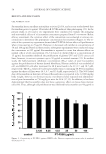
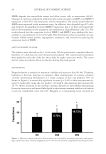
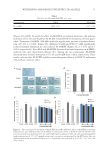
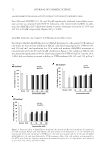
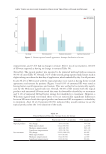
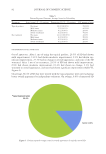
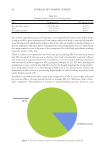
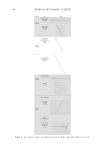
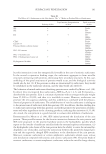
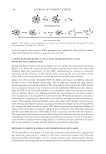
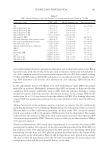
JOURNAL OF COSMETIC SCIENCE 82 IN DEPENDENT EVALUATOR DATA Ov erall appearance. Af ter 1 mo of using the topical product, 29.5% of SD had shown mild improvement, 34.1% had shown moderate improvement, 9.1% had shown sig- nifi cant improvement, 27.3% had no change in overall appearance, and none of the SD worsened. After 1 mo of no treatment, 29.5% of SD had shown mild improvement, 6.8% had shown moderate improvement, 61.4% had shown no change, 2.3% had worsened in overall appearance, and none had shown signifi cant improvement (Table VI, Figure 4). On average, 86.4% of SD that were treated with the topical product were rated as having better overall appearance by independent evaluators. On average, 0.0% of untreated SD Table V Patient-Reported Outcome, Average Scores for Tolerability Treatment Score (count), N = 22 patients Proportion (%), N = 22 patients 95% margin of error Topical product No issues 20/22 (90.9%) ±12.0% Mild issues 2/22 (9.1%) ±12.0% Moderate issues 0/22 (0.0%) ±0.0% Severe intolerance 0/22 (0.0%) ±0.0% No treatment No issues 22/22 (100.0%) ±0.0% Mild issues 0/22 (0.0%) ±0.0% Moderate issues 0/22 (0.0%) ±0.0% Severe intolerance 0/22 (0.0%) ±0.0% Figure 3. Patient reported a v erage scores for overall appearance of topically treated SD.

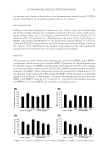
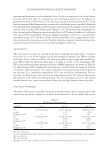
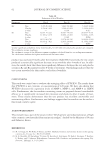
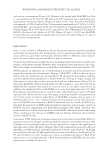
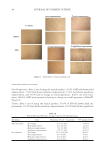
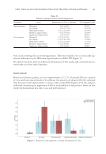
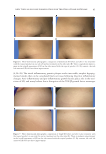
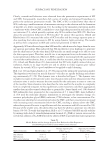
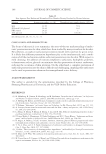
NEW TOPICAL SILICONE FORMULATION FOR TREATING STRIAE DISTENSAE 83 Table VI Evaluator Average Scores for Overall Appearance Treatment Score Proportion (%) N = 22 patients 95% margin of error Topical product Worsened 0/22 (0.0%) ±0.0% No change 6/22 (27.3%) ±13.2% Mild improvement 6.5/22 (29.5%) ±13.5% Moderate improvement 7.5/22 (34.1%) ±14.0% Signifi cant improvement 2/22 (9.1%) ±8.5% No treatment Worsened 0.5/22 (2.3%) ±4.4% No change 13.5/22 (61.4%) ±14.4% Mild improvement 6.5/22 (29.5%) ±13.5% Moderate improvement 1.5/22 (6.8%) ±7.4% Signifi cant improvement 0/22 (0.0%) ±0.0% Figure 4. Evaluator overall a p pearance: Average distribution of scores. were rated as having better overall appearance. This was verifi ed to be a statistically sig- nifi cant difference by the Wilcoxon signed-rank test (Table VII, Figure 5). No adverse reactions were recorded over the duration of this study, and no patient discon- tinued the use of the topical product. DI SCUSSION Ba sed on evaluator grading, we saw improvement in 72.7% of treated SD over a period of 1 mo with our topical product. In addition, the majority of subjects (86.4%) indicated that they saw mild improvement or more to their treated SD (Figures 6–8). No subjects indicated a worsening in appearance of SD or intolerability of the product. Based on this study, the formulation was safe to use and well tolerated.
Purchased for the exclusive use of nofirst nolast (unknown)
From: SCC Media Library & Resource Center (library.scconline.org)