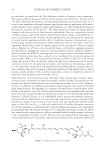
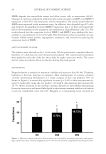
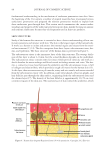
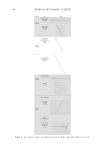
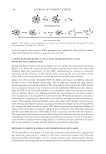
JOURNAL OF COSMETIC SCIENCE 96 fundamental understanding in the mechanism of surfactant penetration into skin. Since the beginning of the 21st century, a number of original researches have investigated various surfactants’ penetration and proposed the relevant penetration models to explain how these surfactants pass through skin. This review article summarizes the current under- standings and progress of the surfactant penetration into skin, mainly focusing on anionic and nonionic surfactants because they are frequently used in skin-care products. SKIN STRUCTURE Study of the human skin structure is essential to have a better understanding of how sur- factants penetrate and interact with skin. The skin is the largest organ of the human body. It works as a barrier to isolate and protect the internal organs and tissues from the exter- nal environment (13,14). The skin comprises three basic layers: subcutaneous tissue, der- mis, and epidermis. The basic structure of the human skin is presented in Figure 4. The subcutaneous tissue is the innermost layer of the skin structure. The average thick- ness of this layer is about 4–9 mm, but the actual thickness depends on the individual. The subcutaneous tissue contains some fat tissues which provide elasticity and work as a shock absorber for nerve endings and blood vessels including arteries and veins. The der- mis, a connective tissue layer between the epidermis and the subcutaneous tissue, is full of collagen and elastin fi bers, which provides a tough cell matrix for the human skin (15). In this layer, there are some arrector pili muscles, artery and vein vessels, and nerves extended from the subcutaneous tissue (16). In addition, some sweat glands, sebaceous glands, and hair follicles pass through the skin surface, originating from the subcutaneous layer and the dermis layer (17). The density of the hair follicles is approximately 10–70 on every centimeter square of the skin area. The outmost layer of skin termed the epidermis, which Figure 4. Human skin diagram (Reprinted from (16) with permission. Copyright 2012 Elsevier).

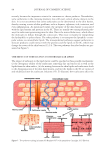
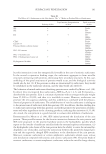
SURFACTANT PENETRATION 97 is around 0.05- to 1-mm thick, directly contacts with the outside environment (13). The epidermis consists of keratinocytes and other components such as Langerhans cells, mela- nocytes, and Merkel cells (18). The keratinocytes, as one of the most important compo- nents in the epidermis, form a protective barrier to keep the skin hydrated internally (19). The epidermis can be further divided into the viable epidermis, i.e., the inner layer, in- cluding the basal cell layer, spinous cell layer, and granular layer, and the nonviable epi- dermis, i.e., the outer layer, also called the stratum corneum (SC). The distinction among the various epidermis layers depends on the mature stages of the keratinocytes. From the basal cell layer (the innermost epidermis layer) to the SC (the outermost epidermis layer), the mature stages deepen, so do the density and fl attening of the cells. One of the popular models to describe the SC structure is termed as the “brick and mor- tar.” The “brick” represents the corneocytes (20) which are the most mature stage of the keratinocytes—the dead keratin-fi lled cells (21). The corneocytes are surrounded by the cell envelopes (protein shells). The cell envelopes serve as the protective layer for the cor- neocytes. Situated at the external of the cell envelopes is a layer of bonded lipids, which forms the cornifi ed lipid envelope with the protein shells (22). The external bonded lipids build compatibility between the corneocytes and the intercellular lipids (23). The natural moisturizing factor (NMF) is an important substance in the corneocytes which can only be found in the SC. NMFs are water-soluble compounds and are mainly composed of about 40% free amino acids, 12% of sodium salt of pyroglutamic acid, 12% of lactic acid salts, 7% of urea, and 18.5% of inorganic salts (4,24). NMFs occupy 5–30% of the total dry weight of the SC, and their quantity has an infl uence on the degree of skin dryness (25,26). The “mortar” consists of two parts: one is the intercellular lipids, which is mainly made up of approximately 50% of ceramides (CERs), 15% of free fatty acids, 25% of cholesterol (CHOL), and 10% of CHOL esters (4). The intercellular lipids play an impor- tant role in maintaining the skin structure (4,20). Lipid matrix exists in both the crystal- line state and the liquid crystalline state (27,28). Liquid crystalline is the state after the substance melted or dissolved in solvents. It is the middle phase between the liquid and crystal, which loses the rigidity of solid substances and has the fl uidity of liquid (29). Because of the fl uid nature, the lipids in the liquid crystalline state are relatively perme- able. Furthermore, the solid lipid crystalline states mainly consist of two phases: the or- thorhombic (OR) and the hexagonal (HEX) phases. Their main function is to ensure the integrity of the skin barrier structure (30). The OR phase is considered as the most solid structure among the three structures (OR/HEX/liquid crystalline state), whereas the liq- uid crystalline state is the most fl uid (22). The other part of the “mortar” is the corneodesmosomes, which are proteins connecting the corneocytes together, providing strength for the skin structure (31). Consequently, the coexistence of the lipid matrix and the corneodesmosome proteins serves as an impor- tant factor that enables the SC to act as the tight barrier against the penetration of the external stimulus and other harmful substances (32). Windsor and Burch fi rst discovered that the skin barrier is located in the SC and its stability is directly linked with the states of the lipids and the proteins in the SC (23). THE IMPACT OF SURFACTANTS TO SKIN With the constant upgrade of skin-cleansing formulations, the function of the cleansers is not just limited to dirt removal. The mild cleansing and the skin feel after moisturizing
Purchased for the exclusive use of nofirst nolast (unknown)
From: SCC Media Library & Resource Center (library.scconline.org)