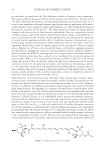
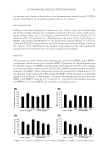
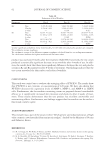
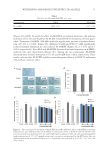
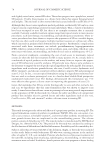
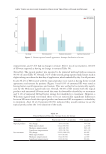
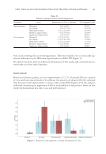
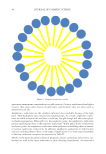
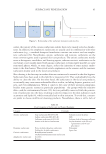
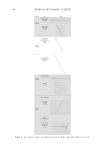
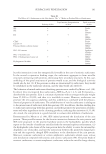
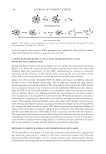
JOURNAL OF COSMETIC SCIENCE 94 quaternary ammonium compounds are not pH sensitive. Cationic surfactants show higher toxicity than most other classes of surfactants, and therefore they are often used as preservatives (9,10). Amphoteric surfactants are the smallest surfactant class probably because of the high price. Their hydrophilic part contains two charged groups. As a result, amphoteric surfac- tants are stable in both acidic and basic conditions, but pH change will affect their phys- icochemical properties. When pH is at the isoelectric point, the amphoteric surfactants possess similar properties as the nonionic surfactants. When pH is above or below the isoelectric point, the amphoteric surfactants show properties resembling those of anionic or cationic surfactants, respectively. In addition, amphoteric surfactants are mild to skin and eyes, enabling them to have a wide range of applications (11). Some typical examples of the four surfactant categories are presented in Table II. Thanks to the particular physicochemical properties, anionic surfactants and nonionic sur- factants are used as the main surfactants in skin-cleansing formulations. As mentioned Figure 2. Diagram of surfactant micelle.

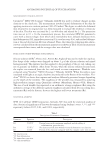
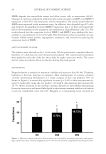
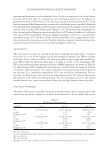
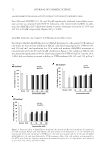
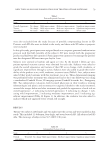
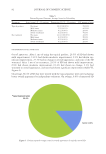
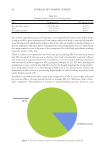
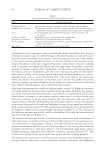
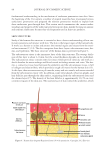
SURFACTANT PENETRATION 95 earlier, the toxicity of the cationic surfactants enables them to be mainly served as disinfec- tants. In addition, the amphoteric surfactants are usually used in combination with other surfactants (e.g., a standard shampoo formulation contains one anionic and one ampho- teric surfactant ( 6)). Nevertheless, anionic surfactants and nonionic surfactants are the most common agents used in general skin-care products. The anionic surfactants mainly serve as detergents, emulsifi ers, and foaming agents, whereas nonionic surfactants can be used alone or are usually mixed with anionic surfactants to form mixed micelles or some structured phases, which, to some degree, reduce the irritation of some anionic surfac- tants to the skin barrier. This review article emphasizes on the anionic and the nonionic surfactants mainly used in the facial care products. Skin cleaning is the fi rst step in modern skincare routines and is essential to the skin hygiene. Surfactants have been used in this fi eld for a long period (2). They undoubtedly have the ability to clean the skin. On the other hand, the surfactants in the facial care products, occasionally, may cause some undesirable effects to skin, including dryness, pruritus, red- ness, and even infl ammation. When it comes to the cause of these irritation symptoms, besides some genetic reasons in particular populations—the groups with the sensitive skin—and the environmental factors (12), they are probably connected with the penetra- tion of surfactants into the skin, resulting in adverse impacts to the skin substances such as proteins and lipids (4), which eventually lead to skin irritation. To avoid this, consum- ers prefer to choose mild facial cleansing products. Nevertheless, there is still a lack of Figure 3. Relationship of the surfactant monomers and micelles. Table II Four Categories of Surfactants and Typical Examples Category Examples Anionic surfactants Soap surfactants (RCOO¯)n M Sodium stearoyl lactylate Sulfate surfactants RO-SO3-M SDS Sulfonate surfactants R-SO3-M Sodium dodecyl benzene sulfonate Amino acid–derived surfactants Acylated amino acids (N-acyl l-glutamates and N-acyl glycinates) Nonionic surfactants Fatty alcohol ethoxylate surfactants Poloxamer Polyhydric alcohols surfactants Span class Cationic surfactants Benzalkonium bromide Dialkyldimethylammonium surfactants Amphoteric surfactants Lecithin Betaine
Purchased for the exclusive use of nofirst nolast (unknown)
From: SCC Media Library & Resource Center (library.scconline.org)