JOURNAL OF COSMETIC SCIENCE 482 sensory response, whereas mixed regime lubrication performance is important for in-use sensory performance (2). Viscosity plays an important role in both of these. Particulate lubricants, such as mineral oils containing dispersed solids are extensively used in indus- trial applications. It has also been shown that the tribological properties of cosmetic products affect its performance (3,4) and skin feel (5–7). An understanding of the rheology is critical also for product processing where a knowledge of the product rheology dictates certain processing parameters such as pumping, pouring, and mixing. Product application and spreadability are also highly governed by product rheology (8). In addition to the importance of the rheology of surfactant mesophases and emulsions found in liquid and semisolid cosmetic products, the rheology of the foams gen- erated during in-use conditions plays a critical role in sensory performance of products such as facial cleansers, body washes, and shampoos. Foams are a manifestation of the surface activity of the surfactants (9), which is itself related to the rheology of the foam itself. It is also important to note that the demands of the present-day consumers have shifted dramatically from high-performing, aesthetically pleasing products to products that are eco-friendly, use ingredients from sustainable sources, and are tailored to individual needs. Another factor that is driving the cosmetic industry to a more sustainable path is laws and regulations placed by certain governments (10). This new trend requires an under- standing of the rheology of sustainable ingredients. The utilization of automated formulation platforms across the cosmetic industry enables one to perform complex formulation workfl ows in a fully automated manner. Its advantages over manual formulation include, but are not limited to, continuous real-time monitor- ing and control of all formulation parameters, including internal and jacket temperature, shear rate and viscosity, scraping speed, refl ux and pH in an inert atmosphere, if desired, and automatic logging of all data. Its overall effi ciency brings about a decrease in cost per sample up to 90% (8). Automated formulation platforms provide the fl exible mode of operation and production necessary to meet the growing demands of individualization, personalization, and mass customization. These platforms can be used heavily in estab- lishing an understanding of rheology and controlling formulation design rules in a much faster and effective manner. APPLICATIONS OF RHEOLOGY IN COSMETIC PRODUCTS SURFACTANT MESOPHASE: BODY WASHES, SHAMPOOS, AND HAIR CONDITIONERS Surfactant mesophases have a huge impact on the rheology of products such as body washes, shampoos, and hair conditioners (8,11). Surfactants possess self-assembly properties in solution when the critical micelle concentration (CMC) is surpassed. Surfactants self- assemble to form various meso-structures that dictate the formulations’ microstructure and various rheological properties (12). The formation of micelles in aqueous solution is generally viewed as a compromise between the tendency for alkyl chains to avoid ener- getically unfavorable contacts with water, and the desire for the hydrophilic parts to maintain contact with the aqueous environment. A thermodynamic description of the process of micelle formation includes both electrostatic and hydrophobic contributions to the overall Gibbs energy of the system (13). There are multiple mesophases that can be formed by surfactant systems, such as wormlike micelles and lamellar gel phases.

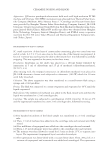
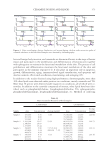
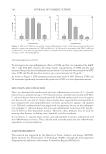
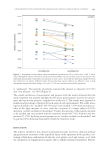
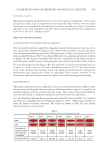
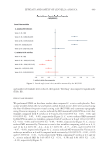
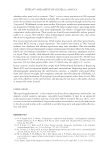
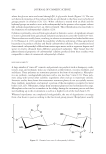
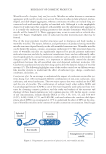
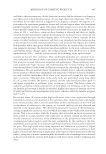
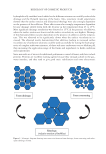
RHEOLOGY OF COSMETIC PRODUCTS 483 Wormlike micelles: shampoos, body, and face washes . Micelles are either discrete or continuous aggregates with overall circular cross section. Discrete micelles include spherical, prolate- shaped, and disk-shaped aggregates, whereas continuous micelles can include long un- connected rods with variable rigidity or branched rods. Although it is the amphiphilic character of surfactants that promotes self-assembly into the aforementioned aggregates, it is actually the surfactant packing parameter that mainly determines which kind of micelle will be formed (14). These aggregates may occur in water-rich or oil-rich solu- tions (15). Figure 1 highlights some of surfactant micellar microstructures that may be formed. One of the most prevalent micellar structures used in shampoos and body washes is wormlike micelles. The nature, behavior, and performance of products having wormlike micelle structures depend heavily on the self-assembled nanostructure. Wormlike micelles can be formed by anionic, cationic, or nonionic surfactants (15). The structural character- istics of wormlike micelles are signifi cantly impacted by specifi c primary surfactants’ molecular structure and also by surfactant/cosurfactant choice and are additionally infl u- enced signifi cantly by various formulation conditions such as addition of electrolyte and changes in pH. In these systems, it is important to additionally control the dynamic equilibrium between the self-assembled state and dispersed surfactant molecules (16). Cosolvents/cosurfactants have also been long used to alter the dynamic balance of micellar systems (17). The following highlights some of the studies carried out on different worm- like micellar systems to understand the effect of surfactant type, charge, cosurfactant, cosolvents, electrolyte, etc. Cosurfactant effect. In an attempt to understand the impact of cosolvents on micellar sys- tems, Jiang et al. (18) investigated different combinations of non-ionic surfactant, ionic surfactant, and mixed surfactants. The two major aspects that were studied are the CMC and the size of micelles. The combination of sodium lauryl ether sulfate (SLES) and Cocamidopropyl betaine (CAPB) is one of the most frequently used surfactant base mix- tures for cleansing cosmetic products, and the study and analysis of the structure and rheology of these binary mixtures are very common practice (19). In this report, a series of salt concentrations, sodium chloride (NaCl) at 3.01, 3.56, 4.01, 4.5, and 5.00 wt% (0.515, 0.609, 0.686, 0.770, and 0.856 M), with and without the cosolvent diol dipro- pylene glycol (DPG) was investigated at 25°C to understand the effect of DPG on the struc- ture of wormlike micelles in the context of variable counterion concentration. Small-angle Figure 1. Diagrammatic presentation of spherical, rod, and wormlike micelles.
Purchased for the exclusive use of nofirst nolast (unknown)
From: SCC Media Library & Resource Center (library.scconline.org)