JOURNAL OF COSMETIC SCIENCE 484 neutron scattering (SANS) was used to understand microstructural changes. The viscosity of wormlike micelle solutions is strongly dependent on the contour length, and the re- sults show that the addition of DPG has a dramatic impact on the viscoelastic properties of wormlike micelles solutions because of a dramatic reduction in the contour length as- sociated with the lower dielectric constant media. The decreased dielectric constant of the solvent with the addition of DPG may increase the electrostatic interaction between head groups and lead to the observed smaller micelle radii and dramatic reduction in contour length of the micelles. Electrolyte effect. NaCl induces an electrostatic screening effect on surfactant mixtures, which imparts the rheology of the solution by elongating the micelles formed. Amin et al. (19) revealed structural properties of micelles using dynamic light scattering (DLS), microrheology, and Raman spectroscopy. In this study, Raman spectroscopy was com- bined with DLS–optical microrheology to investigate the impact of ionic strength on the molecular structure and associated changes in the microstructure and rheology of a mix- ture of anionic SLES and zwitterionic CAPB surfactants in solution. It is reported that DLS measurements and Raman spectroscopy were performed on surfactant mixtures in water containing 14% w/w sodium lauryl monoether sulfate (SLES), 2% w/w CAPB, and varying concentrations of NaCl, ranging from 73 to 500 mM. To perform the microrheo- logical measurements, 900-nm polystyrene probe particles were added to obtain a fi nal concentration of 0.15% w/w in the surfactant mixtures and 73 mM NaCl because of commercial preparation of CAPB. Sample aliquots (~20 μL) for Raman work were placed into a titanium cuvette with 120-μm-thick quartz windows and positioned in a temper- ature-stabilized sample holder. For the microrheological work, 1-mL aliquots were placed into a disposable polystyrene cuvette and placed in the same sample holder. It was also reported that all data were collected at 25°C. The effect of electrostatic screening on the rheological properties of anionic SLES and zwitterionic CAPB surfactant mixtures was studied by modulating the NaCl concentration. It was reported that the viscosity of the surfactant mixture increased with NaCl concentration to a maximum level and then de- creased. This phenomenon can be attributed to either a conformational change to a branched micellar network or to a reversal to short cylindrical micelles. To further pro- vide insights into this effect and the exact microstructure differences, Raman spectros- copy was carried out which highlighted that the Raman band at 170 cm-1 correlates well with the NaCl-induced viscosity changes however, the values are different at low and high NaCl values. This indicated that although both low and high NaCl values exhibit low viscosity, the microstructures at these two extreme levels are different. State of ionization or pH change. Under standing how pH and pH change impact wormlike micelle properties and ultimately affect and determine the fi nal rheology of a cosmetic formulation is highly important. Silva et al. (20) did show how to tailor the structure and rheology of aqueous solutions of the cationic surfactant cetyltrimethylammonium tosyl- ate (CTAT) by adding potassium phthalic acid (PPA) or by changing pH. It was reported that the addition of PPA to CTAT solutions greatly increases the viscosity of the solution. It is important to state that the addition of PPA to the mixture promotes a transition from spherical micelles to rod-like micelles and, eventually, to elongated and fl exible wormlike micelles at much lower surfactant concentration. The interaction between both species is maximum at a determined PPA concentration, after which a gradual reduction in viscosity and shear thinning is produced this is a phenomenon also observed in surfac- tant solutions where NaCl is added to build viscosity (21). The initial pH values for all

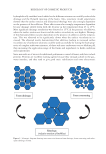
RHEOLOGY OF COSMETIC PRODUCTS 485 CTAT solutions evaluated ranged between 6.9 and 7.4, and any increase in the solution pH leads to a progressive decrease in the low-shear rate viscosities. Move toward sustainability: Biosurfactant addition effect. Perso nal care and cosmetic compa- nies are increasingly moving toward enhanced sustainability. This implies substituting synthetic surfactants with more biodegradable alternatives such as biosurfactants. This substitution will require gaining an understanding of how biosurfactants will self-assemble and impact on the traditional surfactants’ self-assembly process. Xu and Amin (21) car- ried out a microrheological study of ternary surfactant–biosurfactant mixtures. This re- port explores the rheological impact of rhamnolipid biosurfactant [mono-/di-rhamnolipid mixture concentrated clarifi ed broth (CCB)] on an SLES and CAPB mixed surfactant system. In this report, the evolution in the wormlike micellar structure in the SLES/ CAPB system is explored when a rhamnolipid biosurfactant is introduced. Techniques used in this study include mechanical rheometry and microrheometry (diffusive wave spectroscopy). The biosurfactant mixture explored CCB has a rhamnolipid concentration of 49.7% in which the mono- to di-rhamnolipid ratio is 9:13. CCB is the target of inves- tigation for all three experiments. It was found that the SLES/CAPB/CCB system had a Maxwellian-type response which indicates the formation of wormlike micelles. The vis- cosity of the SLES/CAPB system was signifi cantly reduced on just substituting 2% of SLES with the biosurfactant CCB. Microrheometry measurements allowed for the extrac- tion of microstructural parameters, and it was observed that the contour length of worm- like micelle formed by SLES/CAPB decreased from 445.8 to 88.37 nm with only 2 wt% addition of CCB. Change in electrostatic interactions obtained through changes in pH allowed for a rebuilding of the viscosity through re-formation of elongated wormlike micelles. This work identifi ed understandings of microstructure–rheology linkages in complex biosurfactant/surfactant mixtures that can be used as a guideline for future ap- plications of rhamnolipids in cosmetics and personal care products. Catio nic wormlike micelles. The m ost common type of wormlike micelle stems from anionic surfactants as discussed previously. Cationic surfactants also form wormlike micelles in solu- tion. Raghavan and Kaler (22) investigated viscoelastic properties of unsaturated cationic surfactants, two C22 surfactants with a cis unsaturation at the 13-carbon position: erucyl bis(hydroxyethyl)methylammonium chloride (EHAC) and erucyl trimethylammonium chloride . These two surfactants were studied in the presence of sodium salicylate (NaSal) or NaCl. Previous reports and studies of similar surfactants with long, monounsaturated tails mostly focused on their drag-reducing ability where they effectively reduced drag at ele- vated (higher) temperatures when compared with their saturated counterparts (23,24). Solutions of these C22 surfactants also show complex phase tilized in the presence of salt (22). It is reported that EHAC/NaCl solutions phase separate at high salt content (ca. 2 M), whereas EHAC/NaSal solutions phase separate beyond a certain molar ratio of salt to surfac- tant. These differences are connected to the fact that the Cl- counterion does not penetrate the surfactant aggregate, whereas the hydrophobic salicylate counterions can attach be- tween the charged head groups, thus screening electrostatic repulsions and promoting mi- cellar growth even at low salt concentrations (25). Giant wormlike micelles are reported to be formed by the surfactant EHAC on addition of NaCl. This makes it an ideal surfactant for rheology-control applications. The contour length at elevated temperatures of 60°C was estimated to be similar to that of other micellar systems at room temperature. Thus, the solution viscosity was extremely high, even at high temperatures of 90°C. Furthermore, a nonmonotonic dependence of viscosity on temperature was reported.
Purchased for the exclusive use of nofirst nolast (unknown)
From: SCC Media Library & Resource Center (library.scconline.org)