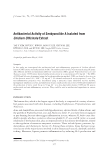
J. Cosmet. Sci., 71, 377–383 (November/December 2020) 377 Antibacterial Activity of Senkyunolide A Isolated from Cnidium Offi cinale Extract TAE Y. KIM, HYUK C. KWON, SANG Y. LEE, CHUN M. LEE, KWANG S. LEE, and KUN K. LEE , Songpa R&D Center, Coreana Cosmetic Co., Ltd., Chenan-si, Chungcheognam-do 31041, South Korea Accepted for publication May 8, 2020. Synopsis In this study, we investigated the antibacterial and anti-infl ammatory properties of Cnidium offi cinale hexane (COH) extract and senkyunolide A (SA). The antibacterial activities were measured using the paper disk diffusion method and minimum inhibitory concentration (MIC) against Propionibacterium acnes and Malassezia furfur. COH extract showed antibacterial activity at a concentration of 50 mg ml-1. The MICs of COH and SA were determined using the broth microdilution method. COH was found to be active on all the bacteria tested (10 d MIC d 20 mg ml-1). SA showed antibacterial activity against P. acnes. The anti-infl ammatory properties were determined using a pancreatic lipase inhibition activity method, lipoxygenase inhibition activity, and inhibition of nitric oxide production activity. COH and SA inhibited the production of nitric oxide by up to 50 μg ml-1 in a dose-dependent manner. COH and SA possess antibacterial and anti-infl ammatory activities. They could be used as antibacterial ingredients in various industries. INTRODUC T ION The huma n skin, which is the largest organ of the body, is composed of a variety of micro- bial genera associated with skin diseases, including Staphylococcus, Propionibacterium, and Malassezia. Acne and dandruff are associated with hyperkeratosis, elevated levels of skin sebum, and the growth of Propionibacterium acnes and Malassezia furfur. P. acnes have been recognized as pus-forming bacteria that trigger infl ammation in acne, whereas M. furfur cause dan- druff in people who have overactive sebaceous glands (1). P. acnes and M. furfur, as a usual inhabitant of the human skin, play an important role in skin disease development, related to the regulation of numerous enzymatic activities. These include lipases, proteases, hy- aluronidases, and chemotactic factors (2). Among these enzymes, lipase has been recog- nized as one of the major factors involved in skin diseases such as acne, dandruff, and skin itching. Moreover, lipases promote infl ammation by inducing IL-6 production and Address all correspondence to Tae Y. Kim at taeyang8653@coreana.co.kr.
Purchased for the exclusive use of nofirst nolast (unknown)
From: SCC Media Library & Resource Center (library.scconline.org)