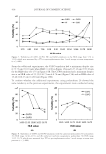
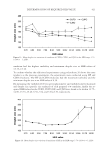
JOURNAL OF COSMETIC SCIENCE 374 skin SC include surgical resection, tape stripping, cyanoacrylate stripping, mechanical scraping, sanding, and organic solvent dissolution methods. Compared with other collec- tion methods, the cyanoacrylate stripping method selected in this study is simple, repro- ducible, and can extract lipids from the skin to the greatest extent in a noninvasive manner. In this study, HPLC was used with high-resolution MS and LipidSearch software to determine ceramide constituents in the skin and blood. The method is simple, rapid, has ultrahigh resolution, good stability, high sensitivity, and can be used for qualitative and relative quantitative analysis of ceramide in samples. Ceramide is les s in the epidermis and diffi cult to extract from the skin. Because of the complexity of various ingredients, it is diffi cult for the cosmetics industry to mass pro- duce them. A ceramide analog (pseudoceramide) was artifi cially synthesized (16). However, how to effectively produce pseudoceramides that are very similar to natural ceramides still needs further research. This study provides a methodological basis for the detection and extraction of ceramide content. The application of high-throughput liquid MS can thoroughly detect and explore the composition and proportion of each ceramide content and also explore the effect of different types of ceramide on the skin barrier. This research has great signifi cance for the future development of skin care products. According to th e number of C atoms, ceramides are divided into long-chain (C chain 40) and short-chain (C chain d 40) ceramides. Our research shows that long-chain ceramide is the main type in the skin, mainly C42H85NO3. The long-chain and short-chain ceramides were measured in the blood at the same time, and the long-chain ceramides were signifi - cantly higher in the blood than in the skin, which may be related to factors such as vascular endothelial cell metabolism or tissue density. There are different distributions of ceramide in different tissues of the human body. The long-chain ceramides present in the skin SC help maintain the skin barrier, reduce water loss, and participate in adhesion. The blood is rich in short-chain ceramides, induces apoptosis, and participates in processes such as differen- tiation and aging (17,18). It can be used as a new type of exogenous agonist to regulate tissue metabolism together with cytokines (19). Long-chain ceramide is part of intracellular signal transduction and induces cell migration (20), which may have synergistic effects with short-chain ceramides, which needs to be studied further. Of course, this e xperiment still had some limitations: the sample size is small, only the skin on the inside of the forearm is selected, the age range of volunteers is relatively small, and there may be some one-sidedness. In the future, ceramide contents of different indi- vidual ages and different body parts need to be further studied. It is also important to analyze differences in ceramide from different ethnic groups or any skin disease. The study used li quid chromatography mass spectrometer to effi ciently detect ceramides in the skin and blood and compared the types and contents of ceramide, which provided an effective method and basis for exploring the metabolic changes of ceramide in the skin barrier and various systemic diseases. ACKNOWLEDGMENTS This study was entirely funded by a grant from the Science &Technology Action Plans for the Prevention and Treatment of Major Diseases. We thank the Thermo Fisher Scientifi c (China) Limited for assisting with the experiment and data processing. We appreciate language editing assistance provided by DerMEDit (www.DerMEDit.com).

CERAMIDE IN SKIN AND BLOOD 375 REFERENCES (1) J . van Smede n and J. A. Bouwstra, Stratum corneum lipids: their role for the skin barrier function in healthy subjects and atopic dermatitis patients, Curr. Probl. Dermatol., 49, 8–26 (2016). (2) W. Boiten, R . Helder, J. van Smeden, and J. Bouwstra, Selectivity in cornifi ed envelop binding of ceramides in human skin and the role of LXR inactivation on ceramide binding, Biochim. Biophys. Acta Mol. Cell Biol. Lipids, 1864, 1206–1213 (2019). (3) M. J. Choi a n d H. I. Maibach, Role of ceramides in barrier function of healthy and diseased skin, Am. J. Clin. Dermatol., 6, 215–223 (2005). (4) H. C. Huang a nd T. M. Chang, Ceramide 1 and ceramide 3 act synergistically on skin hydration and the transepidermal water loss of sodium lauryl sulfate-irritated skin, Int. J. Dermatol., 47, 812–819 (2008). (5) Z. D. Draelo s , Modern moisturizer myths, misconceptions, and truths, Cutis, 91, 308–314 (2013). (6) M. Puviani, F . Agostinis, and M. Milani, Barrier repair therapy for facial atopic eczema with a non- steroidal emollient cream containing rhamnosoft, ceramides and iso-leucine. A six-case report series, Minerva Pediatr., 66, 307–311 (2014). (7) D. L. Bisset t , Common cosmeceuticals, Clin. Dermatol., 27, 435–445 (2009). (8) M. Saleem, N . Herrmann, A. Dinoff, M. M. Mielke, P. I. Oh, P. Shammi, X. Cao, S. L. V. Venkata, N. Haughey, and K. L. Lanctôt, A lipidomics approach to assess the association between plasma sphingolipids and verbal memory performance in coronary artery disease patients undertaking car- diac rehabilitation: a C18:0 signature for cognitive response to exercise, J Alzheimers Dis., 60, 829–841 (2017). (9) B. J. Scholte, H. H o rati, M. Veltman, R. J. Vreeken, L. W. Garratt, H. A. W. M. Tiddens, H. M. Janssens, S. M. Stick, and Australian Respiratory Early Surveillance Team for Cystic Fibrosis (AREST CF), Oxidative stress and abnormal bioactive lipids in early cystic fi brosis lung disease, J. Cyst. Fibros., 18, 781–789 (2019). (10) M. M. Mielke, N. J . Haughey, D. Han, Y. An, V. V. R. Bandaru, C. G. Lyketsos, L. Ferrucci, and S. M. Resnick, The association between plasma ceramides and sphingomyelins and risk of Alzheimer’s disease differs by sex and APOE in the baltimore longitudinal study of aging, J Alzheimers Dis., 60, 819–828 (2017). (11) B. J. Pettus, B. J . Kroesen, Z. M. Szulc, A. Bielawska, J. Bielawski, Y. A. Hannun, and M. Busman, Quantitative measurement of different ceramide species from crude cellular extracts by normal-phase high-performance liquid chromatography coupled to atmospheric pressure ionization mass spectrome- try, Rapid Commun. Mass Spectrom., 18, 577–583 (2004). (12) Z. X. Jia, J. L. Z h ang, C. P. Shen, and L. Ma, Profi le and quantifi cation of human stratum corneum ce- ramides by normal-phase liquid chromatography coupled with dynamic multiple reaction monitoring of mass spectrometry: development of targeted lipidomic method and application to human stratum corneum of different age groups, Anal. Bioanal. Chem., 408, 6623–6636 (2016). (13) L. Cui, Y. Jia, Z. W. Cheng, Y. Gao, G. L. Zhang, J. Y. Li, and C. F. He, Advancements in the maintenance of skin barrier/skin lipid composition and the involvement of metabolic enzymes, J. Cosmet. Dermatol., 15, 549–558 (2016). (14) Q. Wang, X. H. Liu , X. F. Jia, L. Y. Song, Y. Jia, and C. F. He, Progress in research work with respect to analysis method for composition of skin lipids, China Surfact. Deterg. Cosmet., 44, 226–230 (2014). (15) Y. Masukawa, H. Narita, E. Shimizu, N. Kondo, Y. Sugai, T. Oba, R. Homma, J. Ishikawa, Y. Takagi, T. Kitahara, Y. Takema, and K. Kita, Characterization of overall ceramide species in human stratum corneum, J. Lipid Res., 49, 1466–1476 (2008). (16) H. Iwai, J. Fukasawa, and T. Suzuki, A liquid crystal application in skin care cosmetics, Int. J. Cosmet. Sci., 20, 87–102 (1998). (17) T. Sassa, S. Suto, Y. Okayasu, and A. Kihara, A shift in sphingolipid composition from C24 to C16 increases susceptibility to apoptosis in HeLa cells, Biochim. Biophys. Acta, 1821, 1031–1037 (2012). (18) S. M. Hammad, J. S. Pierce, F. Soodavar, K. J. Smith, M. M. Al Gadban, B. Rembiesa, R. L. Klein, Y. A. Hannun, J. Bielawski, and A. Bielawska, Blood sphingolipidomics in healthy humans: impact of sample collection methodology, J. Lipid Res., 51, 3074–3087 (2010). (19) L. M. Frago, C. Pañeda, I. Fabregat, and I. Varela-Nieto, Short-chain ceramide regulates hepatic methionine adenosyltransferase expression, J. Hepatol., 34, 192–201 (2001). (20) D. Wimalachandra, J. X. Yang, L. Zhu, E. Tan, H. Asada, J. Y. K. Chan, and Y. H. Lee, Long-chain glucosylceramides crosstalk with LYN mediates endometrial cell migration, Biochim. Biophys. Acta Mol. Cell Biol. Lipids, 1863, 71–80 (2018).
Purchased for the exclusive use of nofirst nolast (unknown)
From: SCC Media Library & Resource Center (library.scconline.org)