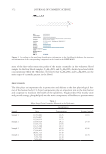
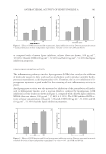
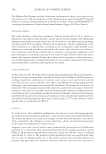
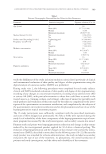
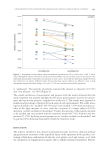
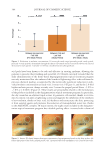
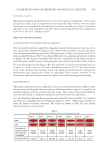
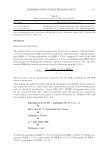
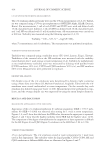
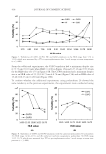
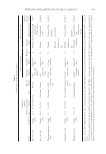
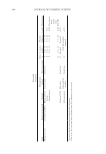
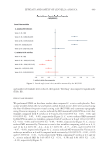
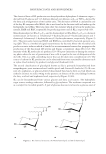
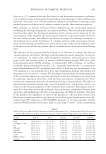
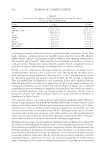
JOURNAL OF COSMETIC SCIENCE 380 (NDGA), and enzyme (100 μl, 500 U ml-1 in Tris-HCl buffer). Samples and NDGA were added as dimethyl sulphoxide solutions. After incubation of the test solution for 5 min, 100 μl of linoleic acid was added, and the change in the absorbance of the solution was measured after 60 s at 234 nm. CELL VIABILITY AND DETERMINATION OF ANTI -INFLAMMATORY ACTIVITY The cell viability assay was carried out by using 3-(4,5-dimethylthiazol-2-yl)-2,5-diphen- yltetrazolium bromide (MTT). RAW 264.7 cells were treated with various doses of S. baicalensis extract (1, 10, 100, 500 μg ml-1). To confi rm the anti-infl ammatory properties, we examined the inhibitory effects on the production of lipopolysaccharide (LPS)-induced NO in RAW 264.7 cells. NO levels were measured by the Griess reaction. After cells (5 × 10⁵ cells ml-1) were stimulated in 24 wells for 24 h, 100 μl of each cultured medium was mixed with the same volume of Griess reagent (1% sulfanilamide/0.1% N-(1-naphthyl)- ethylenediamine dihydrochloride/2.5% H3PO4). NO concentration was determined by measuring the absorbance at 540 nm with a Vmax 96-well microplate spectrophotometer. The NO2 concentration was calculated with reference to a standard curve of NaNO2 gener- ated by known concentrations. All experiments were carried out in triplicate. RESULT ANTIBACTERIAL ACTIVITY The disc diffusio n assay and broth dilution met hod were used to determine the antibacte- rial activity and the MIC of the COH against two bacterial strains. COH exhibited anti- bacterial activities (MIC 15.33 ± 2.11–42.33 ± 2.11 mg ml-1) against P. acnes and M. furfur (Table 1). PANCREATIC LIPASE INHIBITION ACTIVITY Lipase is glyc erol ester hydrolase (E.C. 3.1.1.) tha t acts on acylglycerols to liberate fatty acids and glycerol. Several lipases produced by microbial pathogens play an important role in skin diseases (11). The bacterial lipase is an important factor in the pathogenesis of skin diseases such as acne, dandruff, and atopic dermatitis. They can induce severe infl ammatory reactions (12). The lipase inhibition activity results are shown in Figure 1 Table I Antibacterial Activity of COH Fraction and Senkyunolide A against Tes t Bacteria Sample Paper disk test Bacteria (clear zone size, mm) Bacteria (MIC, mg ml-1) Concentration (mg ml-1) P. acnes M. furfur P. acnes M. furfur COH 50 14.6 13.3 15.33 ± 2.11 30 SA 50 23.5 ND 5.30 ± 0.47 ND ND: not detected .

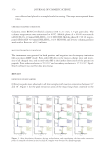
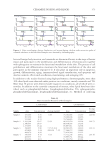
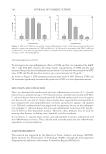
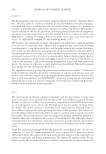
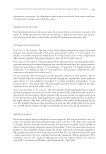
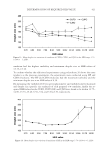
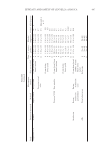
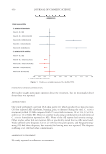
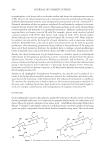
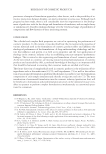
ANTIBACTERIAL ACTIVITY OF SENKYUNOLIDE A 381 as compared with a known lipase inhibitor, orlistat (data not shown, 100 μg ml-1, 45.94%). Overall, COH (100 μg ml-1, 31.94%) and SA (10 μg ml-1, 51.36%) had lipase inhibition properties. LIPOXYGENASE INHIBITION ACTIVITY The infl ammatory pathways in volve lipoxygenases (LOXs) that c atalyze the addition of molecular oxygen to fatty acids such as arachidonic acid to produce unstable hydro- peroxyeicosatetraenoic acids (hyperoxides) (13). Therefore, the in vitro inhibition of li- poxygenase represents a good model for the screening of anti-infl ammatory activity in plants. Antilipoxygenase activity was also measured as inhibition of the peroxidation of linoleic acid to hydroperoxy linoleic acid, a reaction which is catalyzed by lipoxygenase. LOX inhibition activity results are shown in Figure 2, compared with a known lipase inhibitor, NDGA (data not shown, 100 μg ml-1, 37.88% ± 2.12%). The COH inhibited LOX ac- tivity at lower concentrations (10 μg ml-1). Overall, COH (100 μg ml-1, 31.94%) and SA (10 μg ml-1, 51.36%) had the lipase inhibition properties. Figure 1. Effects of COH fraction and SA on pancreatic lipase inhibition acti v ity. Data are presented as mean ± standard deviation of three independent experiments. *p value 0.05. (A) COH and (B) SA. Figure 2. Effects of COH fraction and SA on lipoxygenase inhibition activity. D a ta are presented as mean ± standard deviation of three independent experiments. *p value 0.05. (A) COH and (B) SA.
Purchased for the exclusive use of nofirst nolast (unknown)
From: SCC Media Library & Resource Center (library.scconline.org)