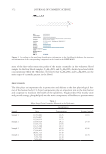
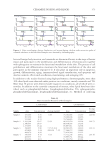
JOURNAL OF COSMETIC SCIENCE 390 PRODU CTS The h yperpigmentation topical treatment program (Pigment Solution™ Program, Relife S.r.l., Florence, Italy) is a cosmetic treatment specifi cally formulated to reduce hyperpig- mentation and achieve a uniform skin tone. It consists of three products: (i) a preparation cleanser—a mild detergent, containing a mixture of soothing ingredients, formulated to cleanse and prepare the skin for treatment, facilitating dermal penetration of depigment- ing agents (ii) a day cream (kojic acid 0.3%, vitamin E 0.05%, vitamin A 0.005%, and AQUAXYL™ complex 3%) (Seppic SA) (iii) a night cream (kojic acid 0.3%, glycolic acid 5.7%, AQUAXYL complex 3%, and scrubbing beads 1.5%). The tre atment was administered at home. All patients were instructed to apply the products every day for 30 consecutive days. Subjects had to apply the day cream in the morning (two fi ngertips of cream on the whole face) and the night cream in the evening (two fi nger- tips of cream on the whole face), massaging with circular movements in the areas affected by hyperpigmentation (sun spots, age spots, and photosensitivity spots). A fi ngertip unit corresponds to about 0.43 g of cream for a female adult. Subjects had to prepare the skin using the preparation cleanser before each application (2 mL of cleanser on the whole face, 1 mL in the morning, 1 mL in the evening, massaged for 2 min, and then rinsed with water). No increase or reduction in daily applications was allowed. The study products were supplied by the study Sponsor Relife S.r.l. The sup erfi cial chemical peeling/depigmentation treatment given within 7 d before the study enrollment included a fi xed-dose combination of salicylic acid, pyruvic acid, and retinoic acid, with the integration of the depigmentation agents Lumiskin (diacetyl bol- dine, a tyrosinase inhibitor) and SEPIWHITE, containing lipoaminoacid (undecylenoyl phenylalanine) acting as a selective antagonist of α-melanocyte-stimulating hormones, involved in the regulation of melanogenesis. DACSS Th e tota l amount of melanin, pigment uniformity, and the skin texture in target skin areas of each subject were assessed using the Antera 3D® system (Miravex Limited, Dublin, Ireland), an objective, reliable, fast, noninvasive, nonpainful tool for DACS based on the use of multispectral sources and on the 3D mapping of the skin surface. In more detail, the Antera 3D camera produces a multidirectional light beam by emitting diodes of seven different light wavelengths, spanning the entire visible spectrum. The camera col- lects the refl ected light and uses the refl ection angle to produce a 3D reconstruction of the skin surface. This reconstruction is based on shape from shading, extensively modifi ed to eliminate skin glare and improve the accuracy of measured data. The refl ectance data are transformed into skin absorption coeffi cients and used to quantify melanin concentration using the mathematical correlation with known spectral absorption data of this chromo- phore. Target sk in areas were photographed with the Antera 3D camera (fi eld of view: 56 × 56 mm resolution: 0.1 mm 3D depth resolution: 0.01 mm accuracy: ±5%). Associated Antera 3D software allows the analysis of the skin in 2D and 3D, together with a multispectral analysis of epidermis and dermis pigmentation. The Antera 3D software allows the op- erator to select the investigated skin area, which is automatically recognized during the

A DEPIGMENTATION TOPICAL TREATMENT PROGRAM ENHANCES A PREVIOUS CHEMICAL PEELING OF THE FACE 391 subsequent acquisitions. An algorithm is then used to analyze the skin surface and mea- sure parameter changes versus baseline values. PRIMARY STUD Y END POINTS Skin hyperpi gmentation and texture were the primary effi cacy end points assessed in the study. A comparison between melanin concentration, pigment uniformity, and parame- ters inherent to the skin texture before and after the study treatment was made. SECONDARY ST UDY END POINTS Ease of use of the treatment. The ease of use of the hyperpigmentation topical treatment program was assessed through a fi ve-point questionnaire, where 1 = very simple, 2 = simple, 3 = neither simple nor complicated, 4 = complicated, and 5 = very complicated. The patients completed the questionnaires at the end of the study (visit 2). Pleasantness of the treatment. The pleasant ness of the three products constituting the hyper- pigmentation topical treatment program was assessed through three fi ve-point question- naires (one per product), where 1 = very pleasant, 2 = pleasant, 3 = neither pleasant nor unpleasant, 4 = unpleasant, and 5 = very unpleasant. The patients completed the ques- tionnaires at the end of the study (visit 2). Overall sati sfaction. The investig ator and the patients’ satisfaction with regard to the re- sults obtained after the treatment was assessed through two separate fi ve-point question- naires, where 1 = very satisfi ed, 2 = satisfi ed, 3 = neither satisfi ed nor dissatisfi ed, 4 = not satisfi ed, and 5 = very dissatisfi ed. The investigator and the patients completed the ques- tionnaires at the end of the study (visit 2). Safety and tolerability of the treatment . The safety profi le of the hyperpigmentation topical treatment program was assessed in terms of the number of AEs reported by the subjects or detected by the investigator. All the patients who received at least one application of one of the three products of the hyperpigmentation topical treatment program were included in the safety analysis. AEs were coded using the Medical Dictionary for Regulatory Activi- ties. The number of patients who experienced at least one AE, an AE related to the prod- uct, an SAE and the number of subjects withdrawn because of an AE are summarized. STATISTICAL ANALYSIS Data were analyzed using an intention-to-treat approach. The statistical analysis was car- ried out on patients who had completed study visits 1 and 2 (n = 16). Data were expressed as average, median, standard deviation, range for continuous variables, and as number of subjects and percentage values for categorical variables. T-tests for paired data were per- formed to assess whether changes versus the initial visits were statistically signifi cant. The signifi cance level of the statistical tests used was 5% the statistical tests that gave p values lower than 0.05 were considered statistically signifi cant. Where appropriate, 95% confi dence interval was calculated. Missing data were not replaced. Data were analyzed with SAS 9.4 software for Windows (SAS Institute Inc ., Cary, NC).
Purchased for the exclusive use of nofirst nolast (unknown)
From: SCC Media Library & Resource Center (library.scconline.org)