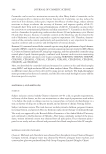
JOURNAL OF COSMETIC SCIENCE 396 In conclusion , our data support the effi cacy, safety, and tolerability of a home-based de- pigmentation treatment based on the combination of different ingredients and activities, leading to a potential synergic effect and enhancing the overall activity of the treatment program. Subjects’ compliance with this home-based daily treatment has been assured by its ease of use and high pleasantness, as rated by the large majority of the study participants. ACKNOWLEDGMEN T S We are gratef ul to Tania Torresani for assistance in clinical activities and to ERA ms Srl for assistance in medical writing. This st udy was sponsored by Relife S.r.l. Dr. Cavallini has been the principal investigator in the clinical study he is a consultant for Relife S.r.l. REFERENCES (1) R. Balkr i shnan, A. J. McMichael, F. T. Camacho, F. Saltzberg, T. S. Housman, S. Grummer, S. R. Feldman, and M. M. Chren, Development and validation of a health-related quality of life instrument for women with melasma, Br. J. Dermatol., 149, 572–577 (2003). (2) T. F. Ce s tari, L. P. Dantas, and J. C. Boza, Acquired hyperpigmentations, An. Bras. Dermatol., 89, 11–25 (2014). (3) E. C. Da v is and V. D. Callender, Postinfl ammatory hyperpigmentation: a review of the epidemiology, clinical features, and treatment options in skin of color, J. Clin. Aesthet. Dermatol., 3, 20–31 (2010). (4) C. G. Ri t ter, D. V. Fiss, J. A. Borges da Costa, R. R. de Carvalho, G. Bauermann, and T. F. Cestari, Extra-facial melasma: clinical, histopathological, and immunohistochemical case-control study, J. Eur. Acad. Dermatol. Venereol., 27, 1088–1094 (2013). (5) O. A. Og b echie-Godec and N. Elbuluk, Melasma: an up-to-date comprehensive review, Dermatol. Ther., 7, 305–318 (2017). (6) S. C. Ta y lor, Epidemiology of skin diseases in ethnic populations, Dermatol. Clin., 21, 601–607 (2003). (7) A. Filon i , M. Mariano, and N. Cameli, Melasma: how hormones can modulate skin pigmentation, J. Cosmet. Dermatol., 18, 458–463 (2019). (8) S. H. Kw o n, Y. J. Hwang, S. K. Lee, and K. C. Park, Heterogeneous pathology of melasma and its clinical implications, Int. J. Mol. Sci., 17, 824 (2016). (9) S. Kumar i , S. Tien Guan Thng, N. Kumar Verma, and H. K. Gautam, Melanogenesis inhibitors, Acta Derm. Venereol., 98, 924–931 (2018). (10) P. E. G r imes, N. Yamada, and J. Bhawan, Light microscopic, immunohistochemical, and ultrastructural alterations in patients with melasma, Am. J. Dermatopathol., 27, 96–101 (2005). (11) H. Y. K a ng, J. S. Hwang, J. Y. Lee, J. H. Ahn, J. Y. Kim, E. S. Lee, and W. H. Kang, The dermal stem cell factor and c-kit are overexpressed in melasma, Br. J. Dermatol., 154, 1094–1099 (2006). (12) E. H. K i m, Y. C. Kim, E. S. Lee, and H. Y. Kang, The vascular characteristics of melasma, J. Dermatol. Sci., 46, 111–116 (2007). (13) E. J. K i m, H. Y. Park, M. Yaar, and B. A. Gilchrest, Modulation of vascular endothelial growth factor receptors in melanocytes, Exp. Dermatol., 14, 625–633 (2005). (14) C. Whee l er-Jones, R. Abu-Ghazaleh, R. Cospedal, R. A. Houliston, J. Martin, and I. Zachary, Vascular endothelial growth factor stimulates prostacyclin production and activation of cytosolic phospholipase A2 in endothelial cells via p42/p44 mitogen-activated protein kinase, FEBS Lett., 420, 28–32 (1997). (15) M. I. R e ndon, D. S. Berson, J. L. Cohen, W. E. Roberts, I. Starker, and B. Wang, Evidence and consid- erations in the application of chemical peels in skin disorders and aesthetic resurfacing, J. Clin. Aesthet. Dermatol., 3, 32–43 (2010). (16) N. Bagh e rani, S. Gianfaldoni, and B. Smoller, An overview on melasma, J. Pigment Disord., 2, 218 (2015). (17) D. E. C a stillo and J. E. Keri, Chemical peels in the treatment of acne: patient selection and perspectives, Clin. Cosmet. Investig. Dermatol., 11, 365–372 (2018). (18) T. Sole y mani, J. Lanoue, and Z. Rahman, A practical approach to chemical peels: a review of fundamen- tals and step-by-step algorithmic protocol for treatment, J. Clin. Aesthet. Dermatol., 11, 21–28 (2018).

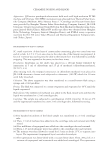
A DEPIGMENTATION TOPICAL TREATMENT PROGRAM ENHANCES A PREVIOUS CHEMICAL PEELING OF THE FACE 397 (19) R. Ganc e viciene, A. I. Liakou, A. Theodoridis, E. Makrantonaki, and C. C. Zouboulis, Skin anti-aging strategies, Dermatoendocrinol., 4, 308–319 (2012). (20) M. Puvi a ni and M. Milani, A pilot, prospective, open-label study on the effects of a topical photorepair and photoprotection fi lm-forming medical device in patients with actinic keratoses evaluated by means of skin analysis camera Antera 3D, J. Clin. Exp. Dermatol. Res., 6, 263 (2015). (21) C. Cant i sani, G. Paolino, P. Corsetti, U. Bottoni, D. Didona, and S. Calvieri, Evaluation of ingenol mebuta te effi cacy for the treatment of actinic keratosis with Antera 3D camera, Eur. Rev. Med. Pharma- col. Sci., 19, 92–97 (2015). (22) A. R. M a tias, M. Ferreira, P. Costa, and P. Neto, Colour, skin redness and melanin biometric measure- ments: comparison study between Antera(®) 3D, Mexameter(®) and Colorimeter(®), Skin Res. Technol., 21, 346–362 (2015). (23) R. Sarkar, V. Garg, S. Bansal, S. Sethi, and C. Gupta, Comparative evaluation of effi cacy and tolerability of glycolic acid, salicylic mandelic acid, and phytic acid combination peels in melasma, Dermatol. Surg., 42, 384–391 (2016). (24) K. Shankar , K. Godse, S. Aurangabadkar, K. Lahiri, V. Mysore, A. Ganjoo, M. Vedamurty, M. Kohli, J. Sharad, G. Kadhe, P. Ahirrao, V. Narayanan, and S. A. Motlekar, Evidence-based treatment for melasma: expert opinion and a review, Dermatol. Ther. (Heidelb.), 4, 165–186 (2014). (25) H. Choi, K . Kim, J. Han, H. Choi, S. H. Jin, E. K. Lee, D. W. Shin, T. R. Lee, A. Y. Lee, and M. Noh, Kojic acid-induced IL-6 production in human keratinocytes plays a role in its anti-melanogenic activity in skin, J. Dermatol. Sci., 66, 207–215 (2012). (26) M. Rodrigu e s, A. S. Ayala-Cortés, A. Rodríguez-Arámbula, L. S. Hynan, and A. G. Pandya, Interpret- ability of the modifi ed melasma area and severity index (mMASI), JAMA Dermatol., 152, 1051–1052 (2016). (27) E. Berardesca , C. Rigoni, A. Cantù, N. Cameli, A. Tedeschi, and On behalf of Donne Dermatologhe Italia, and T. Laureti, Effectiveness of a new cosmetic treatment for melasma, J. Cosmet. Dermatol., 19, 1684–1690 (2019).
Purchased for the exclusive use of nofirst nolast (unknown)
From: SCC Media Library & Resource Center (library.scconline.org)