JOURNAL OF COSMETIC SCIENCE 400 fame-seeking motivations, as well as their emotional and diverse personality traits. Hill et al. (9) reported a lipstick effect in the United States, which concluded that women would purchase more beauty products to improve their appearance during economic downturns. Consumer satisfaction over product performance, especially long-lasting or long wear on the lips, is another important, perhaps more infl uential factor. A 2012 study in France had shown that wearing lipstick could have a signifi cant infl uence on restaurant patrons’ tipping behavior (10), and scientists in Japan had detected that wearing red lip- stick enhanced the lightness of facial skin complexion (11). Instrumental and image anal- yses of properties of skin and lips have been active, which provide important quantitative descriptions of multiple color and morphological properties (12–17). However, there is little information in the literature regarding objective measurements of lipstick color retention and bleeding potentials because, up to now, lipstick property and performance have been primarily evaluated by small panel studies or laboratory testing using non-skin surfaces and various instruments (18–20). Although those tests are quick and convenient for prototype testing, the small sample size may lead to inadequate representation of product performance when it comes to fi nal claims substantiation. Relating to measure- ment of color retention and bleeding, there was a Korean research in 2005, which exam- ined lip color tone and spread (bleeding) while studying the lip wrinkles of 20 participants (21). The emphasis was made, however, to the local area around specifi c lip lines, and the pixels showing color spread (bleeding) were manually picked and measured with assis- tance of an image analysis software. The changes in overall color retention and compre- hensive measurement of lip color bleeding were not studied. It is our belief that the objectively measured parameters from a relatively large test population (N ≥ 30) would help achieve better measurement consistency, less variability in assessing product perfor- mance, and more relevance to consumer experience. Therefore, the aim of this study was to develop methods for the objective measurement of lipstick performance with regard to color retention and bleeding properties in a controlled usability study in conjunction with a large-scale panel perception study. This would allow us to evaluate a lipstick for- mulation and derive meaningful substantiated claims to drive consumer satisfaction in the marketplace. MATERIALS AND METHODS STUDY DESIGN A liquid lip color formulation with bright red shade and silky matte fi nish was tested in our clinical testing laboratory in Ada, MI, where the temperature and relative humidity were controlled at 70 ± 1°F and 39% ± 2%, respectively. Thirty female volunteers par- ticipated in the study, with ages ranging from 30 to 63 years and of various ethnicities. They came to the laboratory in the morning and washed their face. After acclimating to the room conditions for 15 min, their frontal facial images were taken using VISIA-CR 4.3 (Canfi eld Scientifi c, Parsippany, NJ) together with a plate of color standards. These images were defi ned as the baseline (BSL) time point. They then applied the test product on their lips under the guidance of a laboratory scientist. After allowing the product to dry for 15 min, their images were taken again and were defi ned as the immediate after lipstick application (IMM) time point. The volunteers were then dismissed from the laboratory with instructions to drink beverages through a straw, cut food into small pieces

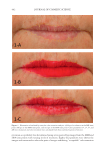
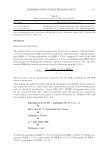
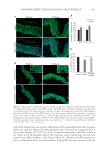
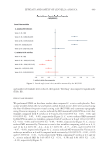
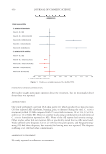
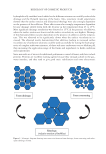
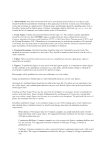
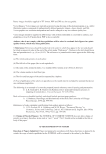
COLOR RETENTION AND BLEEDING POTENTIAL OF A LIPSTICK 401 to eat, and refrain from excessively licking/touching their lips during the day. Eight hours after application of the lip color, the participants returned to the laboratory to have their images taken for the fi nal 8-h (H08) time point. QUANTIF ICATION OF LIP PROPERTIES BY IMAGE ANALYSIS Image a nalysis was performed on the clinical images using ImageJ, a freeware created and distributed online by the National Institutes of Health. Algorithms and analysis programs were developed in our laboratory using JavaScript. Steps involved in the analysis included (i) color correcting the images, (ii) outlining the lip area, (iii) measuring color intensity, and (iv) calculating lip color properties, namely, color retention and bleeding potential. To carry out the aforementioned analysis, each clinical image was fi rst color-corrected against the embed- ded standard color chip using the least-square method described elsewhere (22). Lip area was detected using our in-house developed, automated algorithms to minimize inconsistent measurement results introduced by manual processing. Color intensity of the lips was mea- sured from the detected lip area using L*, a*, and b* in CIE-LAB color space. Color reten- tion was derived from the L*a*b* values based on the defi nition shown by equation (1): % % q100%, %E IMM BSL IMM IMM BSL Color retention, % T E E (1) w here % 2 2 2 * * * * * 1 2 1 2 1 2 E L L a a b b* , in which the subscripts 1 and 2 are any time points of interest. Subscript BSL = baseline, IMM = immediate after lipstick application, and T = any time point at which a lipstick is evaluated for color performance. In this study, T = H08, 8 h after wearing the liquid lip color. Some samp le images with lip areas outlined for color retention analysis are shown in Figure 1A and C. Color ble eding describes a phenomenon that occurs when the applied lip color spreads outside the boundaries of the lips, typically through wrinkles and lip lines. Examining the phenomenon, we defi ned a parameter of lip color bleeding as the ratio of line rough- ness of the detected lip border at time point T (which can be any time point after IMM, e.g., in this study, T = H08) over that at IMM, together with the infl uence of its corre- sponding color retention, as shown by equation (2). qColor IMM IMM IMM Line Roughness Bleeding Retention Line Roughness . T T T (2) Sam ple im ages of detected lip border before and after color bleeding are displayed in Figure 2A and C. PANEL PERC EPTION Consumer r elevance of the color retention and bleeding potential was obtained from two separate perception studies in Shanghai, China, as well as in the United States. Color
Purchased for the exclusive use of nofirst nolast (unknown)
From: SCC Media Library & Resource Center (library.scconline.org)