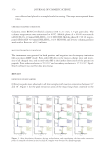
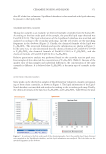
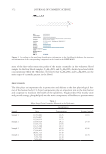
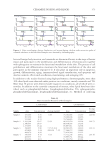
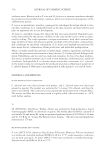
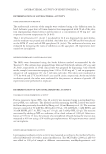
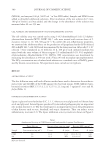
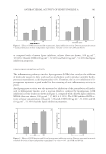
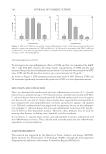
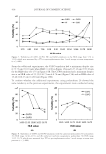
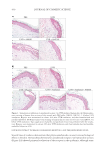
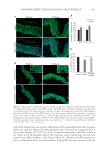
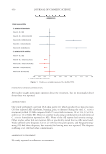
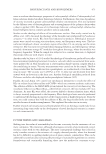
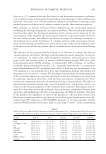
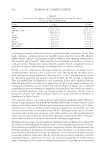
JOURNAL OF COSMETIC SCIENCE 432 placebo condition. Synthesis of β-endorphin by keratinocytes was confi rmed by ELISA (Figure 2D) keratinocytes expressed more β-endorphin when treated with the patchouli extract (+17% *p 0.05). The DMSO (DMSO used at 0.001%) showed a little variation in β-endorphin levels compared with control condition. PATCHOULI EXTRACT MODULATES EXPRESSION OF TRPV1, INTERLEUK IN RECEPTOR 1, AND IL6ST The skin expresses an abundance of Transient Receptor Potential (TRP) channels m odu- lating its development, integrity, and function. TRPV1 receives substantial attention as a candidate target for pain control, and itching sensation in skin. Cannabinoids have been used to treat pain for millennia we tested the hypothesis that the patchouli extract could decrease the expression of TRPV1 and exerted a peripheral soothing effect. UVB and LPS induced TRPV1 immunohistochemistry in human skin (Figure 3A). The treatment with patchouli extract reduced the expression of TRPV1 in skin in response to UVB- or LPS- induced infl ammation (Figure 3A). IL-1 is a highly active and pleiotropic pro-infl ammatory cytokine. The receptor that mediates all known biologic activities of IL-1 is the IL-1 receptor type 1 (IL1R1). We investigated the capacity of the patchouli extract to reduce the expression of IL1R1. Immunohistochemistry results showed that the patchouli extract reduced IL1R1 expression, in skin infl ammation models induced either by UVB (Figure 3A) or LPS (Figure 3B). Interleukin-6 (IL-6) is a pleiotropic cytokine, with diverse roles in driving chronic infl ammation. IL-6 activities are predominantly exerted through a pro- cess known as trans-signaling that uses a protein called IL6ST for initiating the IL6 signal transmission. The effect of the patchouli extract on the local concentrations of IL6ST in skin was investigated. Results showed the capacity of the extract to reduce IL6 signaling through IL6ST diminution in the epidermis irradiated with UVB (Figure 3A and C). CALMING EFFECTS OF PATCHOULI EXTRACT ON CAPSAICIN-INDUCED FACIAL STINGING IN VOLUNTEERS WITH SENSITIVE SKIN. All 20 subjects reported a stinging/burning sensation afte r application of capsaicin. Twenty-eight d of cream applications, with patchouli extract, resulted in signifi cant lower values for burning/stinging sensations in comparison to the values obtained for the placebo group (Figure 4). On the patchouli extract–treated sides, a signifi cant decrease in the TEWL was observed after 28 d of application compared with the placebo sides, demonstrating that the patchouli extract can improve the skin barrier function (data not shown). DISCUSSION In this study, we highlight the key function of cannabinoi d signaling, to control local immune responses in the human skin. Anti-infl ammatory effects of cannabinoid CB2 receptor activation was observed with the agonist AM1241. Recent data with AM630 were available on rodent skin model (28). Our results add comprehension to the human skin physiology, by providing direct evidence supporting the tight control of the cutane- ous endocannabinoid system, in the cellular response to UVB. Several previous studies showed endocannabinoid system have been involved in major roles in nociception or in- fl ammatory reactions by receptor activation (29,30). We hypothesized that the extract

SOOTHING EFFECT OF POGOSTEMON CABLIN EXTRACT 433 could counter the infl ammation induced by UVB or LPS, by stimulating CB2 receptor activity on epidermal cells and decreasing the release of infl ammatory cytokines. The selec- tive AM1241 activator, and the patchouli extract helped prevent an acute infl ammation in skin without producing observable adverse effects. CB2 receptor antagonist AM630 clearly reversed the anti-infl ammatory effect of patchouli in ex vivo skin. The patchouli extract contains many anti-infl ammatory molecules such as sesquiterpenes and polyphenols, which could involve other anti-infl ammatory signaling pathways independent of CB2. Activation of peripheral CB2 receptor was shown to produce a particularly potent analge- sic effect on infl ammatory pain (31,32). The opioid peptide β-endorphin is derived from the precursor POMC. Patchouli application associated with CB2 receptor stimulation has effect on the opioid expression. The β-endorphin was detected in the skin biopsies, in the Figure 3. Anti-infl ammatory effect of the patchouli extract. (A) Expression level of TRPV1, IL1R1, and IL6ST in human skin exposed to 200 mJ/cm2 and treated with placebo or patchouli extract for 48 h. The expressions of the proteins were measured by immunohistochemistry. (B) Expression level of TRPV1, and IL1R1 in human skin exposed to 0.5 mg/mL Escherichia coli LPS for 1 night and treated with placebo or patchouli extract for 48 h. The expressions of the proteins were measured by immunohistochemistry. (C) Immunohistochemistry staining of IL6ST (green) and DNA stained with DAPI (blue), on human skin biop- sies irradiated with 200 mJ/cm2 UVB and treated with placebo or patchouli extract for 48 h (×40 objective lens, scale bar = 16 μm) (n = 3 mean ± SEM ***p d 0.005 **p d 0.01 *p d 0.05).
Purchased for the exclusive use of nofirst nolast (unknown)
From: SCC Media Library & Resource Center (library.scconline.org)