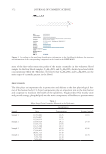
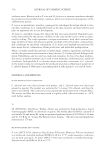
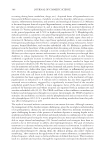
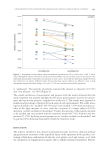
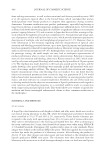
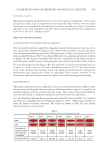
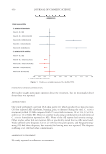
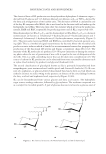
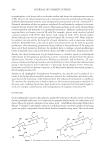
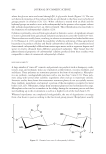
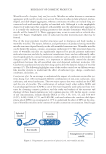
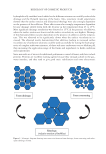
JOURNAL OF COSMETIC SCIENCE 456 redefi ning the term performance to include sustainability. Most organizations have at- tempted to tackle this issue by taking on a reductionist approach wherein the entire product life cycle is broken down into different components and trying to incorporate the concept of green chemistry and engineering into each phase individually. Zimmerman et al. state that this approach is faulty and works by transferring the adverse impacts of a par- ticular phase of the product life cycle to another phase. They emphasize that the hazards and wastes must be eliminated from the system, and this can only be achieved by taking a holistic approach to sustainability—right from ingredient sourcing and production to waste disposal (2). The cosmetic industry too has a major role to play in this context. Valued at nearly $532 billion, the cosmetic industry is rapidly expanding and has become a vital part of the consumers’ life. The beauty and personal care industry is very heavily driven by the con- sumers, making it essential for cosmetic companies to adopt sustainable practices. Green chemistry can help cosmetic scientists and engineers to use sustainable practices while creating new products and processes. The 12 Principles of Green Chemistry, fi rst intro- duced by Anastas and Warner (4), comprise a comprehensive construct for the design of new products and processes. These principles are applicable throughout the product life cycle and address the toxicity and biodegradability of the entire process. Therefore, it is crucial that beauty and personal care organizations achieve complete sustainability by adhering to green chemistry principles so as to reduce their ecological footprint and keep up with consumer demands. The product life cycle of a cosmetic product with a sustainable approach is shown in Figure 1. The above fi gure shows that there are several factors that determine the sustainability of any industry. The decisions taken at the design stage have the potential to affect the pro- cesses and routes chosen for the fi nal production. Hence, all decisions must be made keep- ing sustainability in mind. During the sourcing and extraction of raw materials, it is vital to ensure that the ingredients are obtained from green, biodegradable sources and that Figure 1. Sustainability in a product life cycle.

BIOSURFACTANTS AND BIOPOLYMERS 457 the extraction processes do not generate harmful residues. Sustainable ingredient sourcing has become an important area of research, and more and more companies are shifting to agricultural and microbial sources for their raw materials (5–10). Most of the beauty and personal care products are emulsions, and cold emulsifi cation is a good alternative to the conventional emulsifi cation processes. This eliminates the separate heating and cooling phases, thus reducing energy requirements during the production phase of the product life cycle. This process also makes it easier to control the emulsion, resulting in reduced production time (11). With regard to the fi nal phase, companies are using recycled paper to make cardboard for packaging. Some are turning to biopolymers as sustainable alterna- tives for packaging (12). Another approach taken by companies involves long-lasting, reusable packaging which can be refi lled (13). Although it is important to incorporate sustainability in every aspect of an industry, ingredient sourcing has a signifi cant role in ensuring sustainability within the cosmetic industry. The key ingredients used in the beauty and personal care products include surfactants, polymers, and emulsifi ers, among others. The demand for green products and the dwindling resources has forced the cosmetic industry to explore various alternatives for convention- ally derived cosmetic ingredients. Among these, biopolymers and biosurfactants have gained a lot of traction as viable alternatives to the chemically synthesized polymers and surfactants because of their biocompatibility and biodegradability (14–17). Biosurfac- tants have numerous advantages in terms of low toxicity and their effectiveness over wide pH and temperature ranges (18). The notable fi lm-forming properties of biopolymers such as chitosan and carboxymethyl cellulose and the potential to be used as effective thickeners (19) make them suitable for applications in diverse industries such as beauty and personal care, food, packaging (20), and textile (21). This article presents a review on sustainability in formulation design specifi c to the cos- metic industry as well as the effect of the green alternatives on the rheological properties and performance parameters of the formulations. SUSTAINABLE SOURCING OF RAW MATERIALS The fi rst and foremost environmental responsibility of cosmetic corporations is raw mate- rial sourcing and its degree of sustainability. These responsibilities can be fulfi lled by switching to bioalternatives for surfactants and polymers and also by the utilization of by-products from industrial wastes. A good way to do this is to use biosurfactants instead of synthetic surfactants for cosmetic applications. To extend the value of sustainability, biosurfactants can be obtained, for example, from fat- or carbohydrate-rich effl uents pro- duced by food or agricultural industries (5). There have been several studies where olive oil mill effl uents, waste frying oils, animal fats, molasses, etc. are proven to be useful sub- strates for the production of glycolipid-producing microorganisms (6,7,22–24). There also exist similar studies in the case of biopolymer sourcing (8–10). Apart from being responsibly sourced, bio alternatives are also lower in toxicity and are biodegradable in nature (25–30). Because polymers and surfactants comprise a major portion of cosmetic and personal care formulations and often accumulate in the environment over time, it is important to study the aspect of their biodegradability. The following sections expand further on the aforementioned concept of sustainable raw material sourcing and biodegradability.
Purchased for the exclusive use of nofirst nolast (unknown)
From: SCC Media Library & Resource Center (library.scconline.org)