JOURNAL OF COSMETIC SCIENCE 458 BIOSURFACTANTS Surfactants are an integral part of cosmetic and personal care applications. So far, the in- dustry has primarily incorporated synthetic surfactants to serve the purposes of cleaning, wetting, dispersing, emulsifying, foaming, etc. This extensive use of synthetic surfactants, however, does not come without negative environmental consequences. A high concen- tration of synthetic surfactants has adverse effects on aquatic fl ora and fauna, leads to toxic accumulation in the human body, and depletes water quality when discharged (31,32). Biosurfactants have been subjected to toxicity tests against synthetic surfactants. One such study conducted by Kanga et al. (25) observed the solubilization of naphthalene from crude oil using glycolipids produced by the Rhodococcus species. This was compared with the synthetic surfactant Tween-80 or polyoxyethylene sorbitan monooleate. The study of toxicity per mass revealed that the glycolipid was 50% less toxic than the Tween-80 surfactant. The biosurfactant also exhibited a higher EC50 (effective concentrations at which 50% of the test organisms die) value which means that it poses a low toxicity to aquatic life. Another such study conducted by Kumano et al. (26) observed the toxicity and surface activity of sophorolipids (SL) from Starmerella bombicola. Marine life was exposed to differ- ent concentrations of SL, and its growth was observed. Even with 72 h of exposure to the highest concentration of SL, the growth inhibition remained less than 50%. This EC50 is higher than those reported on the growth inhibition of microalga by chemical surfactants (27). The EC50 of SL was signifi cantly higher than that of sodium dodecyl sulfate and linear alkylbenzene sulfonate, which proved SL to be of low toxicity. This highlights the necessity of transitioning to biological surfactants. A challenge faced here is the tedious and expensive process of obtaining these biosurfactants for complete commercial and large-scale utilization. The key to combating this issue is to promote biosynthetic meth- ods of propagation while minimizing waste and maximizing yield. This would involve the microbial action of various types of yeasts, bacteria, and fungi (30). Even though the degree of toxicity of biosurfactants is without question far lower than that of synthetic surfactants, Munstermann et al. (33) found that the toxicity levels of biosurfactants can also vary depending on the source, strain, and synthesis. However, synthetic surfactants are grouped according to their charge affi nity and biosur- factants, and, on the other hand, can be classifi ed according to raw material of sourcing, chemical constitution, and molecular weight. They are most often categorized according to their raw material of sourcing as follows—glycolipids, lipopeptides, fatty acids, phos- pholipids, neutral acids, and polymeric biosurfactants (34,35). Glycolipids and lipopep- tides are low molecular weight biosurfactants. Higher molecular weight structures can be more easily classifi ed as bioemulsifi ers rather than as biosurfactants, and examples of these are polymeric saccharides, lipoproteins, etc (36,37). GLYCOLIPIDS Glycolipids, a well-studied classifi cation of biosurfactants, are lipid molecules linked co- valently to carbohydrate molecules. Glycolipids are further classifi ed as rhamnolipids (RLs), SLs, and trehalose lipids based on their individual head group polarities (38). RLs, which are synthesized by the genus Pseudomonas (particularly the strain, Pseudomonas aeruginosa), contain a mono/di rhamnose head group(s) linked by β-glycosidic bonds to a fatty acid tail group with a hydroxy functional group present in the third position (39).

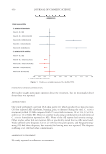
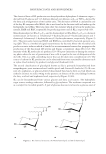
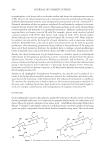
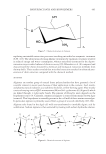
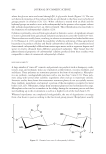
BIOSURFACTANTS AND BIOPOLYMERS 459 The chemical bases of RL production are deoxythymidine diphosphate-L-rhamnose sugar— derived from D-glucose and 3-(3-hydroxy alkanoyl oxy) alkanoic acid—or HAA—derived by the fatty acid amalgamation of two-carbon units. The derivation of HAA is catalyzed by one of the key RL enzymes called RhlA this is not found in the bacteria itself and makes up the hydrophobic end of RLs. There also exist other two enzymes which are key in the production, namely, RhlB and RhlC responsible for producing mono and di RLs, respectively (40). Mo norhamnolipid or Rha-C10-C10 and di-rhamnolipid or Rha-Rha-C10-C10 in chemical nomenclature are known as l-rhamnosyl-3-hydroxydecanoyl-3-hydroxydecanoate and l- rhamnosyl-l-rhamnosyl-3-hydroxydecanoyl-3-hydroxydecanoate, respectively (Figure 2) (41). The previously mentioned RhlA and RhlB are controlled by bacterial quorum sens- ing (QS). This is a method of signal transmittance by bacteria where the microbial cells produce an auto-inducer which is bonded to an environmental sensor that propagates the production of the functional QS system and begins a regulatory chain effect (42). The majority of the RL molecules are produced 20–36 h post-initiation or during the station- ary phase where the rate of generation of new cells is equal to the rate of dissipation of the old cells. This is a yield-controlling factor that can be taken into consideration (43). The source of carbon for RL production can be obtained from more sustainable substrates such as xylose (food industry by-product) and glycerol (biodiesel) (44). Th e second classifi cation of glycolipids known as SLs is primarily biosynthesized from nonpathogenic yeast strains such as Candida apicola and Starmerella bombicola (45). SL con- sists of a sophorose- or glucose-derived disaccharide head and a fatty acid tail which can either be lactonic or acidic owing to the presence or absence of the ester linkage between the fatty acid tail and sophorose head, respectively (Figure 2) (46). SL s can be biosynthesized from various glucose and fatty acid sources. The hydrophilic sugar sources undergo reduction, followed by glycosylation. The resultant compound acts as a catalyst for microbial growth. A part of glucose also reacts to become a glucose ester of F igure 2. RL chemical structures. (A) Monorhamnolip i d and (B) dirhamnolipid.
Purchased for the exclusive use of nofirst nolast (unknown)
From: SCC Media Library & Resource Center (library.scconline.org)