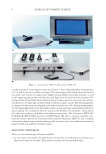
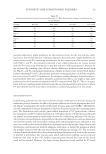
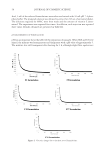
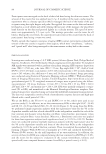
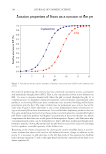
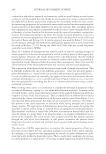
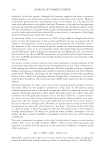
JOURNAL OF COSMETIC SCIENCE 104 the result of performing this exercise for two commonly used perm actives, cysteamine and ammonium thioglycolate (ATG). That is, the concentration of the active thiolate ion [RS-] is seen to increase dramatically when the pH is raised through the pKa. It is common practice to formulate chemical treatments, such as bleaches or permanent color products, at elevated pH because these conditions cause increased swelling and facilitate penetration into the hair. The same is likely true for permanent wave actives, but at the same time, Figure 3 shows that there is also a more fundamental chemical reason for us- ing an elevated pH in these formulations. It is recalled that depilatory products also use this same underlying chemistry, but these products are formulated at considerably higher pH. These conditions produce still higher concentrations of the active thiolate ion, which compromise the hair structure to the point of disintegration. Figure 3 a lso illustrates why cysteamine-based perms can be formulated at lower pH than traditional thioglycolate formulas, namely, a lower pKa means that the pH does not need to be raised to such high levels to produce a suitable quantity of the thiolate ion. Returning to the chemical equations for cleaving the cystine disulfi de bond, it now be- comes evident that there is the need to also balance electronic charge in addition to the atoms. It is necessary to add electrons to the left-hand side of the equation for disulfi de bond cleavage equation (7) and to the right-hand side for the conversion of the thiol to its dimer equation (8). Figure 3. Calculations for the relative abundance of thiolate ion as a function of pH for two common perm actives.

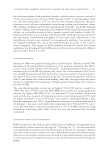
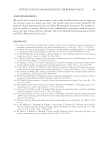
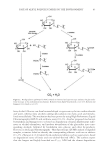
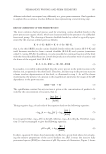
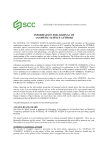
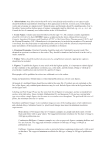
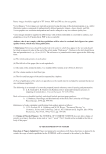
PERMANENT WAVING AND PERM CHEMISTRY 105 j K - S- S- K 2e 2KS (7) 2RS R - S- S- R 2e j (8) K -S-S- K 2RS 2KS R -S-S-R j ( 9) In a cco rda nce with standard textbook chemistry, the acquisition of electrons represents a reduction reaction, whereas loss of electrons is oxidation. Cleavage of disulfi de bonds within the hair therefore represents a redox reaction: the cystine bonds are reduced and the thiol is the reducing agent which itself becomes oxidized in the process. The two half equations are combined (with cancelation of the electrons) to produce the total ionic equation shown in equation (9). The thermodyn amic driving force for a redox reaction is given by the following equation: % , G nFE (10) where ' G i s th e Gibbs free Energy, n is the number electrons involved, F is the Faraday constant, and E is the difference between the reduction and oxidation potentials of the species involved. Therefore, the driving force for the perm reaction is directly propor- tional to the oxidation potential of the reducing agent. An oxidation po tential of +1.06 volts can be measured for thioglycolate, whereas a value of +0.56 volts results for cysteamine. This shows how thioglycolate is a signifi cantly stronger reducing agent and explains the superior results associated with this active in producing tighter, true to rod-shaped curls. In summary, we learn that cystine disulfi de bonds can theoretically be cleaved by treat- ment with any reducing agent, with the effectiveness being related to the oxidation po- tential of the active. The most common means of achieving this end involves the use of thiols, with the level of activity being further controlled by manipulation of the solution pH. The scientifi c literature describes the use of numerous thiols (and other reducing agents) for cleaving disulfi de bonds in wool and hair. However, virtually none of these have received commercial attention. Clearly, any reagent must be proven to be safe for use on consumers, and such testing is generally costly (and unpopular). One additional benefi t associated with the use of thiols involves an ability to minimize the likelihood of overprocessing hair. The reaction schemes shown previously all represent equi- librium processes, and so a buildup of the oxidized thiol (i.e., R-S-S-R) within the hair would be expected to progressively retard forward progress of equation (2) in a fortuitous manifestation of Le Chatelier’s principle. The work of Salce et al. (10) appears to confi rm this supposition, and consequently, it is relatively common to fi nd dithioglycolate (DTG) being included in thioglycolate-based perms to help control the extent of reaction. The previous di scussion predominantly deals with chemical and thermodynamic aspects of the perm process, but as hinted previously, there is also the need to consider kinetic aspects. A comprehensive discussion of this topic is given in the following section. THE RATE OF DIS ULFIDE BOND CLEAVAGE Early efforts t o follow the rate of the perming process involved chemical analysis of cys- tine content after exposing hair to reagents for differing periods of time (11–13). This is
Purchased for the exclusive use of nofirst nolast (unknown)
From: SCC Media Library & Resource Center (library.scconline.org)