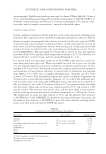
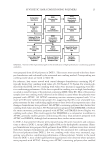
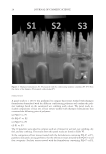
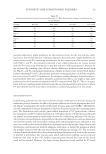
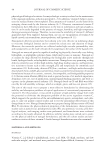
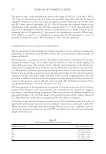
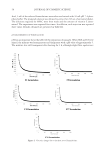
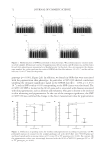
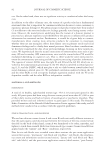
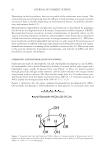
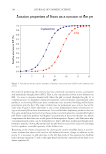
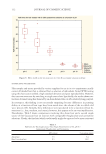
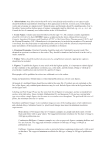
JOURNAL OF COSMETIC SCIENCE 112 S IGNIFICANCE OF HAIR TYPE H air samples and tresses provided by various suppliers for use in in vitro experiments usually consist of blended hair that is obtained from a selection of individuals. Initial SFTK testing using this hair source yielded a high standard deviation and poor reproducibility. However, this issue was overcome by switching to single-source hair. Specifi cally, the results shown ear- lier were obtained using hair donated by an Asian female who cut off a relatively long ponytail. I n retrospect, this fi nding is not necessarily surprising because differences in perming ability as a function of hair type have been noted since the advent of the so-called cold wave process (26). Initially, these differences were speculated to be a function of hair di- mensions (i.e., fi ne, medium, and course) however, this appears to be an oversimplifi cation. Nonetheless, Table I shows comparisons involving this Asian hair and a second single source of fi ne Caucasian hair on reaction with comparable thioglycolate and cysteamine solutions. Clearly, the fi ne hair (which traditionally might be expected to be more resistant) Figure 8. Effect of pH on the reaction rates of a 0.42 M cysteamine solution with hair. Table I Halftimes for Two Single-Source Hair Types Tested with 0.42 M, pH 9.2 Ammonium Thioglycolate and Cysteamine ATG (min) Cysteamine (min) Asian hair 3.3 5.4 Fine Caucasian hair 8.3 16.8

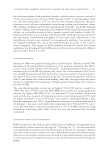
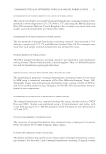
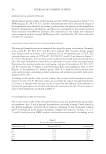
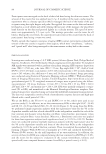
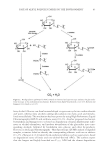
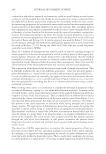
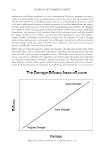
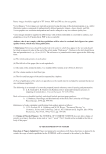
PERMANENT WAVING AND PERM CHEMISTRY 113 gives rise to considerably slower reaction rates with both solutions. Similar differences in SFTK rates as a function of hair type were also noted by Wickett (17). These fi ndings suggest a hypothesis whereby the poor response of “resistant hair” to the perming process is a consequence of slower transformation rates which result in an insuffi cient number of disulfi de bonds being cleaved during a given exposure time to the thiol solution. F igure 9 shows the result of further investigation into the infl uence of hair type on the rate of transformation with a common perm treatment. Hair was procured from nine different donors, and SFTK experiments were performed using a 0.42 M, pH 9 cysteamine solution. Clearly, there are signifi cant (and sizable) differences in reaction rates associated with these women’s hair. The donors were asked to fi ll out a questionnaire documenting typical habits and practices, and some basic laboratory characterization measurements were also performed (e.g., fi ber dimensions). However, no simple correlations were seen between the hair properties and transformation rates. T he one exception to this statement seems to involve the initial “health” of the hair. The donors in the previous experiment had not used any chemical treatments, and consequently, their hair was considered in relatively good condition. An additional experiment involved comparing the reaction rates for single-source virgin hair with a subbatch of the same hair that was exposed to a standard bleaching treatment. Results showed considerably faster re- action rates associated with the chemically damaged hair. This fi nding is in line with the popular opinion that extreme care is needed in attempting to perm, especially damaged hair, because of the danger of overprocessing. Again, this highlights the “art” of the perm process because stylists attempt to judge the reactivity of hair and obtain the desired result. Figure 9. Halftimes for panelists’ hair when exposed to 0.42 M, pH 9 cysteamine.
Purchased for the exclusive use of nofirst nolast (unknown)
From: SCC Media Library & Resource Center (library.scconline.org)