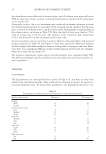
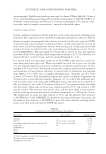
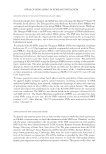
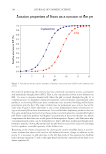
JOURNAL OF COSMETIC SCIENCE 124 As mentioned earlier, it has been suggested that there is enhanced reactivity associated with strained disulfi de bonds. Table II shows results from a systematic set of experiments that were intended to investigate this idea. Intermittent stress relaxation experiments were performed as a function of the applied strain increment using single-source hair in combination with a 0.42 M, pH 9 ATG solution. Clearly, faster overall transformation results are obtained when using higher strain increments. Further to this point, an additional set of experiments were performed wherein both the rate and period of this deformation were altered. The use of a slower sample deformation rate (i.e., 0.25 inches/min vs. 0.5 inches/min) was observed to yield signifi cantly faster transformation rates. Similarly, repeated application of the strain every 15 s, rather than every 30 s, also led to faster rates. Both of these experimental conditions result in the hair being in a strained state for longer durations and may then be considered in line with the presumed proposition. Con- versely, it could be argued that in spending more time in a strained state, there is greater op- portunity for viscous relaxation, or indeed a yielding of the structure (if the stress begins to exceed the yield point). Further to this same point, static stress relaxation experiments were found to yield faster rates than the corresponding intermittent method. In short, although these fi ndings are in line with the premise, there may be other explana- tions for these outcomes. However, they do highlight the signifi cant contribution of these variables to the magnitude of the rates that result. As such, it is again emphasized that the SFTK approach appears to provide a convenient means of comparing relative transfor- mation rates that arise as a function of solution chemistry variables and/or hair type. However, these same rates should not be expected under real-life usage conditions. From the previous results, it is hypothesized that poor perm performance in resistant hair is a consequence of slow transformation rates that do not induce suffi cient bond breakage during treatment time. Accordingly, the SFTK approach would seem ideally suited for studying factors that may positively infl uence this state. For example, it would be antici- pated that elevated temperatures could induce faster perming rates. Indeed, in real-life salon conditions, it is common practice for the client to sit under an upright hair drier that provides this extra stimulus. It is noted that Wickett performed some preliminary experiments to illustrate this expected infl uence of temperature. One may also conceive of experiments to investigate the effect of swelling agents in formulations or perhaps various prewraps or other pretreatments that could alter diffusion. OXIDATION STEP After concentrating so much time on the breaking of disulfi de bonds, it now becomes neces- sary to consider their reformation. Following from the earlier chemistry discussion, if these bonds are cleaved by reduction, their restoration relies on oxidation. Whereas much has Table II SFTK Results as a Function of the Strain Increment Strain increment (%) Halftime (min) 0.5 20.4 1 17.0 1.5 11.6 2 4.7

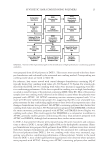
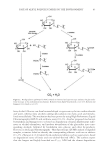
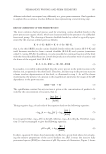
PERMANENT WAVING AND PERM CHEMISTRY 125 been published on bond breaking, relatively little is written on this reformation process. It is again suggested that this step may be seen as somewhat trivial because bond reformation is recognized to occur to some extent by the so-called air oxidation, namely, this process ap- pears to begin during rinsing of the perm solution from the head, wherein the hair becomes saturated with large amounts of aerated water. Nonetheless, there is obviously the desire to perform this important function properly, and consequently, treatment with an oxidizing agent is prudent. Most often this is accomplished using hydrogen peroxide. j 2 2 2 2K - SH H O K - S-S- K 2H O (20) Wortmann and Souren (31) used a method somewhat analogous to the SFTK approach to observe the recovery in mechanical properties of reduced hair on rinsing with water and treatment with hydrogen peroxide. In performing this more thorough “neutralization” treatment, there is increased likeli- hood for a degree of “overoxidation” whereby cysteine is converted to the corresponding sulfonic acid (i.e., cysteic acid). In short, there is a reduction in the number of strength- supporting cystine disulfi de bonds and a concomitant decrease in tensile properties. This topic of hair damage resulting from perm treatments will be discussed shortly. REVERSION DUE TO SULFIDE–DISULFIDE BOND INTERCHANGE The permanency of permanent waves merits some discussion, that is, it is well-recognized and relatively commonplace for the induced curls to relax somewhat from the initial freshly permed state. The culprit for this occurrence is generally considered to be sulfi de– disulfi de bond interchange, through which a rearrangement of the newly formed internal bonds takes place to release stress within the S-S bond network. A schematic of this pro- cess is given in Figure 21. This occurrence is sometimes speculated as a reason why thiol-based relaxers are not es- pecially effective on Afro hair, namely, a more dramatic change in conformation results in additional internal stress and an increased tendency for this interchange. The creation of more permanent lanthionine bonds under highly basic conditions may therefore repre- sent more enduring chemistry for this challenging hair type. HAIR DAMAGE ASSOCIATED WITH THE PERMING PROCESS As documented throughout this article, the perm process involves the rather drastic process of breaking down a signifi cant portion of hair’s internal structure, followed by subsequent Figure 21. Schematic representation of sulfi de–disulfi de bond interchange.
Purchased for the exclusive use of nofirst nolast (unknown)
From: SCC Media Library & Resource Center (library.scconline.org)