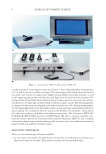
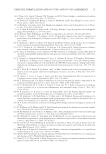
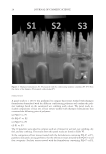
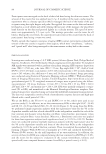
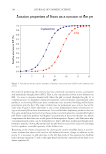
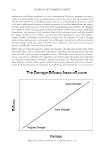
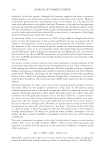
JOURNAL OF COSMETIC SCIENCE 126 Figure 22. Schematic representation of a damage–effi cacy curve. reformation with fi bers anchored in a new conformation. However, perhaps not surpris- ingly, it is not possible to put everything back exactly the way it was. Specifi cally, there will be some depletion in disulfi de cystine content, a commensurate increase in cysteic acid, and a subsequent decrease in tensile properties. It has been shown how the aggres- siveness of the perm process can be altered by many formulation variables, for example, concentration of the reducing agent, oxidation potential of the reducing agent, pH of the formulation, the presence of the oxidized form of the reducing agent, and also possibly the ability for the active to diffuse into the hair. The capability to cleave and reform a higher number of disulfi de bonds would instinctively be expected to yield a stronger perm (at least perhaps up to some upper limit). However, the ability to effectively reform all these bonds would also seem to become more diffi cult as the extent of reaction pro- gresses, and the hair is broken down further. These ideas are realized in practice, where, for example, thioglycolate-based perms gener- ally yield tighter, true to rod-shaped curls than a cysteamine-based perm, but at the same time, the hair is left in a more compromised state. This leads to the concept of a damage– effi cacy trade-off curve whereby more aggressive, more effi cacious treatments and conditions are obtained at the expense of higher damage (see Figure 22). Manufacturers will often offer different variants under a given product line that provide levels of activity commen- surate with the end goals of consumers. In marketing such treatments, it is not uncom-

PERMANENT WAVING AND PERM CHEMISTRY 127 mon to encounter claims pertaining to an active or formula being “less damaging” but these treatments are also milder and consequently also less effective. By means of illustra- tion and continuing with the earlier example, the positioning of a cysteamine-based product as a “less-damaging” perm may be technically correct, but at the same time, it is not a true comparison as levels of transformation are unlikely to be equivalent. It should be remembered that one can also move up and down this damage-effi cacy trade-off curve by the way these products are used, namely, increased effi cacy, but also greater damage, can result from higher product dosages and longer exposure times. With all this said, there are other means by which the hair structure can be damaged that lead to other consumer-related issues. A few articles describe extreme levels of swelling when treating hair with thioglycolate and other reducing agents. Valko and Barnett (32) and Powers and Barnett (33) reported swelling of up to 300% after prolonged soaking in a thioglycolate solution. This occurrence reverses during the oxidation process as bonds are reformed (34) although Shansky (35) noted additional swelling during the rinsing step between the reduction and oxidation steps which he attributed to osmotic forces. This ballooning of dimensions would seem to impose considerable strain on the outer struc- ture of hair, whereby uplifting, cracking, and general deterioration of cuticle scales may be anticipated. The condition of this outer surface is the major contributor to the tactile properties of the hair, and its deterioration will be refl ected in a variety of consumer- related terms. Perhaps most notably, a rough, course hair feel is often described by consumers as “dryness,” although technical measures indicate no decrease in water con- tent (30,36). The aforementioned swelling properties of hair are permanently altered by these treat- ments whereby increased dimension changes arise during immersion in water. This has led some to suggest that this property can also be used as one measure of damage (37,38), but the consequences of this altered state are perhaps more interesting and important. One of the most notable repercussions of these treatments involves the considerable increase in wet-state grooming forces. The popular explanation for this occurrence generally involves a degrading cuticle structure but in this author’s experience, scanning electron micros- copy images do not usually show an especially damaged surface in freshly permed hair. Instead, it is believed that enhanced swelling produces a marked increase in the wet hair volume which subsequently results in higher grooming forces. An increased predilection for swelling is also widely believed to impact diffusion rates for materials both in and out of the hair. This represents a likely explanation for the especially fast transformation rates that arose during SFTK experiments on bleached hair. ADAPTATIONS WITHIN THE PERM PROCESS Several perm variants can be found on the beauty aisle shelves. Most fall within a classifi - cation termed alkali waves because of their basic pH (generally 8–9.5) for the reasons described earlier. There is also an acid perm category, although technically the name is a misnomer as these products are also basic in composition (generally pH 7.5–8.5), but not as alkaline as the previous category. This positioning generally equates to propositions involving reduced hair damage, where more caustic conditions may be anticipated to compromise hair to a greater extent. There is some truth to this idea, although there are complicating factors that preclude such a simple statement. High-pH conditions can lead to increased fi ber swelling and
Purchased for the exclusive use of nofirst nolast (unknown)
From: SCC Media Library & Resource Center (library.scconline.org)