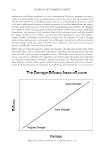
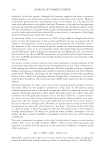
JOURNAL OF COSMETIC SCIENCE 128 hydrolysis of the hair protein, although the literature suggests that these occurrences predominantly occur under more extreme conditions than those used in perms. However, as described previously, the concentration of the active thiolate ion is dictated by the value of the pH relative to the pKa of the thiol. Therefore, acid perms use less aggressive reaction concentrations and therefore sit toward the lower end of a damage–effi cacy trade- off curve. In addition, acid perms often use glycerol monothioglycolate as an active, and it can be further speculated that reduced effi cacy may also be a consequence of this larger molecule diffusing more slowly into the hair. As described earlier, it is common to see DTG being added to thioglycolate-based perms to limit the progression of the second equilibrium reaction see equation (9). To chemists, this represents a fortuitous practical demonstration of Le Chatelier’s princi- ple however, in the creative minds of product marketers, these formulations become self-timing perms. Salce et al. (10) generated results that showed this expected behavior on introducing the oxidized dimer into formulations, but Manuszak et al. (21) were not able to observe any effect in SFTK experiments. It is possible that the high solution-to- hair ratio in SFTK experiments prevents the buildup of suffi cient concentrations of this reaction product. Yet another variant involves exothermic perms which represent a modern adaption of the machineless waves that were described in the Introduction section. These treatments in- volve mixing two solutions before application. The fi rst generally contains a somewhat higher concentration of thioglycolate, and the second has a relatively low level of hydro- gen peroxide. Therefore, on mixing, the two reagents undergo reaction with a signifi cant release of heat, while still providing suffi cient thioglycolate concentration for reaction with the hair. In addition, this reaction produces DTG whose signifi cance has been high- lighted. Outside of damage, the other major issue with conventional perm products involves the smell. There are two primary contributors to this issue: (i) the odorous nature of thiols themselves and (ii) the smell of ammonia, which is commonly used as a pH adjustor. Although unpleasant, these smells will only persist for a short time after treatment and will gradually dissipate after a few days. However, a curious alterna- tive issue can arise when using cysteamine-based perms. These products were intro- duced into the U.S. market as low-odor perms because of the less noxious smell of the active relative to thioglycolate. However, an unexpected occurrence involved the development of a new odor, often likened to “wet dogs,” that arose within a few days to a week of usage. It has been suggested that this new smell is due to the formation of alkyl thiazolidines (39) which are produced when residual cysteamine (tied up within the hair as mixed disulfi de) is gradually released and reacts with sebaceous components. The only commercial exception to the thiol classifi cation of perm actives involves sulfi tes, SO32- (or at low pH, bisulfi tes, HSO3-). These too are reducing agents, and equation (21) shows the half equation for the oxidation of sulphite to sulphate under alkali conditions. j 2 2 3 4 2 SO 2OH SO H O 2e (2 1) Mean while, equation (22) shows the reaction scheme for sodium sulfi te attacking the keratin disulfi de bond with the formation of the so-called bunte salt (i.e., K-S-SO3Na).

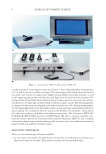
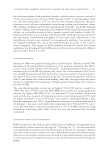
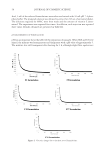
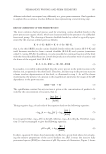
PERMANENT WAVING AND PERM CHEMISTRY 129 j 2 3 3 K - S - S - K Na SO K - S - SO Na NaS - K (22) T he a ttraction of sulfi te/bisulfi te as an active relates to the ability to reverse the aforemen- tioned reaction by rinsing with water and therefore essentially making it a one-step treatment. However, these treatments are not able to create tight well-defi ned curls and are mostly found as weak body waves. Sensitization issues associated with sulfi tes may also be a concern. EVALU ATION OF WAVE EFFICACY In th e salon, the effi cacy of a perm treatment is judged by a visual assessment of the curl shape relative to the size of the waving rods. A close relationship between the resulting curl and the rod diameter is often termed “true to rod” performance. However, based on previous discussions, it is evident that any evaluation of perming performance should also involve some durability assessment, possibly after exposing the hair to adverse conditions that are nonetheless in line with everyday occurrences (e.g., repeated shampooing and/or exposure to elevated humidity). A mor e precise method is often desired in the laboratory that allows for quantifi cation of both the initial and long-lasting effi cacy. A method that remains popular involves adapta- tions of an approach fi rst described by Kirby (40). The testing process involved setting the hair shape by wrapping tresses or bundles of fi bers around the pins on a pegboard. Figure 23 shows an example of such a utensil. (Note: a modifi cation of this approach has been adopted in the hair spray category, where it is also used to quantify style retention and longevity.) Once anchored, the hair can then be treated with an appropriate dosage of Figure 23. Pegboard for use in Kirby wave effi ciency testing.
Purchased for the exclusive use of nofirst nolast (unknown)
From: SCC Media Library & Resource Center (library.scconline.org)