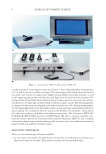
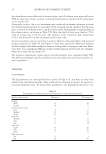
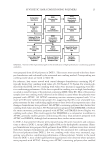
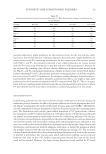
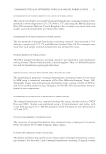
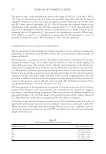
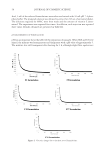
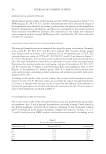
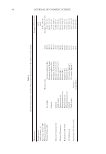
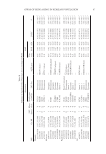
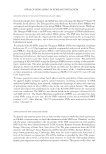
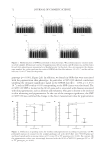
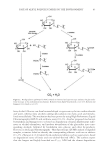
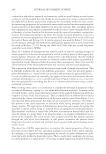
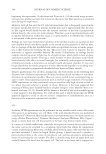
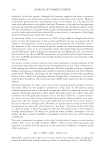
JOURNAL OF COSMETIC SCIENCE 24 RATIONALE FOR DESIGN OF EXPERIMENT S (DOEs) AND WORKFLOW A DOE approach was used in plannin g the polymer syntheses. The DOEs were designed to screen a wide range of polymer compositions to optimize shampoo performance across wet comb, wet feel, and clarity properties. Thus, polymer composition, molecular weight, solubility parameter (balance of hydrophobic and hydrophilic monomer composition), and type and density of cationic charge were systematically varied. High throughput tools were used to make the hypothesized polymers. Key classes of monomers chosen for this study were (i) cationic quat monomers (DADMAC, APTAC, AETAC, and QMA at 65, 80, and 95 wt% of the polymer), (ii) hydrophobic monomers (MMA, BA, LMA, and SMA at 0, 2.5, and 5 wt% of the polymer), and (iii) hydrophilic amide (AAm and DMAAm, at 0, 15, and 30 wt% of the polymer) and amine (DMAEMA and DMAEA at 0, 15, and 30 wt% of the polymer) monomers. Scheme 1 shows the general workfl ow used in the synthesis and screening of the conditioning polymer candidates. Synthesis was followed by SEC analysis, polymer drying, and determination of solubility (presence or absence of haze), viscosity (in 2 wt% aq. solution), % polymer solids in each reaction mixture, and monomer conversion. In this preliminary initial screening effort, the effect of monomer reactivity ratios on polymer composition was not studied in detail effects such as this will need to be dealt with in more in depth follow-up work. We do not, however, anticipate major departures from the overall polymer composition predicted on the basis of the composi- tion of the monomer mixture. Shampoos were formulated with polymers that showed high monomer conversions and little-to-no haze (indicating potential for solubility in a clear shampoo) in the reaction medium. Wet combing work was then determined for hair tresses treated with these shampoos. Results at each stage were used to determine the design of the next series of polymer libraries, as shown in Scheme 1. In this preliminary study, the focus was on comb performance in a single shampoo base. Polymers were synthesized by free- radical polymerizations of different classes of vinyl monomers. Scheme 2 outlines the overall path leading to the fi nal polymer candidate iden- tifi cation. Three DOEs were conducted: the fi rst to identify an advantageous cationic mono- mer, the second to evaluate the effect on conditioning of hydrophobic monomers, and the third to evaluate amide and amine monomers on conditioning performance. DOE-1 probed the composition space of polymers containing different cationic quat mono- mers. Libraries in this DOE consisted of mixture designs where four classes of monomers were varied for a given quat monomer. The following range of monomers (in wt% of total monomers) was used in DOE-1: 65–95% quat monomer, 0–30% amine (DMAEA or DMAEMA), 0–30% AAm, and 0–5% BA. Each library in this initial DOE contained the same set of 24 monomer compositions, with the only difference being in the selection of the type of quat monomer. Example output data are shown in Table III. Shampoo formulations Scheme 1. Overview of the workfl ow used for high throughput polymer synthesis and evaluation.

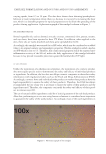
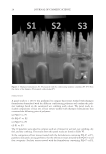
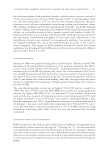
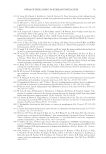
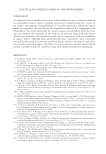
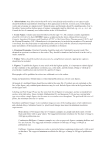
SYNTHETIC HAIR CONDITIONING POLYMERS 25 were prepared from all 96 polymers in DOE-1. Hair tresses were treated with these sham- poo formulations and evaluated by the automated wet combing method. Corresponding wet combing work values are listed in Table III. For reference, hair tresses treated with control shampoo formulations containing PQ-67 typically showed wet combing work values of 1,500 N-mm ± 50 N-mm. For several poly- mers from this DOE, low wet combing work values were measured, suggesting very effec- tive conditioning performance. If the force required for combing was too high, hair breakage occurred as noted for many of the polymers containing QMA (Table III). Most of the positive samples (low wet combing work) observed in the library occurred where the polymers were prepared with APTAC. All APTAC-containing reaction mixtures prepared with 5.0 or more wt% BA were turbid (except sample A1), suggesting that BA is not a favorable non- polar monomer for hair conditioning applications at these levels of incorporation since clear shampoo formulations were preferred. All APTAC-containing polymers that showed wet combing work values less than 1,900 N-mm had been prepared with DMAEMA or without the amine monomer polymers prepared with APTAC and DMAEA showed higher wet combing work values. This result suggests that DMAEMA as a comonomer in addition to APTAC generally enables greater conditioning effi ciency than polymers prepared with APTAC and DMAEA, although both monomers have similar amine moieties. In DOE-2, four polymer libraries were prepared using the same monomers and composi- tions as those in DOE-1, except LMA replaced BA as the hydrophobic monomer. Sham- poo formulations were prepared with polymers from DOE-2, and hair tresses were treated with these shampoo formulations and evaluated by the automated wet combing method. For several polymers from DOE-2, low wet combing work values were measured, sug- gesting very effective conditioning performance of these polymers. Similar to the result from the DOE-1, most of the higher-performing polymers were observed where polymers were prepared with APTAC. Among nine APTAC-containing polymers that enabled Scheme 2. Outline of the experimental path to the identifi cation of high-performance conditioning polymer candidates.
Purchased for the exclusive use of nofirst nolast (unknown)
From: SCC Media Library & Resource Center (library.scconline.org)