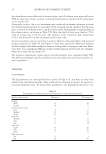
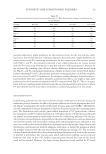
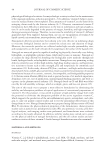
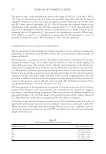
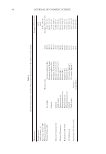
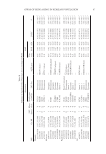
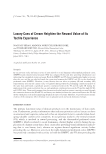
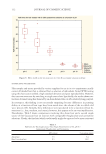
JOURNAL OF COSMETIC SCIENCE 26 good combability (wet combing work 2,000 N-mm), four polymers contained LMA as the hydrophobic monomer. However, reaction mixtures for these four LMA-containing polymers were turbid, suggesting a low likelihood of obtaining clear shampoo formulations. Similar to the results from DOE-1, DOE-2 did not identify any polymers prepared with a hydrophobic monomer that would satisfy both application targets: a clear shampoo formulation and good combability. Surprisingly, the presence of hydrophobic comonomer in synthetic cationic polymers in the ranges explored in this study did not appear to show distinct benefi ts for hair care applications, and, therefore, nonpolar monomers were elim- inated from further study. Two libraries were prepared for DOE-3. In the fi rst library, APTAC was selected as the only quat monomer, and only DMAEMA and AAm were used as additional co- monomers. Five high-performing polymers from this library enabled good combabil- ity (wet combing work 2,000 N-mm), with four exhibiting excellent subjective wet feel. In the second DOE-3 library, polymers were again synthesized with APTAC as the quat monomer, with DMAAm and AAm. Many polymers from this library en- abled good combability (wet combing work 2,000 N-mm), and, for almost all of them, an excellent subjective wet feel score (0 or 1). However, most shampoo formu- lations prepared with these polymers were cloudy or hazy, and, in many of them, particles or oily droplets were observed. Only one polymer gave a clear to slightly hazy shampoo formulation, with excellent combability (wet combing work value 671 N-mm) Table III Example Polymer Compositions and Wet-Combing Work for DOE-1 with BA as the Nonpolar Monomer Sample Quat amount DMAEA amount DMAEMA amount AAm amount BA amount Wet combing work APTAC Wet combing work QMA A1 0.95 0 0 0 0.05 2,918 2,482 A2 0.65 0.07 0 0.23 0.05 2,489 Breaka A3 0.95 0.05 0 0 0 7,729 Break A4 0.731 0.244 0 0 0.025 2,020 2,506 A5 0.7 0 0.3 0 0 1,678 3,143 A6 0.65 0.07 0 0.23 0.05 3,558 4,084 A7 0.86 0 0.09 0 0.05 3,925 Break A8 0.7 0 0 0.3 0 1,867 2,824 B1 0.95 0 0 0.025 0.025 3,989 Break B2 0.65 0 0.05 0.3 0 3,709 Break B3 0.65 0 0 0.3 0.05 2,738 Break B4 0.675 0 0.15 0.15 0.025 2,298 Break B5 0.86 0 0 0.09 0.05 1,802 Break B6 0.875 0 0 0.125 0 1,620 Break B7 0.65 0 0.24 0.06 0.05 1,780 2,571 B8 0.742 0 0.129 0.129 0 1,445 Break C1 0.7 0 0 0.25 0.05 3,112 3,553 C2 0.65 0.15 0 0.15 0.05 1,993 3,013 C3 0.65 0.3 0 0 0.05 2,753 Break C4 0.731 0 0 0.244 0.025 3,614 Break C5 0.75 0 0.05 0.2 0 1,613 Break C6 0.65 0.3 0 0.05 0 2029 Break C7 0.65 0 0.15 0.2 0 1,458 Break C8 0.65 0 0.2 0.15 0 1,317 Break a Hair pulled to the point of breaking.

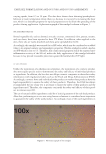
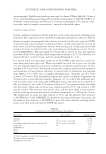
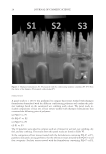
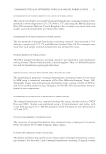
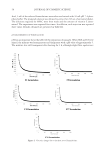
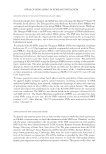
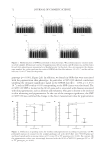
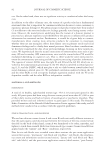
SYNTHETIC HAIR CONDITIONING POLYMERS 27 and wet feel score (0). It is remarkable that the two polymers, one with the DMEAMA amine-functional monomer and the other with an amide-functional monomer, performed similarly in hair conditioning. HIGH-PERFORMANCE CONDITIONING POLYMER CANDIDATES Three polymers (the polymers with the best performance from each library in DOE- 3), P1, P2, and P3, were selected for further evaluation. The compositions and prop- erties of these polymers and the shampoos derived from them are shown in Tables IV and V. To obtain additional material for further testing, each of these polymers was synthesized in a separate library with 24 identical reaction mixtures, and the resulting polymers were combined. Shampoos were prepared, and the evaluation results for these shampoo formu- lations are summarized in Table V. The reference shampoo formulation containing PQ-67 (S0) exhibited a wet combing work value of 5,740 N-mm and a wet feel score of 2.5. The formulation S1 prepared with poly- mer P1 showed the same properties within the limits of experimental error but was very hazy. The shampoo formulation S2 prepared with polymer P2 showed lower wet combing work and a better wet feel score than the formulation S0 with PQ-67 but was also hazy. The best performance in this scale-up study was observed for shampoo S3 prepared with polymer P3. It yielded a shampoo formulation that was almost clear and which showed substantially lower wet combing work and a better wet feel score than the reference shampoo S0 with PQ-67. Figure 3 shows the appearance of shampoo formulations pre- pared with the scale-up samples of polymers P1, P2, and P3. Table IV The Composition and Properties of High Performing Conditioning Polymer Candidates Polymer APTAC amount DMAEMA amount DMAAm amount AAm amount Mw, KDa PDI Viscosity, Pa-s P1 0.53 0.16 0.31 720 1.7 0.37 P2 0.567 0.144 0.289 735 1.7 0.52 P3 0.5 0.333 0.167 669 n.d.a 7.56 a Not determined. Table V Evaluation of Shampoo Formulations Prepared with High-Performing Conditioning Polymer Candidates. Polymer sample Shampoo sample Shampoo appearance Shampoo viscosity (Pa-s) Wet combing worka Wet feel scoreb PQ-67 S0 Clear 30.5 5,740 2.5 P1 S1 Very hazy 21.0 5,000 2.5 P2 S2 Hazy 27.5 3,089 1.5 P3 S3 Almost clear 36.5 1,823 1 a Automated wet combing work, N-mm. b Subjective wet feel score (0: best 5: worst).
Purchased for the exclusive use of nofirst nolast (unknown)
From: SCC Media Library & Resource Center (library.scconline.org)