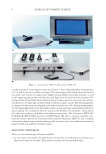
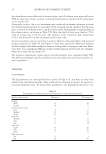
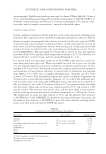
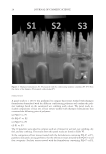
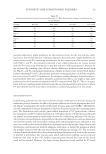
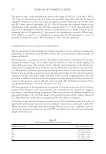
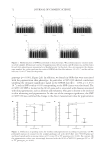
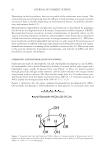
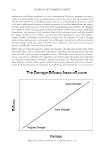
JOURNAL OF COSMETIC SCIENCE 28 PANEL STUDY A panel study (n = 10) (3) was performed to compare hair tresses washed with shampoo formulations formulated with the different conditioning polymers and confi rm the poly- mer rankings based on the automated wet combing work values. The panel study in- cluded comparisons of four sets of hair tresses washed with shampoo formulations that contained the following pairs of polymers: (a) PQ-67 vs. P1 (b) PQ-67 vs. P2 (c) PQ-67 vs. P3 (d) P1 vs. P3 The 10 panelists were asked to compare each set of tresses for wet feel, wet combing, dry feel, and dry combing. The results from this panel study are listed in Table VI . In the comparison of hair tresses treated with the formulations containing PQ-67 or P1, panelists indicated a strong preference for the reference tresses (treated with PQ-67) in all four categories. For hair tresses treated with the formulations containing PQ-67 or P2, Figure 3. Shampoo formulations S1–S3 prepared with the conditioning polymer candidates P1–P3. Note the clarity of the shampoo S3 prepared with polymer P3.

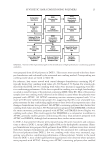
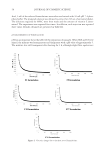
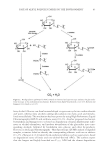
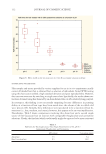
SYNTHETIC HAIR CONDITIONING POLYMERS 29 panelists indicated a slight preference for the reference tresses for dry feel and dry comb- ing, but in the wet feel and wet combing categories, they indicated a slight preference for tresses treated with P2-containing formulation. In the comparison of hair tresses treated with PQ-67 and P3, the panelists indicated a very slight preference for tresses treated with the P3-containing formulation in wet feel and wet combing properties, whereas for dry feel and dry combing, they did not observe differences between tresses treated with the PQ-67- and P3-containing formulations. Finally, for hair tresses treated with formu- lations containing P3 or P1, the panelists indicated a strong preference in all four categories for tresses treated with P3 formulation. In summary, among shampoo formulations pre- pared with the three new synthetic polymers, panelists had either a very slight or equivalent preference for the formulation prepared with P3 compared with PQ-67. This is in agree- ment with wet combing results obtained using the automated parallel tensile tester, in which P3 was identifi ed as the most effective synthetic conditioning polymer in this study. SILICONE DEPOSITION Conditioning polymers are also used to deliver silicone conditioners to the hair during the wash/rinse process therefore, the effect of polymer additives on silicone deposition was stud- ied. Figure 4 summarizes the results of this study. Cationic guar and UCARE™ JR30M were used for comparison of silicone deposition as they are often used in silicone-containing sham- poos. The formulation with cationic guar enabled deposition of 597 ppm silicone, whereas the formulation with P3 enabled deposition of 5,000 ppm silicone ( 8-fold increase). Beyond the general structure–property relationships known for conditioning polymers (36), the spe- cifi c polymer structural features responsible for the observed differences in silicone deposition onto the hair strands, and wet and dry combing work and feel properties are unknown at this time, but could involve nuanced differences in polymer molecular weight, charge density and distribution, and interaction with the shampoo surfactants, as well as the manner in which the polymer interacts with the hair strand during washing and rinsing (37). The increased silicone deposition exhibited by this polymer in this preliminary study leads to the question of whether it will behave like cationic guar, which suffers from enabling excessive silicone build-up over time on hair (30) further characterization beyond the scope of this initial work will be needed. However, the high silicone deposition levels enabled by P3-based Table VI Results from the Panel Study: Fraction of Panelists (%) Who Preferred the Shampoo Containing the Listed Polymer Polymer Wet feel Wet comb Dry feel Dry comb PQ-67 80 80 80 80 P1 20 20 20 20 PQ-67 30 30 60 60 P2 70 70 40 40 PQ-67 40 40 50 50 P3 60 60 50 50 P1 20 20 20 20 P3 80 80 80 80
Purchased for the exclusive use of nofirst nolast (unknown)
From: SCC Media Library & Resource Center (library.scconline.org)