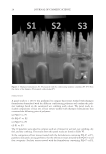
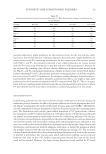
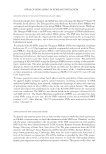
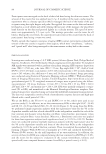
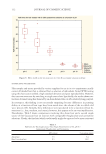
JOURNAL OF COSMETIC SCIENCE 30 shampoos may give the formulator some fl exibility to balance combing/feel with deposi- tion, possibly enabling use of less polymer or less silicone (an expensive component) in the formulation. C ONCLUSIONS I t has been demonstrated in this preliminary work that a high throughput combinato- rial synthesis and screening approach can be used to identify the compositions of po- tential high-performance synthetic cationic conditioning polymers. A high throughput method for polymer synthesis was used to prepare cationic polymer candidates which were characterized by monomer conversion, % polymer solids, molecular weight and PDI, haze, and viscosity. Shampoo formulations were prepared in a single shampoo base with those polymers that demonstrated the required clarity and high monomer conver- sion in high throughput screens. Hair tresses were treated with these shampoo formulations for subsequent testing of wet combing and wet feel in initial performance screens. Numerous polymers in the tested shampoo formulations enabled substantial reduction in wet combing work, apparently showing greater wet comb performance than a shampoo formulation made with a cellulosic polymer, PQ-67. A shampoo formulation contain- ing polymer P3 was only slightly hazy and exhibited lower wet combing work relative to a PQ-67-based shampoo. A panel study indicated similar performance of PQ-67- and P3-containing shampoo formulations. A shampoo formulation with P3 enabled greater silicone deposition (by 8-fold) than a formulation made with cationic guar. P3 is a wholly vinyl monomer-based cationic conditioning polymer with hair conditioning effi ciency equal to or greater than that of PQ-67 in the shampoo formulation studied. Further studies will be needed to elucidate the specifi c polymer microstructural basis of the observed conditioning effi cacy in this one formulation, as well as the range of formulations and treatments in which it is effective. A CKNOWLEDGMENTS W e are grateful to the Dow Chemical Company, to FreeSlate (now Unchained Labs), and to Damian Hajduk, Robert Mussell, Greg Cardoen, and Curtis Schwartz for their support Figure 4. Silicone deposition onto hair from shampoo formulations containing different conditioning poly- mers. Dark bars are error bars.

SYNTHETIC HAIR CONDITIONING POLYMERS 31 of this work. We thank Usha Parasuraman, Cal Davis, and Diane Frank for experimental assistance, and Ed DiAntonio and Jennifer Amos for the silicone deposition determinations. We thank Lyndsay Leal, Jodi Mecca, Nikhil Fernandes, Janet Windisch, and Adam Grzesiak for helpful discussions. N OTES ™ Trademark of the Dow Chemical Company (“Dow”) or an affi liated company of Dow. REFE RENCES (1) R. Schueller and P. Romanowski, “Introduction to conditioning agents for hair and skin,” in Condition- ing Agents for Hair and Skin, R. Schueller and P. Romanowski. Eds. (Marcel Dekker, Inc., New York, NY, 1999), pp. 1–12. (2) W. Li and S. Jordan, Cationic cellulosic polymers with multifunctional and outstanding performance for personal care, Cosmet. Toiletr. 1, 1–4 (2003), and references therein. (3) S. Jordan, X. Zhang, J. Amos, D. Frank, R. Menon, R. Galley, C. Davis, T. Kalantar, and M. Ladika, Evaluation of novel synthetic conditioning polymers for shampoos, J. Cosmet. Sci., 60, 239–250 (2009) and references therein. (4) R . Lochhead, “Shampoos,” in The Chemistry and Manufacture of Cosmetics, Vol. 2, 3rd Ed., M. L. Schlossman. Ed. (Allured Publishing Corporation, Carol Stream, IL, 2002), pp. 277–326. (5) R. Lochhead, Conditioning Shampoos, Soap Cosmet, Chem. Spec., 68, 42–49 (1992). (6) E. Goddard, “Polymer/surfactant interaction in applied systems,” in Principles of Polymer Science and Technology in Cosmetics and Personal Care, E. D. Goddard and J. V. Grubber. Eds. (Marcel Dekker, New York, NY, 1999), p. 181. (7) M . Miyake and Y. Kakizawa, Morphological study of cationic polymer–anionic surfactant complex precipitated in solution during the dilution process, J. Cosmet. Sci., 61, 289–301 (2010). (8) S . Jordan, E. DiAntonio, T. Drovetskaya, J. Amos, C. Davis, M. Ladika, T. Kalantar, X. Zhang, S. Gaynor, and L. Kreeger, Synergistic effects of non-ionic polymers on cationic polymer/surfactant inter- actions, Polym. Preprints, 49, 673 (2008). (9) Y . Akiyama, Y. Matsue, A. Kasagawa, T. Mori, and S. Nishijima, Adsorption behavior of coacervates on the human hair surface, Chem. Lett., 41, 1351–1353 (2012). (10) Y . Li, J. Amos, S. Jordan, A. Theis, and C. Davis, Evaluation of novel synthetic conditioning polymers for shampoos, J. Cosmet. Sci., 57, 178–180 (2006) and references therein. (11) H . Nazir, W. Zhang, Y. Liu, X. Chen, L. Wang, M. Naseer, and G. Ma, Silicone oil emulsions: strategies to improve their stability and applications in hair care products, Int. J. Cosmet. Sci., 36, 124–133 (2014). (12) M . Gamez-Garcia, Polycation substantivity to hair, IFSCC, 4, 99–107 (2001). (13) D ow hair care polymers: “UCARE Polymers,” https://dowservice.custhelp.com/app/answers/detail/a_ id/17713/related/1, and: “SOFTCAT Polymer,” https://dowservice.custhelp.com/app/answers/detail/a_ id/16864/~/softcat-sx-polymers---chemistry-and-products, both accessed January 13, 2020. (14) E . Goddard, Cleaner/conditioner systems: surface chemical aspects, Surfactant Sci. Ser., 135, 137–147 (2007). (15) R . Lochhead, The role of polymers in cosmetics: recent trends, ACS Symp. Ser., 961, 3–56 (2007). (16) S . Llamas, E. Guzmán, F. Ortega, N. Baghdadli, C. Cazeneuve, R. Rubio, and G. Luengo, Adsorption of polyelectrolytes and polyelectrolytes-surfactant mixtures at surfaces: a physico-chemical approach to a cosmetic challenge, Adv. Colloid Interf. Sci., 222, 461–487 (2015). (17) R . Lochhead, Hair Care Polymer Trends, HAPPI (2008), accessed July 7, 2020, https://www.happi. com/contents/view_features/2008-11-04/hair-care-polymer-trends/. (18) G . Matz and R. Lamar, Synergistic Combination of Cationic and Ampholytic Polymers for Cleansing And/or Conditioning Keratin Based Substrates (Calgon), World Intellectual Property Organization (Geneva, Switzerland) WO 2000037041 A1 20000629 (2000). (19) N. Geary, T. Coffi ndaffer, and M. Brown, Composition Containing a Cationic Polymer and Water Insoluble Material (Procter & Gamble), World Intellectual Property Organization (Geneva, Switzerland) WO 2003039499 A1 20030515 (2003). (20) D . Murphy, M. Orchowski, A. Tartakovsky, and D. Binder, Laundry Cleansing and Conditioning Com- positions (Unilever), United States Patent and Trademark Offi ce (Alexandria, VA) US 20040152617 A1 2004080 and US 20040152616 A1 20040805 (both 2004).
Purchased for the exclusive use of nofirst nolast (unknown)
From: SCC Media Library & Resource Center (library.scconline.org)