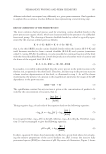
JOURNAL OF COSMETIC SCIENCE 34 those pollutants that cause serious health effects such as cancer and reproductive effects, among others. HAP contamination of air typically derives from anthropogenic sources, including mobile and stationary sources. As a result of this h ealth concern, different antipollution products have recently irrupted in the cosmetic market (3). Cosmetic companies have adopted three main strategies to develop antipollution products based on (i) prevention (fi lm-forming ingredients), (ii) protection (antioxidants), and (iii) repair (4). Generally, a combined strategy including several ingredients with different complementary mechanisms of action is preferred. However, the development of antipollution cosmetics and the evaluation of its effi cacy is still a complex challenge for the cosmetic industry. To date, recently pub lished in vitro effi cacy tests of antipollution cosmetics are based on the effect of air pollutants on the skin structure using human epidermal keratinocytes and reconstructed skin models (5,6) and human fi broblasts (7). Those procedures address modifi cation suffered by the skin in the presence or absence of cosmetic products how- ever, those procedures do not evaluate the possible dermal absorption, penetration, or assimilation of air pollutants through the skin. In this sense, the Organization for the Cooperation and Economic Development has published a series of guidelines for the in vivo (n. 427) and in vitro (N. 428) evaluation of dermal absorption of chemicals (8). In vitro techniques are based on the determination of absorption rates by passive diffusion through skin or skin simulants, using Franz diffusion cells with two chambers (donor and acceptor ones) separated by a human or synthetic membrane. One of the main advantages of in vitro methods is based on the determination of reproducible data of percutaneous absorption parameters and the possibility to evaluate potential risks from dermal expo- sure to chemicals. Permeation of a subst ance through the skin is mainly a diffusion process. Mathemat- ically, absorption of an organic compound can be described by Fick’s laws of diffu- sion. Fick’s fi rst law relates the fl ux of compound (J) per unit area (g cm-2 h-1) with the concentration gradient of substance (δC) (g cm-3), the linear distance diffused (δx) (cm), and the diffusion coeffi cient (D) (cm2 h-1) in infi nite dose conditions equa- tion (1) (9). EC Ex = – J D (1) Absorption parameters such as J and lag time (τ) can be obtained from Fick’s law and calculated from the slope and linear extrapolation back to x-axis of the linear trend of the absorption profi le, respectively (9). Thus, the present study is focused on the development of an appropriate analytical meth- odology for the evaluation of dermal absorption of different HAPs, using in vitro vertical Franz diffusion cells and simulant human skin membranes, to assess the effectivity of antipollution cosmetic products. Moreover, in contrast to previously published single- pollutant approaches, aimed at estimating the absorption of or exposure to a single air pollutant, a multi-pollutant approach representing a situation with more stringent con- ditions has been used. HAPs used to generate controlled contaminated atmospheres in- cluded benzene, toluene, ethylbenzene, and xylene isomers (BTEX), chlorobenzene, nitrobenzene, haloalkanes, and polycyclic aromatic hydrocarbons.

ANTIPOLLUTION COSMETIC EFFECTIVITY AGAINST AIR POLLUTANT ABSORPTION 35 METHODS AND MATERIALS REAGENTS AND MATERIALS Benzene, to luene, ethylbenzene, o- xylene, m-xylene, p-xylene, chlorobenzene, nitroben- zene, 1,2-dichloroethane, bromodichloromethane, 1,2-dibromoethane, bromoform, and naphthalene were provided by Scharlau (Barcelona, Spain) and Sigma-Aldrich (St. Louis, MO). Toluene-d8 was provided by Sigma-Aldrich, and it was used as internal standard. Standards and working solutions were prepared in acetone (GC analysis grade) obtained from Scharlau. Strat-M® membranes were purchased from Millipore (Temecula, CA). Buffer salts were obtained from Scharlau. COSMETIC PRODUCTS COMPOSITION Antip ollution cosmetic A is a daily skin care cream (viscous emulsion) that protects from sunlight and blue radiation, preventing skin photoaging. This cosmetic product fi rms, smoothes, and reduces wrinkles, due to paracress plant extract. It is suited to sensitive skin because of the presence of active principles such as licorice extract and bioactive molecules from stem cells from cotton. Antipollution cosmetic B is also a rich texture cream (viscous emulsion) that welfares and pro- tects the skin against external agents such as contamination, sun radiation (infrared, ultravio- let, and blue light), and oxidant agents, increasing skin fi rmness and elasticity while intensely moisturizing. These properties for treating and preventing adverse environmental effects are provided by its combination of active principles including vitamin C, peptides (carnosine and oligopeptide-1), alantoin, panthenol, and bioactive molecules from stem cells from cotton. PHYSICOCHEMICAL PROPERTIES OF DEVEL OPED COSMETIC PRODUCTS Physicochemical properties such as viscosity, density, pH, conductivity, and refraction index of developed cosmetic products were determined following the procedures de- scribed next. Viscosity was measured using a DV-III Ultra rotational viscometer from AMETEK Brookfi eld (Middleboro, MA). The measurement was carried out with a rota- tional speed of 50 rpm and read after 3 s after starting the viscometer. An electronic densimeter MDS-300 from Alfa Mirage (Tokyo, Japan) was used for density determina- tion. A 3-mL syringe was fi lled with sample. The cell was fi lled with the sample until it fl ows out by the other exit (2 mL of sample, approximately). The pH values of the respec- tive specimen were measured by means of the PHS-3B pH meter from TBT (Nanjing, China). The values of electrical conductivity were measured using an EC-meter GLP-31 from Crison (Barcelona, Spain). The refraction index was measured using an RE40D Re- fractometer from Mettler Toledo (Barcelona, Spain). In all the experiments, sample tem- perature was 25°C, and the measurement was repeated three times for the sample, the fi nal result being an average of three independent measurements. SIMULATION CHAMBER A modifi ed closed enclosure model HZ 08252, with 640 L internal volume, from Bruker (Billerica, MA) was used as a simulation chamber (see Figure SM1 of Supplementary
Purchased for the exclusive use of nofirst nolast (unknown)
From: SCC Media Library & Resource Center (library.scconline.org)