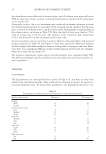
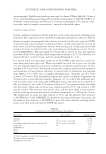
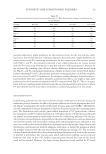
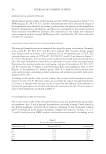
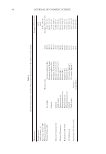
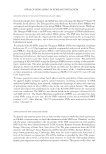
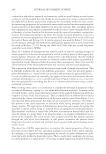
JOURNAL OF COSMETIC SCIENCE 42 with a maximum of 18 h. From experimental data, fl ux values have been obtained for control and cosmetic samples for all the evaluated HAPs (see Table 4), and Student t-test was calculated to determine whether values obtained for treated and control samples were statistically different at a P-value lower than 0.05. As it can be seen, fl ux values for cosmetic B are signifi cantly lower than those obtained for cosmetic A and control samples. A reduced fl ux value implies a higher antipollution effi cacy because it reduces the amount of HAPs absorbed per unit time. Table 5 shows the lag time values obtained from the experimental data for the control and cosmetic sam- ples. As it can be seen, lag time values for the control and cosmetic A sample are similar, with lower than 10 min for all the evaluated analytes. However, lag time values obtained for cosmetic B sample are signifi cantly higher than those of the con- trol sample, with values in the range of 33–74 min, which demonstrates high anti- pollution effectivity of cosmetic B. E FFECT OF PHYSICOCHEMICAL PARAMETERS OF HAPS ON PERMEABILITY VALUES A lthough it is not the main aim of this study, it should be commented that the main physicochemical parameters affecting permeability values (fl ux, lag time, and permeabil- ity at equilibrium) of organic compounds through the skin are related to its molecular weight and octanol–water partition coeffi cient (KOW) (17,18). For volatile organic com- pounds, a good indicator of dermal fl ux is the stratum corneum–air partition coeffi cient (KSC_G) (19,20), which is directly related to the stratum corneum–water partition coeffi - cient (KSC_W) and water–air partition coeffi cient (KW_G). A s KSC_W is directly related to KOW and KW_G is related to Henry’s law constant (HCP), it can be assumed that for compounds with similar KOW [from 1.47 for 1,2-dichloroethane Table IV Concentration of HAPs in the Exposition Chamber and Flux (J) Experimentally Calculated in Control and Cosmetic-Treated Strat-M Membranes, and t-Test Comparison Test HAPs [HAPs] (mg m-3 ± s) J [μg cm-2 h-1 ± s] Control Cosmetic A t-testa Cosmetic B t-testa t-testa (cosmetic A vs B) 1,2-dichloroethane 15 ± 3 0.566 ± 0.007 0.48 ± 0.01 17.258 0.324 ± 0.009 51.990 28.403 Benzene 12 ± 3 0.140 ± 0.006 0.118 ± 0.005 6.900 0.099 ± 0.003 14.971 7.982 Bromodichloromethane 14 ± 3 0.377 ± 0.006 0.30 ± 0.01 15.543 0.243 ± 0.009 30.345 10.378 Toluene 12 ± 2 0.138 ± 0.008 0.10 ± 0.01 7.268 0.084 ± 0.009 10.985 2.913 1,2-dibromoethane 13 ± 3 1.2 ± 0.2 0.6 ± 0.1 6.573 0.33 ± 0.02 6.573 4.677 Chlorobenzene 14 ± 3 0.24 ± 0.04 0.17 ± 0.02 3.834 0.13 ± 0.02 6.025 3.464 Ethylbenzene 13 ± 2 0.114 ± 0.005 0.075 ± 0.002 17.740 0.056 ± 0.005 20.092 8.642 m+p-xylene 25 ± 4 0.25 ± 0.04 0.18 ± 0.06 2.378 0.11 ± 0.02 7.668 2.711 Bromoform 13 ± 4 1.4 ± 0.3 0.7 ± 0.1 5.422 0.5 ± 0.2 5.978 3.944 o-xylene 14 ± 3 0.21 ± 0.02 0.15 ± 0.03 4.076 0.10 ± 0.01 12.050 3.873 Nitrobenzene 3 ± 1 5.1 ± 0.3 4.0 ± 0.1 8.521 3.5 ± 0.2 10.870 5.477 Naphthalene 12 ± 3 1.1 ± 0.1 0.6 ± 0.1 8.660 0.45 ± 0.05 14.241 3.286 a Student t critical values equal to 2.230 (n = 10) .

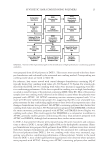
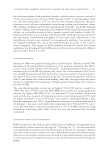
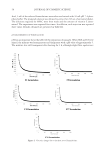
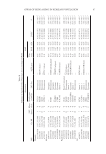
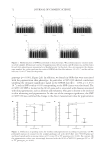
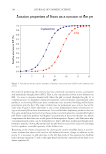
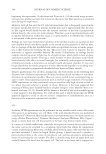
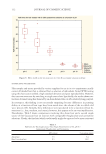
ANTIPOLLUTION COSMETIC EFFECTIVITY AGAINST AIR POLLUTANT ABSORPTION 43 to 3.36 for naphthalene (21)], the main physicochemical parameter affecting dermal fl ux is HCP, and as Henry’s constant increases, molecular fl ux increases too (R2 = 0.92) (see Table 3) (13,22). R egarding permeability values obtained for the different HAPs, it should be noticed that the higher the Henry solubility constant, the higher is the permeability at equilibrium of the analytes in water. Thus, once again, the HCC value is the main physicochemical pa- rameter affecting permeability at equilibrium. As it can be seen in Figure 1, halogenated compounds reached permeabilities at equilibrium from 1.6 to 7.4 μg cm-2 signifi cantly higher than those obtained from BTEX compounds (0.67–1.2 μg cm-2). Moreover, it should be noticed that naphthalene and nitrobenzene provided permeability values of 7.8 and 78 μg cm-2, respectively, which can be attributed to their high HCC values of 57 and 1,140, respectively. EFFECT OF C OSMETICS COMPOSITION ON ANTIPOLLUTION EFFECTIVENESS As it has b een mentioned in the scientifi c literature (4), surfactants and barrier-forming polymeric materials have demonstrated an important antipollution effect versus organic compounds. Antipollution cosmetic B has a total composition of consistency factors, mainly polyacrylates, glyceryl stearates, and hydrophobic waxy polymers, of 3.2% w/w versus only 1% w/w of the antipollution cosmetic A. This difference of consistency factors provides signifi cant differences in viscosity (see Table 2) but also signifi cant differences in antipollution effectiveness against organic compounds (see Table 4). In this sense, it should be commented that the percentage of dimethicone (polydimethylsiloxane) used as emollient in the formula is also higher (6.0% w/w) in the antipollution cosmetic B than in A (3.0% w/w). Polydimethylsiloxane has been previously used as a synthetic skin simulant in dermal absorption experiments (11), which demonstrated that increasing the width of the polydimethylsiloxane membrane decreases fl ux and increases lag time. Thus, Table V Lag Time (τ) Experimentally Calculated for the Studied HAPs in Control and Cosmetic-Treated Strat-M Membranes HAPs τ (min ± s) Control Cosmetic A Cosmetic B t-testa 1,2-dichloroethane 10 10 50 ± 5 14.237 Benzene 10 10 37 ± 3 21.362 Bromodichloromethane 10 10 54 ± 6 14.347 Toluene 10 10 39 ± 3 19.106 1,2-dibromoethane 10 10 41 ± 4 3.431 Chlorobenzene 10 10 33 ± 8 6.713 Ethylbenzene 10 10 53 ± 5 20.428 m+p-xylene 10 10 50 ± 7 11.521 Bromoform 10 10 50 ± 6 3.789 o-xylene 10 10 55 ± 6 17.249 Nitrobenzene 10 10 64 ± 29 3.757 Naphthalene 10 10 74 ± 7 10.379 a Student t critical values equal to 2.230 (n = 10) .
Purchased for the exclusive use of nofirst nolast (unknown)
From: SCC Media Library & Resource Center (library.scconline.org)