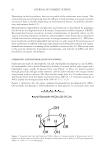
JOURNAL OF COSMETIC SCIENCE 44 it would be expected that the presence of higher amounts of polydimethylsiloxane in the cosmetic formula increases its antipollution effect. The percent age of talc in antipollution cosmetic B is also higher than that in A. It has been previously demonstrated that organic compounds such as benzene and toluene are adsorbed on talc (23), which would increase the antipollution effect of cosmetic products. Moreover, t he addition of high–molecular weight polysaccharides, such as xanthan gum, an antipollution active principle with demonstrated effects against the adsorp- tion of organic compounds (4), to antipollution product B would provide an increase in antipollution effectiveness. In summary, the combination of all the aforementioned compounds provides a demonstrated antipollution effect to cosmetic product B, which is superior to that of cosmetic product A and clearly superior to the application of any cosmetic product. CONCLUSIONS In this stu dy, an analytical methodology has been developed and validated for the evalu- ation of dermal absorption of different HAPs, using in vitro vertical Franz diffusion cells and simulant human skin membranes, to assess the effectivity of antipollution cosmetic products. In this sense, an exposition chamber, with a fi xed and constant concentration of HAPs, has been designed to simulate contaminated atmospheres. The effi cacy of antipol- lution cosmetic products has been evaluated using a multi-pollutant approach, represent- ing a situation with more stringent conditions. The behavio r of HAPs, using Strat-M® as simulant of human skin, followed Fick’s fi rst law, allowing the calculation of diffusion parameters. Antipollution effectiveness is dem- onstrated by statistical evaluation of the diffusion parameters obtained for controls and cosmetics samples. So, the more cosmetics reduce fl ux values and increase lag times, the more will be their antipollution effectiveness. Thus, although cosmetics A and B present a considerable antipollution effect, it has been demonstrated that product B has higher antipollution effectiveness than product A. ACKNOWLEDGME NTS The authors acknowledge the fi nancial support obtained from RNB for the project “De- sarrollo de nuevos cosméticos antipolución, urbancream“ under the CDTI funding proj- ect program (CPI-19-027). The autho rs declare that they have no known competing fi nancial interests or personal relationships that could have appeared to infl uence the work reported in this paper. This article does not contain any studies with human par- ticipants or animals performed by any of the authors. REFERENCES (1) R. Beelen, O. Raaschou-Nielsen, M. Stafoggia, Z. Jovanovic Andersen, G. Weinmayr, B. Hoffmann, K. Wolf, E. Samoli, P. Fischer, M. Nieuwenhuijsen, P. Vineis, W.W. Xun, K. Katsouyanni, K. Dimakopoulou, A. Oudin, B. Forsberg, L. Modig, A.S. Havulinna, T. Lanki, A. Turunen, B. Oftedal, W. Nystad, P. Nafstad, U. De Faire, N.L. Pedersen, C.G. Östenson, L. Fratiglioni, J. Penell, M. Korek, G. Pershagen, K. Thorup Eriksen, K. Overvad, T. Ellermann, M. Eeftens, P.H. Peeters, K. Meliefste,

ANTIPOLLUTION COSMETIC EFFECTIVITY AGAINST AIR POLLUTANT ABSORPTION 45 M. Wang, B. Bueno-de-Mesquita, D. Sugiri, U. Krämer, J. Heinrich, K. de Hoogh, T. Key, A. Peters, R. Hampel, H. Concin, G. Nagel, A. Ineichen, E. Schaffner, N. Probst-Hensch, N. Künzli, C. Schindler, T. Schikowski, M. Adam, H. Phuleria, A. Vilier, F. Clavel-Chapelon, C. Declercq, S. Grioni, V. Krogh, M.Y. Tsai, F. Ricceri, C. Sacerdote, C. Galassi, E. Migliore, A. Ranzi, G. Cesaroni, C. Badaloni, F. Forastiere, I. Tamayo, P. Amiano, M. Dorronsoro, M. Katsoulis, A. Trichopoulou, B. Brunekreef, G. Hoek, Effects of long-term exposure to air pollution on natural-cause mortality: an analysis of 22 European cohorts within the multicentre ESCAPE project, Lancet, 383, 785–795 (2014). (2) Environmental Protection Agency, Priority Pollutant List (2014) (accessed September 1, 2020), https:// www.epa.gov/sites/production/fi les/2015-09/documents/priority-pollutant-list-epa.pdf. (3) C. Juliano an d G. A. Magrini, Cosmetic functional ingredients from botanical sources for anti-pollution skincare products, J. Cosmetics, 5, 19 (2018). (4) N. Mistry, Gu i delines for formulating anti-pollution products, J. Cosmetics, 4, 57 (2017). (5) J. Soeur, J. P . Belaïdi, C. Chollet, L. Denat, A. Dimitrov, C. Jones, P. Perez, M. Zanini, O. Zobiri, S. Mezzache, D. Erdmann, G. Lereaux, J. Eilstein, and L. Marrot, Photo-pollution stress in skin: traces of pollutants (PAH and particulate matter) impair redox homeostasis in keratinocytes exposed to UVA1, J. Dermatol. Sci., 86, 162–169 (2017). (6) J. Cotovio, L. Onno, P. Justine, S. Lamure, and P. Catrouxet, Generation of oxidative stress in human cutaneous models following in vitro ozone exposure, Toxicol. Vitro, 15, 357–362 (2001). (7) Y. Qiao, Q. Li, H. Y . Du, Q. W. Wang, Y. Huang, and W. Liu, Airborne polycyclic aromatic hydrocar- bons trigger human skin cells aging through aryl hydrocarbon receptor, Biochem. Biophys. Res. Commun., 488, 445–452 (2017). (8) OECD, Guidelines for the Testing of Chemicals, Section 4, Test No. 428: Skin Absorption: In Vitro Method (2004), accessed 1 September 2020, https://doi.org/10.1787/20745788. (9) J. W. Pugh and R. P. Chilcott, “Principles of diffusion and thermodynamics, ”in Principles and Practice Skin Toxicology, R. P. Chilcott and S. Price. Eds. (John Wiley & Sons, Hoboken, NJ, 2008), https://doi. org/10.1002/9780470773093.ch6. (10) T. J. Franz, Percuta neous absorption: on the relevance of in vitro data, J. Investig. Dermatol., 64, 190–195 (1975). (11) S. Pontes-López, J. Moreno, F. A. Esteve-Turrillas, and S. Armenta, Development of a simulation cham- ber for the evaluation of dermal absorption of volatile organic compounds, Atmos. Pollut. Res. 11, 1009– 1017 (2020). (12) A. Haq, B. Goodyear, D. Ameen, V . Joshi, and B. Michniak-Kohn, Strat-M® synthetic membrane: permeability comparison to human cadaver skin, Int. J. Pharm., 547, 432–437 (2018). (13) R. Sander, Compilation of Henry’s law constants (versión 4.0) for water as solvent, Atmos. Chem. Phys. 15 , 4399–4981 (2015). (14) H. Lambers, S. Piessens, A. Bloem, H. Pronk, and P. Finkel, Natural skin surface pH is on average be- low 5, which is benefi cial for its resident fl ora, Int. J. Cosmet. Sci., 28, 359–370 (2006). (15) J. Jiang, Z. Mei, J. Xu, and D. Sun, Effect of inorganic electrolytes on the formation and the stability of water-in-oil (W/O) emulsions, Colloids Surf. A P hysicochem. Eng. Asp., 429, 82–90 (2013). (16) N. A. Monteiro-Riviere, Toxicology of the Skin (CRC Press, Cleveland, OH, 2010). (17) T. Vera Fiserova-Bergerova and T. Pierce, Horizons: biological monit o ring V: dermal absorption, Appl. Ind. Hyg., 4, F14–F21 (1989). (18) B. M. Magnusson, Y . G. Anissimow, S. E. Cross, and M. S. Roberts, Molecular size as the main deter- minant of solute maximum fl ux across the skin, J. Investi g . Dermatol., 122, 993–999 (2004). (19) D. R. Mattie, J. R. Bates, G. W. Jepson, J. W. Fisher, and J. N. McDougal, Determination of skin: air partition coeffi cients for volatile chemicals: experi m ental method and applications, Fundam. Appl. Toxi- col., 22, 51–57 (1993). (20) M. Gong, Y. Zhang, and C. J. Weschler, Predicting dermal absorption of gas-phase chemicals: transient model development, evaluation, and application, Indoo r Air., 24, 292–306 (2014). (21) R.E. Rathbun, Transport, behavior, and fate of volatile organic compounds in streams, United States Government Publishing Offi ce (Washington, DC), Professional Paper, 1589 (1998). https://doi.org/ 10.3133/pp1589 (22) Agency for Toxic Substances and Disease Registry website, Atlanta, GA, USA. Accessed September 1st, 2020, https://www.atsdr.cdc.gov/substances/index.asp. (23) H. Hashizume, Adsor ption of aromatic compounds in water by talc, Clay Sci., 14, 61–64 (2009).
Purchased for the exclusive use of nofirst nolast (unknown)
From: SCC Media Library & Resource Center (library.scconline.org)