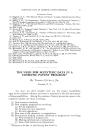
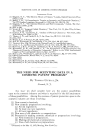
ANALYSIS OF PSYCHOLOGICAL PROPERTIES OF COSMETICS 83 REFERENCES (1) In re Hass & Susie, 60 U.S.P.Q. 548. (2) Ex parte Carson, 78 U.S.P.Q. 93. (3) In re Henze, 85 U.S.P.Q. 261. (4) Ex parte Matheson & Mikeska, 92 U.S.P.Q. 255. (5) 57 U.S.P.Q. 324. (6) U.S.P. 2464284. (7) U.S.P. 2537998. (8) U.S.P. 2443138. (9) U.S.P. 2554826. (10) Ex parte Wagner, 1951, C. D. 3. (11) In re Bloomer, 84 U.S.P.Q. 135. (12) Reissue Patent 22922. (13) "Industrial Research and Development--a Preliminary Report," Research and De- velopment Board, Department of Defense, Washington 25, D.C. EXPERIMENTAL ANALYSIS OF THE PSYCHOLOGIGAL PROPERTIES OF COSMETICS By DEAN Direct/or of Laboralories, U.S. Testin,• Company, Hoboken, N. A GREAT DEAL IS heard currently about pane] testing, consumer re- search, market surveys, motivation analysis, and other approaches to eval- uating consumer products. Unfortunately, many of these approaches are purely trial-and-error methods, executed by non-professionals, and failing in their purpose, namely, to answer the questions that the manufacturer needs to know and wants to know. To compete successfully today, the progressive manufacturer is asking specific questions about the quality of his prodtact: How uniform is it? What are its positive and negative properties? and, How can it be improved? These questions can be answered satisfactorily only after a systematic study of the reactions of people to these products. Since human reactions are the principal subject matter, it is only logical to turn to psychologists for the solutions. Actu- ally, however, these specialists in human behavior have rarely applied their science to product evaluation. The principles of psychological meas- urement, carefully formulated during 100 years of experimentation, have usually been ignored, and each investigator elects to begin again. There is another side to the issue, however. The industrial psychologists have too long delayed the application of the basic principles, so well known to them, to consumer commodities, including toilet goods and other per- sonal products. Presented at the May 15, 1953, Meeting, New York City.

ANALYSIS OF PSYCHOLOGICAL PROPERTIES OF COSMETICS 83 REFERENCES (1) In re Hass & Susie, 60 U.S.P.Q. 548. (2) Ex parte Carson, 78 U.S.P.Q. 93. (3) In re Henze, 85 U.S.P.Q. 261. (4) Ex parte Matheson & Mikeska, 92 U.S.P.Q. 255. (5) 57 U.S.P.Q. 324. (6) U.S.P. 2464284. (7) U.S.P. 2537998. (8) U.S.P. 2443138. (9) U.S.P. 2554826. (10) Ex parte Wagner, 1951, C. D. 3. (11) In re Bloomer, 84 U.S.P.Q. 135. (12) Reissue Patent 22922. (13) "Industrial Research and Development--a Preliminary Report," Research and De- velopment Board, Department of Defense, Washington 25, D.C. EXPERIMENTAL ANALYSIS OF THE PSYCHOLOGIGAL PROPERTIES OF COSMETICS By DEAN Direct/or of Laboralories, U.S. Testin,• Company, Hoboken, N. A GREAT DEAL IS heard currently about pane] testing, consumer re- search, market surveys, motivation analysis, and other approaches to eval- uating consumer products. Unfortunately, many of these approaches are purely trial-and-error methods, executed by non-professionals, and failing in their purpose, namely, to answer the questions that the manufacturer needs to know and wants to know. To compete successfully today, the progressive manufacturer is asking specific questions about the quality of his prodtact: How uniform is it? What are its positive and negative properties? and, How can it be improved? These questions can be answered satisfactorily only after a systematic study of the reactions of people to these products. Since human reactions are the principal subject matter, it is only logical to turn to psychologists for the solutions. Actu- ally, however, these specialists in human behavior have rarely applied their science to product evaluation. The principles of psychological meas- urement, carefully formulated during 100 years of experimentation, have usually been ignored, and each investigator elects to begin again. There is another side to the issue, however. The industrial psychologists have too long delayed the application of the basic principles, so well known to them, to consumer commodities, including toilet goods and other per- sonal products. Presented at the May 15, 1953, Meeting, New York City.
Purchased for the exclusive use of nofirst nolast (unknown)
From: SCC Media Library & Resource Center (library.scconline.org)