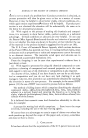
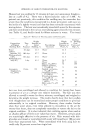
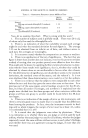
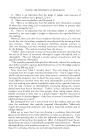
70 JOURNAL OF THE SOCIETY OF COSMETIC CHEMISTS TABLE 1--SOME CATIONS AND AmONS or ZIKCONIUM Cations Anions ZrO(OH) * ZrO(SO4)= - - ZrO** Zr•Oa(SO4)•-- Zr•Oa - • Zr (SO4)• - - Zr•O• * * ZrO(OCH•COO)a .... Zr•Os .... ZrFo - - ZrF=--- TABLE 2--TYPICAL COVALENT COMPOUNDS OF ZIKCONIUM Normalcovalence (4): ZrCla, ZrBra, ZrI4, Zr(OC2Hs)4 Coordination No. 5: NaZrC15 Coordination No. 6: K•ZrF6, Na•ZrOa Coordination No. 7: (NH4)aZrF7 Coordination No. 8: Zr(NH•)sCI4, (NH4):- H2ZrO(SO4)a, (CI•- COCH: COCHa) 4Zr radicals derived from sulfuric, hydrofluoric, and glycolic acids, but numer- ous others are known which are derived from oxalic, carbonic, lactic, and many other acids. The ion types are morphologically distinct, and each has its peculiar chemical properties. The cations as a group are precipitated by bases at relatively low pH's (usually below pH 3), and they precipitate acid dyes observation has been made of their migration to the cathode under electrolysis. The anions resist precipitation by bases to various extents and in some cases are stable at pH's up to 10-12, and they do not precipitate acid dyes observation has been made of their migration to the anode under electrolysis. Zirconlure dioxide is of particular interest for cosmetic uses. The naturally occurring oxide and that produced artificially by calcination are hard, refractory substances of very low chemical activity. However, an active form of the oxide may be precipitated from aqueous solution by the addition of a base. For example, when ammonium hydroxide is added to aqueous zirconlure oxychloride, the reaction is ZrOC12 + 2NH•OH + (x -- 1) H•O --• ZrO•.xH•O + 2 NI-hC1 (I) The formula ZrO•,.xH•,O indicates that water is loosely bound in varying and non-stoichiometric proportions, and hence it is not to be regarded as part of the compound, but rather as adsorbed water. The name hydrous zirconia is applied to this substance, and not such names as zirconia hydrate or zirconlure hydroxide, which imply actual molecules formed from zir- conium dioxide and water (5). Two types of adsorption have been recognized by physical chemists: physical and chemical (6). In the latter, "residual valences" play a role, and hence the adsorption complex is essentially a coordination compound. Adsorption by hydrous zirconia appears to be of the chemical type, and in what follows I shall represent adsorption by the usual symbols for the co- ordinate bond. It is characteristic of hydrous zirconia to undergo exchange adsorption that is, when in contact with many other substances, it releases its adsorbed water and adsorbs the other substances in its place. If citric, tartaric, benzoic, salicylic, or certain other acids are added to a slurry of hydrous

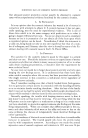
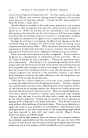
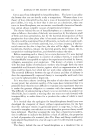
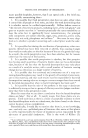
PROPERTIES OF ZIRCONIUM SIGNIFICANT TO TECHNOLOGIST 71 zirconia, the anions of these acids replace water from the zirconia and give the micelles an electronegative charge, and specific electrophoretic and chemical properties are manifested (7). If certain neutral salts such as alkali chlorides or sulfates are added to hydrous zirconia slurry, the anions are adsorbed and suflqcient hydrogen ions are bound by the electrical charge of these anions to prevent an electronegative charge from developing on the micelle, but the holding of the hydrogen ions in the vicinity of the micelles causes an increase in hydroxyl ions to appear in the solution, and the pH is observed to rise (8). When hydrous zirconia is precipitated from an aqueous solution of a zirconlure salt with a carbonate instead of with a hydroxide, carbon dioxide as well as water is adsorbed by the zirconia, and the reaction may be repre- sented ZrOC12 4- Na2CO,• 4- xH20--• ZrO•.xH20-yCO• 4- 2NaC1 4- (1 - y)CO2 (II) The product ZrO2'xH20'yCO2 is called carbonated hydrous zirconia, and is considerably more active chemically than the ordinary hydrous zirconia. For example, it reacts readily with acetic acid to form soluble zirconium acetate, while the ordinary hydrous zirconia does not react with acetic acid (9). PRACTICAL APPLICATIONS AND PROPOSED INTERPRETATIONS The phenomena reviewed briefly above have led to some successful ap- plications of zirconium compounds to cosmetic and related pharmaceutical uses. One of the most successful has been an ointment for the treating of poison ivy dermatitis. The irritating principle of the poison ivy plant is known as urushiol, and it has been found to be a mixture ofcatechol deriva- tives having unsaturated hydrocarbon side chains (10). When urushiol, (HO)2CoHaR is brought in contact with hydrous zirconia or carbonated hy- drous zirconia, it is quantitatively adsorbed. The reaction may be repre- sented ZrO, 4- HO -• O'Zrr'xI• • R (III) The zirconia complex with the urushiol is not irritating. An ointment was prepared consisting of carbonated hydrous zirconia dispersed in a vanishing cream base, and it was applied to a large number of experimental animals and human subjects suffering from poison ivy derma- titis. In nearly all cases, disappearance of the symptoms was accelerated, and the human subjects reported prompt relief from the pruritus (11, 12). Broader experience with this ointment and other similar zirconium prepara-
Purchased for the exclusive use of nofirst nolast (unknown)
From: SCC Media Library & Resource Center (library.scconline.org)