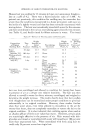
90 JOURNAL OF THE SOCIETY OF COSMETIC CHEMISTS and differences were apparent in tactual or feeling properties according to the panel. This finding was substantiated by the consumers as preference for one over the other. One appeared to be very light and orange in stick form, but when applied produced the same dark cherry color as the com- petitive stick. The latter had no such objectionable inconsistency between stick and applied color. FIELD TESTING To supplement a laboratory consumer study, a number of samples (ac- companied by instructions and questionnaire) may be sent to the homes of another group of respondents. Usually the field tests are much slower than the laboratory tests and must necessarily be more simple in design and ex- ecution. Since the conditions of use cannot be controlled, one can never be sure what physical insult the samples will receive, nor can the influences of time lapse, distraction, and discussion be measured. Consequently, larger numbers of respondents must be employed so that assumptions about randomness of influence are more justified. Most crucial, however, in any psychometric study, be it laboratory or field type, is the motivation of the participant. - The reward of a free sample is frequently insufficient to inspire a complete and reliable response. In the laboratory the interest of the observer can be better maintained and measured than it can be at home. Many different means of motivation are utilized in our laboratory, including subtle competitive devices. In one test the background information is slightly exaggerated, in another a judgment is forced, in another a choice situation is arranged, and on occa- sion, actual purchasing of the same priced items is utilized. The danger is that a motivating circumstance may be inexpertly designed so that it operates counter to experimental intention. INSTRUMENTATION It is frequently necessary to devise special instrumentation for the meas- urement of psychological properties. The use of a colgesthedonoscope, a proportional odor mixture, and a tachistoscope have proved invaluable in obtaining objective and reproducible reactions. All three are adaptations of standard apparatus commonplace in university laboratories of experimen- tal psychology. The principle of the colgesthedonoscope can be applied to cosmetic prob- lems when one wishes to change the color of label background or foreground independently. The same principle applies to facial components when one wishes to vary, say, lip color, hair color, or facial tones one at a time. The tachistoscope is designed to simplify and quantify study of package attention value, label legibility, apparent size, and recognition potential of packages and other display materials. Packages are presented singly or in

ANALYSIS OF PSYCHOLOGICAL PROPERTIES OF COSMETICS 91 groups at any desired intensity of illumination for time intervals ranging from 1/200 second to several minutes. The proportional odor mixer is used in analysis and design of odor form- ulations, testing of odor intensity, odor masking, and deodorization. Sev- eral odorant vapors can be mixed in the percentages desired by the simple expedient of valve manipulation. In conjunction with classification, the mixer is especially useful for difficult matching problems. These instruments are representative of the working tools of the psychol- ogist concerned with evaluation of the qualities and effectiveness of cosmetic products. The instruments only assist him in precise control of the physi- cal and psychological environment of his trained observers and of con- sumers. Both environments are extremely important and must be con- trolled for psychological inquiry into the behavior of complex human beings, if any valid conclusions are to be drawn. SUMMARY This paper represents an attempt to place in perspective the contribu- tions of the specialist in human behavior to the evaluation of cosmetics. The developments of experimental psychology, extending into the past cen- tury, have only recently been applied to industrial products in general, and toilet goods in particular. The professional relationship of the cosmetic chemist and the psychologist is shown in their combined effort to produce constant and improved con- sumer products. Of greatest significance is the analytical approach in combination, to provide answers to the "why" questions of the cosmetic chemist. Several specific examples are advanced to illustrate the use of direct and indirect approaches with the aid of the projective and the in- strumental for laboratory and field investigations including consumer and trained observers in absolute and comparative analyses of the quantitative and qualitative psychological properties of cosmetics. REFERENCES (1) Wenzel, B. M., "Practical Application of Olfactometry," Proc. Sci. Sect. Toilet Goods ?tssoc., No. 14, 11 (December 1950). (2) ?tm. Dyestu•Reptr.,42, No. 3, 67, 1953. (3) Klein, Samuel, "Olfactory Evaluation of Aromatic Raw Materials," Proc. Sci. Sect. Toilet Goods ?tssoc., No. 11 (May 1949). (4) Bell, J., "Projectire Techniques," New York, McMillan (1946). (5) Guilford, J.P., "Psychometric Methods," New York, McGraw-Hill (1936).
Purchased for the exclusive use of nofirst nolast (unknown)
From: SCC Media Library & Resource Center (library.scconline.org)