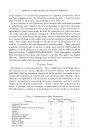
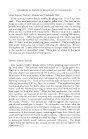
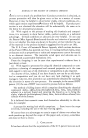
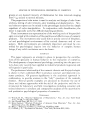
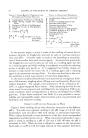
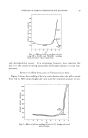
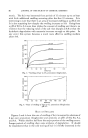
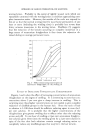
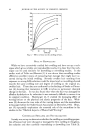
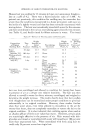
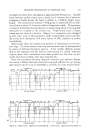
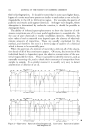
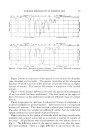
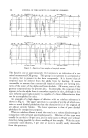
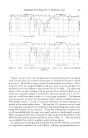
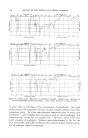
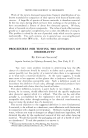
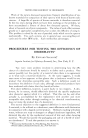
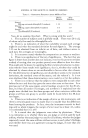
98 JOURNAL OF THE SOCIETY OF COSMETIC CHEMISTS $$o $oo •7o 240 210 180 150 120 90 60 30 0 I I I I 6 % THIO 5% 4% 3% 30 60 90 120 MINUTES Fig. &--Effect of time on the swelling of hair. ROLE OF RESWELLING While we have extensively studied hair swelling and have set up a tech- nique which gives reliable and reproducible results, it is clear that this tech- nique can be used similarly for deswelling or reswelling studies. In the earlier work of Valko and Barnett (1) it was shown that reswelling studies offered an excellent means of measuring hair damage that might have oc- curred during the initial swelling. Severely swollen hair resulting from exposure to strong LiBr solutions could be rinsed and on reswelling showed exactly the same swelling rate and degree of swelling as the original un- swollen hair. These data are confirmed by the findings of Steele at Prince- ton (4) showing that immersion in LiBr involves no permanent chemical change in the hair. It was also found that when the hair was damaged by alkaline hydrolysis or by reduction it was extremely difficult to restore it to its original condition. Hamburger (6, 7) studied the damaging effect of waving lotions on the physical and elastic properties of the hair. Whit- man (8) discusses the true roles of the waving lotions and the neutralizers in his paper before the Toilet Goods Association in December, 1952. Brun- net (9) repeatedly emphasizes the essential role of the neutralizer in his studies in the "Medical Aspects of Home Cold Waving." CONTROLLED SWELLING AND NEUTRALIZATION A study was set up to determine whether the swelling or reswelling proper- ties of human hair were changed or damaged by first swelling in thioglyco- late solution and then carefully neutralizing or deswelling (see Table 3).

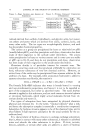
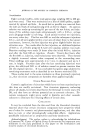
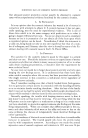
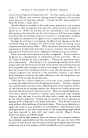
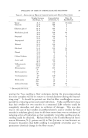
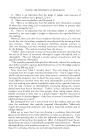
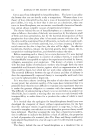
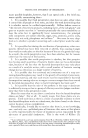
SWELLING OF HAIR IN THIOGLYCOLATE SOLUTIONS 99 Human hair was swollen for 15 minutes in 6 per cent ammonium thioglyco- late at a pH of 9.2. There was a hair-to-solution ratio of 1:100. As pointed out previously, this condition for swelling may be somewhat less severe than the conditions encountered in a home permanent cold wave on the inside of a tightly wound curl that has been normally resaturated with waving lotion. The hair was immediately rinsed with water for five minutes and then neutralized in the various neutralizing agents listed for ten minutes (see Table 4), and finally rinsed for fifteen minutes in water. The rinsed TABLE 4--EFFECT OF NEUTRALIZING ON RESWELLING Increase Weight Weight in Swelling Composition Time Increase on Increase on Over of Original of Initial Neutralizing Exposure to Untreated Swelling Bath Exposure Swelling, % Treatment Water, % Hair, % Water 60 days Lithium bromide, 70% 180 days Ethylene glycol, 100% 120 days Perfluorobu tyric acid, 95% I day Ammonium thioglycol ate, 6%, pH 9.2 15 min. 120 31.5 87.7 47.0 81 5 Water 31.5 ... Water 32.3 ... Water 31.5 ... Water 30.7 •Water 89 i•5 Borax, 1%, pH 9.0 76 144 Sodium perborate, 1%, pH 9.0 71 128 Sodium perborate, 1%, pH 3.5 57 82 Hydrogen peroxide, 1%, pH4.2 56 80 Potassium bromate, 1%,pH3.5 47 50 Tartaric acid, 1%, pH 2.0 45 43 I Boric acid, 1%, pH [ 4.8 39 24 hair was then centrifuged and allowed to condition for twenty-four hours in presence of air at a 20 per cent relative humidity. The hair was then allowed to reswell in water for thirty minutes, centrifuged, and weighed to determine the weight increase. The results clearly show that hair swollen with thioglycolate can be neutralized under proper conditions to give hair substantially in its original condition. However, these studies further show that water alone, even when allowed to recondition in the air for twenty-four hours, does not completely neutralize or restore the hair to its original condition. It is also indicated that oxidizing agents when used at an alkaline pH are of little more value than water. However, certain acids are surprisingly effective in the presence of air. Hair treated with thio- glycolate and rinsed or neutralized with water will reswell over 180 per cent more than unprocessed hair. When neutralized with boric acid, hair re- swells only 24 per cent more than virgin hair.
Purchased for the exclusive use of nofirst nolast (unknown)
From: SCC Media Library & Resource Center (library.scconline.org)