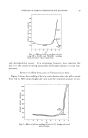
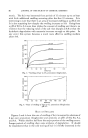
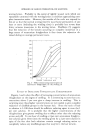
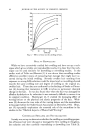
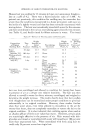
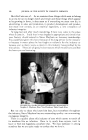
100 JOURNAL OF THE SOCIETY OF COSMETIC CHEMISTS In view of these findings it is suggested that controlled neutralization can produce undamaged hair even after it is swollen in thioglycolates. Severe hair damage is not a necessary result of overprocessing if proper neutraliza- tion is achieved. Careful control of neutralizing conditions wilt consis- tently produce hair in finer condition than has been possible under methods frequently used in the past. SUMMARY A study_is made of the effect of thioglycolate solutions on the swelling of hair. Concentrations above 4 per cent at a pH above 9.0 give markedly greater swelling action. While thioglycolate causes reduction and hydrol- ysis of the hair, a careful control of neutralization can restore the hair more nearly to its original preswollen quality. .dcknowledgment: The authors wish to acknowledge the assistance of L. Star and L. Como which made this work possible. We also wish to express our appreciation for the continued advice and suggestions of Dr. E. I. Valko. BIBLIOGRAPHY (1) Valko, E. I., and Barnett, G., "A Study of the Swelling of Hair in Mixed Aqueous Sol- vents," J. Soe. CosME•r•e CHEMIS•rS, 3, 2 (1952). (2) Chamberlain, N.H., and Speakman, J. B., Z. E/ectrochemie, 37, 374 (1931). (3) Eckstrom, M. E., Jr., "Swelling Studies of Single Hair Fibers," J. Soe. CosMETIC CHEM- iSTS, 2, 4 (1951). (4) Steele, R., "Recent Developments in the Structure of Keratin Fibers," Ibid., 3, 2 (1952). (5) Reed, R. E., DenBeste, M., and Humoiler, F. L., "Permanent Waving of Human Hair-- The Cold Process," Ibid., 1, 2 (1948). (6) Hamburger, W. J., Morgan, H. M., and Platt, M. M., "Some Aspects of the Mechanical Behavior of Hair," Proc. Sci. Sect. Toilet Goods Alssoc., 14, 10 (December, 1950). (7) HamN•rger, W. J., and Morgan, H. M., "Some Effects of Waving Lotions on the Me- chanical Properties of Hair," Ibid., 18, 44 (December, 1952). (8) Whitman, R., "The Role of Neutralizers in Cold Wave Processes," Ibid., 18, page 27 (December, 1952). (9) Brunner, M. J., "Medical Aspects of Home Cold Waving," Alrch. Dermato/. and Syphi/oL, 64, 316-320 (1952). FLASH The Medal Award Committee has just announced that Dr. E.G. Klarmann has been selected as the recipient of the 1953 honor. The award will be made in the evening of December 10, 1953 at the Biltmore Hotel in New York City.

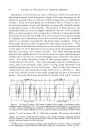
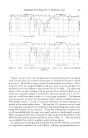
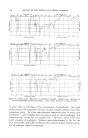
INFRARED SPECTROSCOPY OF ESSENTIAL OILS* By A. K. PRESNE,,, P.D. /lndrew •ergens Company, Cincinnati, Ohio THE EXAMINATION OF essential oils by infrared spectrophotometry is by no means new, but the application of the method to these materials has been the exception rather than the rule. In several respects the method is exceptionally well suited to essential oil analysis. It is one of the very few methods which can be applied to a mixture which will give information on each of the components of the mixture. It may be applied to very small amounts of material, such as the traces of materials sometimes separated from essential oils. It gives a great deal of evidence of the chemical struc- ture of a compound. When performed with a double-beam instrument it is quite rapid. It is applicable to all essential oils. Finally, essential oils are practically all soluble in one or both of the solvents of choice, carbon tetrachloride and carbon disulfide. Inasmuch as many of those who are interested in essential oils have not had occasion to become well acquainted with infrared spectrophotometry, a brief discussion of the theory and method involved may not be amiss. .lust as visible light is radiant energy covering a range of wave lengths from about 0.4 to 0.7 of a micron, infrared is radiant energy, but of a wider range and of longer wave lengths. The portion of this range of immediate interest to us is 2 to 16 microns, although the infrared region extends much farther. Just as some substances absorb certain wave lengths of visible light and therefore have characteristic colors, so different substances absorb various wave lengths in the infrared. All organic compounds and prac- tically all inorganic ones absorb in the 2.0 to 16.0 micron region. A spectrophotometer is an instrument capable of measuring the intensity of the energy at each increment of wave length throughout the region under consideration. By comparison of the amount of energy transmitted through a sample with the amount falling upon it, the per cent of transmit- tance or some derived function is obtained. The spectra given here were drawn by a Baird Associates double-beam infrared spectrophotometer, which makes the necessary comparative measurements and records the results automatically as a curve of per cent transmittance plotted against wave length. * Presented at the December 11, 1952, Meeting, New York City. 101
Purchased for the exclusive use of nofirst nolast (unknown)
From: SCC Media Library & Resource Center (library.scconline.org)