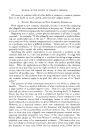
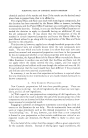
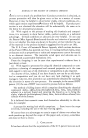
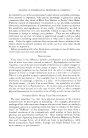
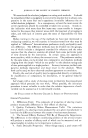
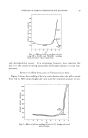
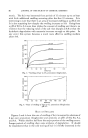
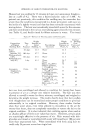
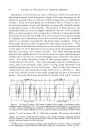
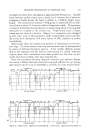
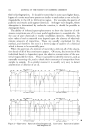
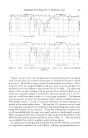
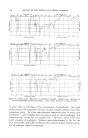
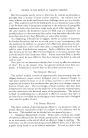
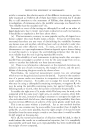
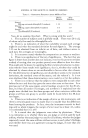
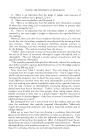
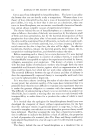
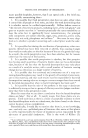
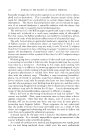
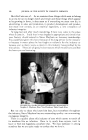
106 JOURNAL OF THE SOCIETY OF COSMETIC CHEMISTS Figure 5.--Spectra of two samples of terpinyl acetate. The band in one at approximately 11.3 microns is an indication of a ter- minal unsaturated CH2 group. This group is not present in •-terpineol or its esters, but is present in the beta compounds. It is known that E- terpineol may be derived from the alpha form by heating. It seems reasonable to assume that commercial terpinyl acetates are varying mix- tures of the esters of the alpha and beta alcohols. Of course, some of the gamma compound may be present also. Incidentally, the compound that appears to be the alpha form is somewhat superior in odor, although in this case infrared spectrophotometry is capable of a finer differentiation than can be accomplished by odor. An example of a high degree of dilution with an odorless substance is shown in Fig. 6. The upper spectrum is a sample of myrtle oil which con- tains so much diethyl phthalate that the characteristics of the original oil are almost entirely hidden. The lower spectrum is that of pure diethyl phthalate for comparison purposes. When an odorless diluent is used the nose is at a serious disadvantage in comparison with infrared spectrophotometry. Dilution of this type may usually be carried to 50 per cent, and in some cases to 80 per cent without detection being possible by direct smelling of the sample. With the most commonly used diluents, $ per cent or more is usually easily detectable from the spectrum.

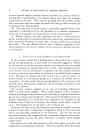
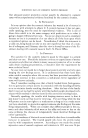
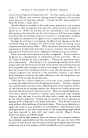
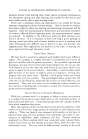
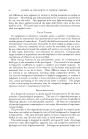
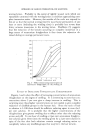
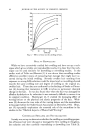
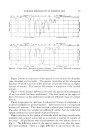
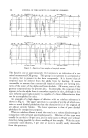
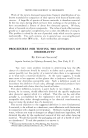
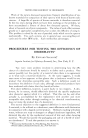
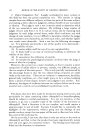
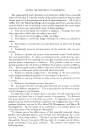
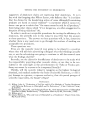
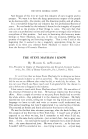
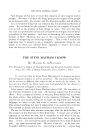
INFRARED SPECTROSCOPY OF ESSENTIAL OILS 107 4OOO WAVE NUMBERS IN CM I WAVE NUMBERS rN 3000 l$0•) 2000 IS0•) 140•) I10•) I• I1• I• • IllI I I i Ii,, • ,I, 80 I WAY LENGTH I MICRONS WAVE LENGTH IN MICRONS •o • WAV• LENGTH IN M•CRONS WAVE LENGTH Figure 6. Upper curve: Spectrum of "myrtle oil." Lower curve: Spectrum of diethyl phthalate. Figure 7 shows at the top the spectrum of acetylated lavandin compared with (center) that of a material purchased as acetylated lavandin, which it was not. Obviously a large amount of some acetate was present. Puri- fying the ester by careful distillation did not result in much change in its spectrum but it was different than any we had in our files. The spectrum told us that we were dealing with an acetate of an alcohol which was of moderate molecular weight if rnonohydric (the ester bands at 8.1 and 9.7 microns would have been weaker in a very large molecule). No benzene ring was present as shown by the absence of the various correlation bands. The double band at 7.2 and 7.4 microns indicated two methyl groups at- tached to the same carbon atom. The band at 11.3 microns was too weak to be regarded as evidence of a terminal unsaturated CH2 group, unless such group were presel•t as an impurity. From this information it seemed not at all improbable that the ester was nopyl acetate or hydronopyl acetate. When samples of these were obtained the spectra showed the identity of the unknown ester with nopyl acetate (lower curve of Fig. 7). This material is now available from several suppliers under various n0mes. In addition to checking essential oils and mixtures for identity, constancy of composition, adulteration, and dilution, infrared spectrophotometry is
Purchased for the exclusive use of nofirst nolast (unknown)
From: SCC Media Library & Resource Center (library.scconline.org)