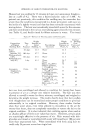
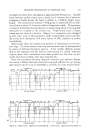
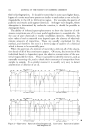
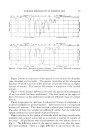
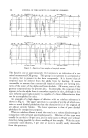
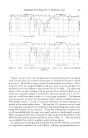
TESTING THE EFFICIENCY OF DEODORANTS 109 Work of the nature discussed necessitates frequent identification of un- known materials by comparison of their spectra with those of known sub- stances. A large file of spectra of known materials is therefore essential. In the two years during which we have been working on the problem, we have accumulated a library of about five thousand spectra. Of these, about a thousand are of pure compounds. The value of such a file increases greatly as it approaches completeness, but so does the difficulty of using it. This problem is solved by the use of punched cards which sort the spectra mechanically. Two such systems are in general use one using Keysort cards and the other IBM cards. Each method has advantages. PROCEDURES FOR TESTING THE EFFICIENCY OF DEODORANTS* By EDWARD SAGARIN• Sagarin !nstilule for Olfactory Research, Inc., New York, N.Y. THE VERY •'IRS'r problem involved in determining how the effi- ciency of a deodorant should be tested is to define such a product. One cannot possibly test the quality of a material when there is no agreement as to what such a material should be. As the name suggests, it would seem more or less apparent at first glance that a deodorant would be any product that diminishes perceptible odor. Such a definition would not necessitate the abolition of such odor, although commercial products have been marketed with claims that they banish all odors. The above definition, however, is quite faulty in two respects. A deo- dorant, by its nature, should effectively diminish the specific unpleasant odor character against which it is utilized. That this can be, and often actually is, accomplished by the replacement with another and more acceptable odor, either through masking or by chemical transformation, does not make the product less of a deodorant. The second objection to the suggested definition is more fundamental. A material, to be utilized as a deodorant, must effectuate such diminution in comparison with a logical control product. Ordinary washing with plain water, without any soap or detergent or alleged deodorant ingredient, will diminish the odor by the mechanical removal of dirt and other decaying material. Would that justify the packaging and sale of a bottle of water as a deodorant? To ask the question is to answer it. * Presented at the December 11, 1952, Meeting, New York City. ]• Present address, Standard Aromatics, Inc., New York City

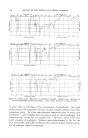
110 JOURNAL OF THE SOCIETY OF COSMETIC CHEMISTS But that example merely serves to illustrate, by reductio ad absurdum, a principle that is worthy of more serious attention. An ordinary bar of soap, without any doubt and beyond any challenge, must act as a deodor- ant. This would not justify the labeling of Lux as a deodorant soap, unless it can be shown that it has greater properties in the reduction of perceptible unpleasant body odor than have soaps made up of other ingredients. In the same manner, the deodorant claims for Dial soap are completely un- justified unless it is demonstrated that such a soap diminishes the body odor more than does Ivory, Lux, Palmolive, or some other product. As a beginning, I should like to suggest, merely as a point of departure for further discussion, and not as an end point in any investigations, that the deodorant be defined as a product that effectively diminishes the per- ceptible unpleasant odors more than does a comparable material used or sold for other than deodorant purposes. Such a definition does not mean that Arrid must be more effective than Stopette, or vice versa, because they are both used for their deodorant value. It does mean that Dial, to justify its claims, must be more effective than Lux, because the latter is sold and used as soap. Now, how can one determine whether there is such an effective reduction of odor? Up to the present time, two general methods have been pro- posed. I should like to classify them as the indirect and the direct. Tug Im)•RgcT MgT•or) The indirect method consists of experimentally demonstrating that the alleged deodorant causes certain biological and/or chemical changes to take place within the body or on its surface, and then to draw from such experimental evidence the conclusion that ipsofacto such changes cause re- duction of body odor. The two changes of body condition that have been interpreted in such manner are the reduction in the quantity of perspiration, and the reduction in the bacterial count of the perspiration. The indirect method of establishing that a deodorant is effective assumes that there is and must be an inviolable and intransigeant ratio between such a biological state and the quality of odor. Tug D•Rgcx Mgx•or) The direct method of determining the efficiency of a deodorant relies on actual olfactory examination either of a subject or of a substance that he has worn. This method can be divided into two general systems: 1. NumericalMeasurement System: Under such a method, the sample of material collected from the breath, perspiration, or elsewhere, is tested on an instrument, at the end of which an olfactory judge is smelling. The instrument can be constructed along several different lines, one of the most popular being based on an air-dilution technique. It is not my wish in this
Purchased for the exclusive use of nofirst nolast (unknown)
From: SCC Media Library & Resource Center (library.scconline.org)