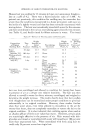
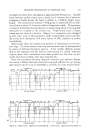
TESTING THE EFFICIENCY OF DEODORANTS 11! article to examine the relative merits of the different instruments, particu- larly inasmuch as I believe all of them have been overrated, but I should like to call attention to the statement of KillJan, that during extensive investigations of cutaneous odors, the metallic osmoscope was found to be "less reliable than the unaided nose" (1). Inasmuch as most of the testing on chlorophyll as well as on other al- leged deodorants has in recent years been conducted on such instruments, I should like to emphasize a few facts about them: (a) The instruments, contrary to some popular myths, all depend on a human subject who must finally make a choice. It has not yet been dem- onstrated that there are any ways of diminishing the variability between one human nose and another, which has been such an obstacle in odor clas- sification and other olfactory work. To state, as has been done, that a thermometer or a spectrophotometer likewise depends upon a human being to read the results is to ignore the overwhelming evidence that the eye is more reliable than the nose in giving reproducible results. (b) The reliability of such instruments in giving results that are repro- ducible from one judge to another or even by the same judge from one oc- casion to another has definitely not been demonstrated. (c) There is no information whatsoever on the standard deviations ob- tained in the use of such instruments, the margins of error, and the possi- bilities of obtaining the given results by chance alone. Nevertheless, the numerical measurement system has one advantage which must not be gainsaid and cannot be denied. It permits the examina- tion of a person under one situation in comparison with the same person under another situation. It enables one to judge the mouth odor of A, who may be using a chlorophyll-containing toothpaste, not against B, who may be using the penicillin-containing paste, but against himself, A, the following week or month, when he has been switched to the penicillin. It enables the right arm of A, under which Dial soap may be used, to be compared with the same man's right arm, on another occasion, when Life- buoy may be used, instead of making it necessary to compare the right arm of an individual with the left arm, thus bringing up the possibility that there may be extreme differences of activity of the sweat glands under each arm. This is not an asset without a drawback. Let us not overlook the fact that A on one occasion may be more unlike A on another than A might be unlike B or, even more possible, that the right armpit of A may be more dissimilar from the same armpit a week or two later than it would be unlike his left armpit on the same day. All in all, the numerical evaluation of olfaction would be ideal, in that it would reduce the results to a mathematical equation, but it is completely unacceptable until such time as its reproducibility has been established and the margin of error computed.

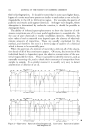
112 JOURNAL OF THE SOCIETY OF COSMETIC CHEMISTS 2. Paired Comparison Test: Largely overlooked by many workers in this field has been the paired comparison test. This consists in taking samples from two different subjects, or from two parts of the same subject, and making a direct olfactory judgment, without benefit of any instrument or dilution. The judge in such a test is merely asked to determine which of the two materials is more odorous. By utilizing a large number of judges (I have used from 5 to 15 in various tests), and by repeating each judgment by each judge several times, under blind conditions and with change of code numbers, it is not difficult to determine whether the judges were consistent unto themselves, and with each other, and whether signifi- cant results were obtainable. Such a test has the following advantages: (a) It is precisely and directly a test of the quality to be determined-- the perceptibility of odor. (b) It carries within itself the test of its own reproducibility. (c) It lends itself to an ease of statistical handling to determine the validity of any claims. (d) It necessitates the utilization of controls. (e) It excludes the psychological prejudice involved when the judge is aware of what he is judging. However, this system has a major drawback, in that it requires a direct comparison of unlike objects or persons namely, two different people, or the two armpits of the same person. This is only partially counteracted by the advantage found in that the two objects being compared are under study at the same time. There are no variations in temperature, humidity, general body conditions, etc., that might prove to be a serious handicap when a period of time elapses between one judgment and another. Fur- thermore, the degree of similarity between two subjects before use of a test material and a control can be established by preliminary work. The claims that have been made for deodorants during recent years, and particularly for those containing either chlorophyll or hexachlorophene, should be subject to careful examination. It is not my intention, at this moment, to go into a complete study of the validity of the literature on chlorophyll. Such a literature is far too complex, and would require a separate paper in and of itself. Instead, I should like to summarize the highlights of the experiments, without going into the findings of any specific workers, except that one paper will be used to illustrate how ridicu- lous some of this work may be. On the asset side, I can state that there is only one virtue to the work on chlorophyll, and that is that the product has been experimentally tested, over and over again, by numerous workers. The findings have been pub- lished and the literature is voluminous.
Purchased for the exclusive use of nofirst nolast (unknown)
From: SCC Media Library & Resource Center (library.scconline.org)