TESTING THE EFFICIENCY OF DEODORANTS 119 supporters of deodorant claims are expressing their skepticism. It is in line with the foregoing that Milton Lesser, who believes that "it is evident that the claims for the deodorizing action of some chlorophyll-containing products are based on sound evidence"--a statement which I cannot en- dorse-can go on to admit that "the same cannot be said for all products," there being other claims which "if not dangerous, are often exaggerated to the point of being ridiculous" (4). In order to work out acceptable procedures for testing the efficiency of a deodorant, the scientific men in this industry must first find the answers to three questions. The answers to these questions will, in fact, determine whether there is any need even to go through the motions of working out acceptable test procedures. These questions are: First, are the cosmetic research men going to be placed in a position where they will tell their advertising colleagues what their findings actually are, or are the advertising men going to continue to tell the research men what the findings shall be? Secondly, are the claims for the efficiency of deodorants to be made with the responsibility governing other cosmetic claims, or are they to be con- sidered in the same light as the advertisements for Tabu or Voodoo per- fume, not meant by anyone to be interpreted literally? Thirdly, will the cosmetic industry recognize as the highest biological, chemical, and medical authority the body of scientific literature, or will it pay homage to a greater, a supreme authority, that oft-quoted paragon of scientific impartiality, the Reader's Digest? REFERENCES (1) Killian, John A., "Evaluation ooeIn-IZitro and In-IZivo Methods of Testing Deodorants with Particular Reoeerence to Chlorophyll and Its Derivatives," J. Soc. CosME'nC 3, 30 (1952). (2) Montgomery, Royal M., and Nachtigall, Henry B., "Oral Administration of Chlorophyll Fractions for Body Deodorization," Postgraduate Medicine, 8, 401, November, (1950). (3) Killian, op. cit. (4) Lesser, Milton A., "Pros and Cons of Chlorophyll as a Deodorant," Drug •9 Cosm. Ind., 71, 30, July (1952).

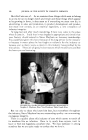
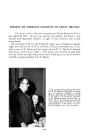
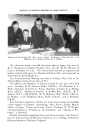
S. L. MAYHAM, FIFTH HONORARY MEMBER By FRAZIER SINCLAIR Publisher, Drug and Cosmetic Industry, New York I, N.Y. IT •S CUSTOMAP.¾, on an occasion of this sort, when a professional society is about to bestow an honorary membership, for some speaker to think up a good reason why this chosen individual should be so honored. As your president, Paul Laufl:er, wrote to me, and I quote "Would I agree to give a r•sum• of the history and achievements of our friend, Steve Mayham." I feel quite competent to do a job of that sort. Steve Mayham and I have been working in the same neighborhood and sometimes on the same street for nearly thirty years. As a matter of fact, I suspect the reason I have been asked to speak here today is that the number of men with similar qualifications is beginning to provide pretty slim picking. It would be very easy for me, now that I have been given this opportunity of addressing you, to keep you tied to your chairs for an hour or two while I reminisced about the history and achievements of Steve Mayham. But I am going to forego this pleasure. Steve's history is safely recorded in the archives of the industry and his achievements are well known to nearly all of you. Instead I would rather use my brief allotted time to tell you how singularly fitting and timely it is that this professional society, THe. Som- •.T¾ Or Cosu•.Tm CH•.•4•STS, should now extend to Steve Mayham an honor- ary membership. But before I do that I should like to change the subject briefly, or, as advertising men say, to build up the background. Today, looking at this large audience, made up of so many professional men in our industry, and realizing that I am talking to a professional society of American cosmetic chemists, I am conscious of a new era in our industry. It seems just a few years ago (actually only about twenty) when hardly any company in our industry employed a chemist. Those were the days of the practical man and the formulator. Most of these men were intelli- gent, hard-working fellows, but scattered throughout the industry were strange and bizarre figures in various professional poses. Almost invari- ably when one of these men had some influence in buying, the supply trade made him a Ph.D. and henceforth it was wise to address him as Doctor. 120
Purchased for the exclusive use of nofirst nolast (unknown)
From: SCC Media Library & Resource Center (library.scconline.org)